Sheet 08 · History & Culture
Key West Cemetery: A Walking Tour of the Famous Tombstones
A guide to touring the historic Key West Cemetery: the famous epitaphs, the USS Maine memorial, notable graves, a self-guided route, hours, and visiting tips.

Key Takeaways
- The Historic Key West Cemetery is a 19-acre Old Town landmark, established in 1847 and famous for its dark humor and dense local history.
- The most famous epitaph reads “I Told You I Was Sick,” on the grave of a self-described hypochondriac, one of many one-liners scattered across the grounds.
- Many graves are above ground because the island’s high water table and hard coral rock make deep burial difficult.
- An estimated 70,000 to 100,000 people are buried here, far more than the island’s living population, including USS Maine sailors and Cuban patriots.
- It’s free to visit on your own, and the Historic Florida Keys Foundation runs guided walking tours by reservation.
Most cemeteries ask for solemnity. The Key West Cemetery asks for a sense of humor. Tucked into the middle of Old Town, this gloriously offbeat 19-acre burial ground is one of the island’s most rewarding stops, a place where a hypochondriac’s headstone reads “I Told You I Was Sick,” where graves stack above the ground like little whitewashed houses, and where free-roaming roosters and iguanas wander among monuments to sea captains, sailors, and Cuban freedom fighters. It’s history, folk art, and Key West’s irreverent spirit all in one shady, sun-dappled square.
This guide gives you the cemetery’s remarkable backstory, the famous graves and epitaphs to find, a self-guided route, and everything you need to visit respectfully. It’s one of the most atmospheric corners of Old Town and a memorable chapter of our Key West history guide.
Why the Key West Cemetery Is One of Old Town’s Most Unusual Attractions
The Key West Cemetery is no morbid detour; it’s one of the most genuinely interesting things to do on the island. Spread across nineteen acres at the foot of Solares Hill, the highest natural point in Key West, it holds the entire sweep of the island’s story in stone: Bahamian mariners and Cuban cigar makers, millionaires and paupers, war heroes and local eccentrics, all resting side by side. What sets it apart is the personality. The epitaphs are funny, the layout is quirky, the wildlife is unbothered, and the whole place radiates the same live-and-let-live humor that defines Key West itself.
How the 1846 Hurricane Created the Cemetery
The cemetery exists because of a catastrophe. Key West’s original burial ground sat by the beach near today’s Higgs Beach, and in October 1846 the same Great Havana Hurricane that destroyed the island’s first lighthouse tore through it, washing away graves and scattering remains and coffins through the streets and into the trees. It was a gruesome scene that the town never wanted to repeat. So in 1847, a new cemetery was established on higher, safer ground at Solares Hill, where it has remained ever since. A few headstones here predate the cemetery itself, relocated markers that survived the storm.
Why the Graves Are Above Ground
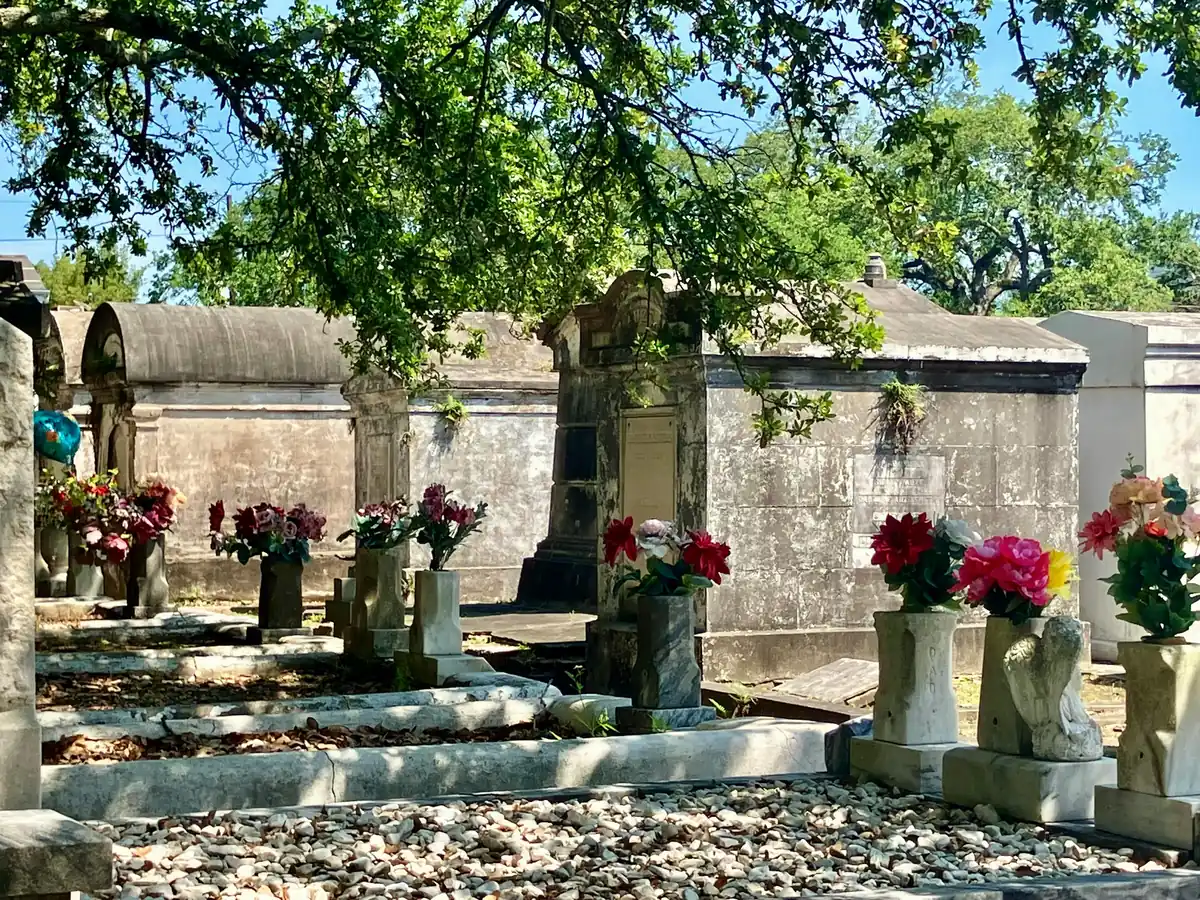
One of the first things visitors notice is that so many graves sit above the ground in whitewashed vaults and crypts, much like in New Orleans. The reason is the island’s geology. Key West has a high water table and a base of hard coral rock, which makes digging deep graves difficult and impractical, dig too far down and you hit water or stone. So the dead are often laid to rest in raised vaults instead. There’s also a practical space-saving logic: a single small plot can hold several burials by stacking them, which matters in a cemetery that has long since filled its underground space and still conducts around a hundred burials a year.
The Famous Epitaphs: Key West’s Last-Word Humor
The cemetery’s signature attraction is its sense of humor, carved in stone. The most beloved epitaph belongs to B.P. “Pearl” Roberts, a self-described hypochondriac whose family gave her the perfect last word: “I Told You I Was Sick.” It’s the cemetery’s single most-photographed grave. Nearby, atop the same family plot, Gloria Russell’s marker reads “I’m Just Resting My Eyes.” A cluster of newer memorial niches carries its own deadpan one-liners, including “If You’re Reading This, You Desperately Need a Hobby.” Another resident, a devoted fan, is remembered simply as a “Devoted Fan of Singer Julio Iglesias.” And a former local official and pioneering woman juror is fittingly marked as an “Admiral, Conch Republic Navy.” Hunting down these epitaphs is half the fun of a visit, a treasure hunt of last laughs.
The USS Maine Memorial
The cemetery’s most solemn and significant monument honors the USS Maine, the U.S. battleship that exploded in Havana Harbor in February 1898, killing some 260 American sailors and helping trigger the Spanish-American War. About two dozen of the dead are buried here, in a plot arranged around a striking central bronze statue of a sailor, surrounded by an ornate iron fence and gates made in Washington, D.C. The U.S. Navy still tends the plot to this day. It’s a moving counterpoint to the cemetery’s lighter side and a direct link to a pivotal moment in American history, one with deep ties to Key West, which served as a staging point in that war.
Notable Residents: The Conchs, Characters, and Legends
The cemetery is a who’s-who of Key West history and lore. Here you’ll find “Sloppy” Joe Russell, Hemingway’s fishing companion and the namesake of the famous Sloppy Joe’s Bar. There’s General Abe Sawyer, a local character of unusually short stature who, with a sense of humor that fit right in, insisted on being buried in a full-size grave. Pioneer Conch families like the Currys (whose patriarch was Florida’s first millionaire) and the Mallorys (after whom Mallory Square is named) lie here, alongside Kermit “Shine” Forbes, a local prizefighter who once sparred with Hemingway and whose stone proudly notes it. Each grave is a thread in the island’s story.
Cuban Patriots and the Cultural Sections
Key West’s deep Cuban heritage is written across the cemetery. A special section honors Los Mártires de Cuba, the Cuban independence fighters of the Ten Years’ War in the 1860s and 70s, on a plot connected to the Cuban community that made Key West a center of the cigar industry and the independence movement. The cemetery also preserves distinct historic sections, Catholic, Jewish, Bahamian, and Cuban, reflecting the many cultures that built the island. Wandering between them is a quiet lesson in just how diverse this little outpost has always been. To understand the Cuban story further, see our guides to Key West cigar history and the island’s Cuban restaurants.
Dark Chapters and Cemetery Lore
Not every story here is lighthearted. The cemetery holds the grave of Manuel Cabeza, a World War I veteran lynched by the Ku Klux Klan in 1921 over his relationship with a woman of mixed race, a sobering reminder of the island’s harder history. There’s a connection, too, to one of Key West’s most macabre legends: Elena Hoyos, the young woman at the center of the notorious Carl Tanzler “undying love” case, in which an obsessed man stole and kept her body for years. Her actual resting place here is kept unmarked and secret to deter the curious. And like any good old cemetery, this one has its ghost stories, most famously a protective spirit said to scold visitors who behave disrespectfully or sit on the graves.
Robert the Doll, the Otto Family, and the Pet Graves
One of the cemetery’s more charming corners belongs to the Otto family, a prominent Key West clan whose plot connects to the island’s most famous haunted legend. The Ottos were the family of Robert Eugene Otto, the artist forever linked to “Robert the Doll,” the supposedly cursed childhood toy now displayed at the Fort East Martello Museum that has inspired countless ghost stories (and a horror-movie franchise). The family plot is also a tender reminder that Key Westers love their animals: it includes small graves for three beloved Yorkshire terriers and even a pet Key deer. In a cemetery full of grand monuments and dark histories, these tiny pet graves are a sweet, very human touch, and a favorite stop for visitors who know to look for them.
How to Read the Gravestones: A Quick Guide to Symbolism
Once you start looking, the old headstones reveal a whole visual language. A draped urn represents mourning and the soul’s passage; a broken column marks a life cut short; clasped hands signify farewell or eternal union; a lamb almost always marks a child’s grave, symbolizing innocence; an anchor stands for hope (and often, here, a life at sea); and a carving of a tree trunk or logs denotes membership in the fraternal order Woodmen of the World. Learning even a few of these symbols turns a walk through the cemetery into a richer, more readable experience.
Roosters, Iguanas, and the Cemetery’s Strange Beauty
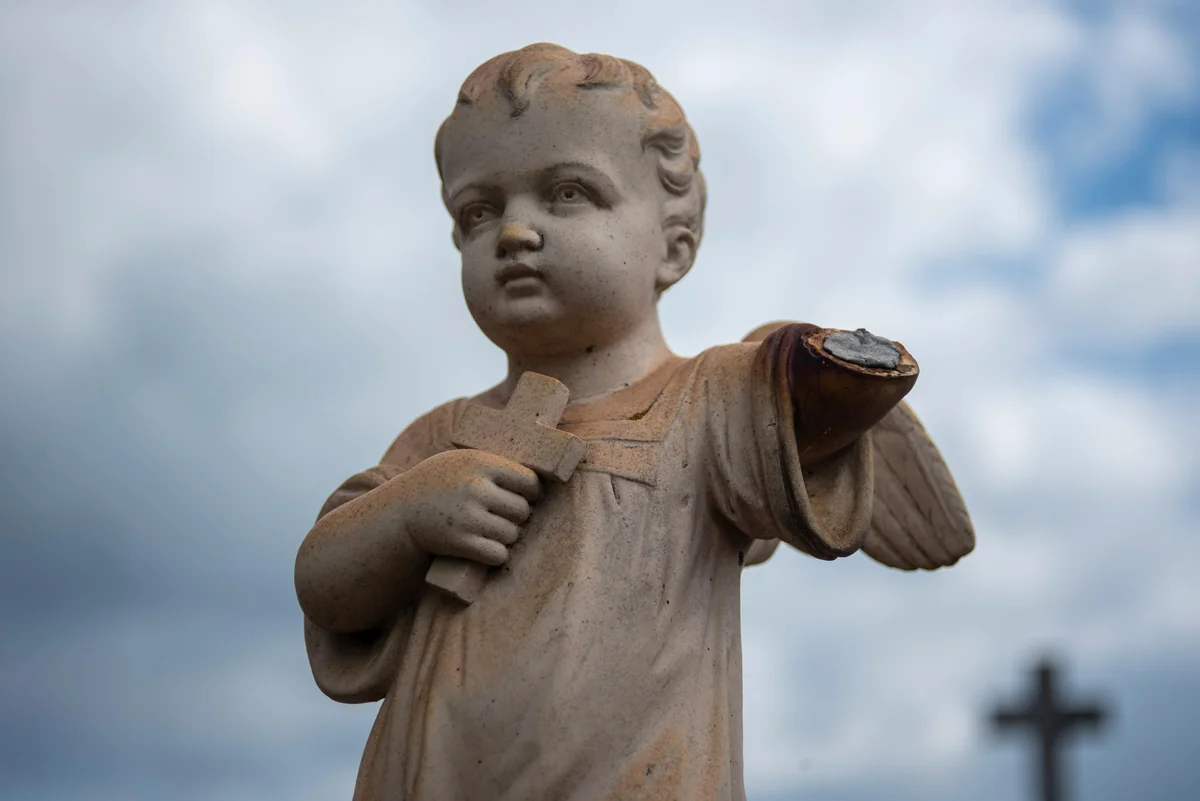
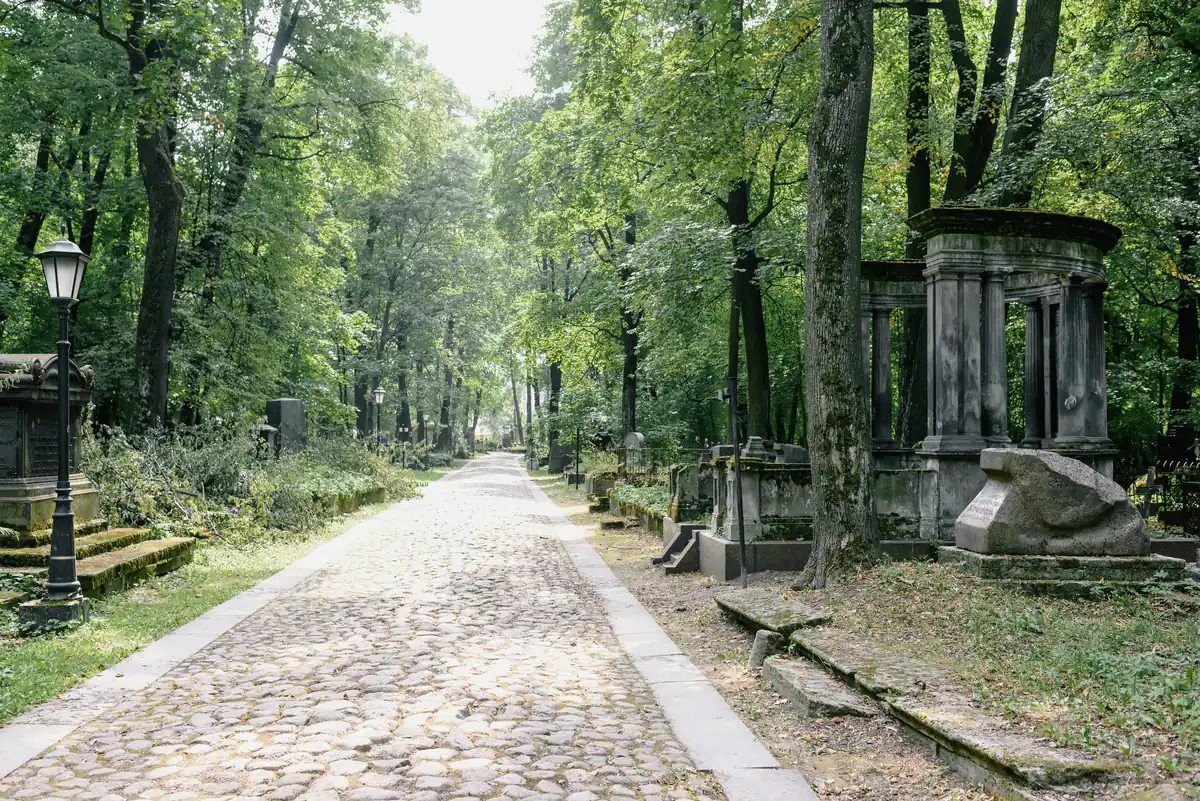
Part of what makes this place unforgettable is its atmosphere, which is unlike any cemetery you’ve visited. Key West’s famous free-roaming chickens and roosters strut between the vaults, green iguanas sun themselves on the warm stone, and the whole nineteen acres feel less like a somber graveyard than a quiet, slightly wild park where the living and the dead share the shade. Weathered statues add to the mood: a bronze angel, carved lambs marking children’s graves, and other monuments softened by a century of salt air. Some graves collect offerings, beads, shells, and trinkets left by visitors and locals. The effect is genuinely beautiful, a little surreal, and deeply Key West, a place where even mortality comes with sunshine, wildlife, and a sense of humor.
A Self-Guided Walking Route
You can absolutely explore on your own, and the best plan is to start at the Sexton’s office near the main entrance at Margaret and Angela Streets, where you can pick up a free map. From there, a satisfying loop takes in the USS Maine Memorial, the famous “I Told You I Was Sick” grave of Pearl Roberts toward the back near the Jewish section, the Los Mártires de Cuba monument, and the resting places of Sloppy Joe Russell and General Abe Sawyer. Allow 45 minutes to 90 minutes for a relaxed highlights walk over more than a mile of uneven ground. Wear comfortable shoes and bring water, especially in the heat. A paid self-guided audio tour is also available through a phone app if you’d like narration as you go.

Guided Tours, Hours, and Practical Information
For the richest experience, take a guided tour. The Historic Florida Keys Foundation leads roughly 90-minute walking tours, typically a couple of times a week, for a suggested donation of around $20 that supports cemetery restoration. Reservations are required and spots are limited, so call ahead to confirm the current schedule and reserve. The cemetery gates are generally open daily from around 7 a.m. until dusk (roughly 6 to 7 p.m. depending on the season), and it’s free to walk the grounds on your own. The Sexton’s office keeps weekday business hours for maps and information. Because tour days, times, and hours can change, it’s always worth verifying before you go.
Cemetery Etiquette and Tips for Respectful Visiting
This is an active cemetery and a place of mourning for local families, so visit with care. Don’t sit, stand, or lean on the graves and vaults (the local ghost lore on this point is really just good manners with a story attached). Keep your voice down, stay on the paths, and don’t disturb the offerings, beads, and trinkets left on certain graves. Photography is welcome, but be discreet around any funeral or grieving visitors. Leave the roaming chickens and iguanas alone, they live here too. A little respect goes a long way and keeps this remarkable place open and welcoming. For more thoughtful ways to spend a day, see our things to do in Key West guide.
When to Visit and What to Bring
The cemetery is at its best in the cooler, quieter hours. Early morning is ideal: the light is soft and golden for photography, the temperature is bearable, and you will often have the paths nearly to yourself, save for the roosters. Bring water, wear a hat and comfortable closed shoes for the uneven ground, and pack a small map or load the self-guided route on your phone so you can find the famous graves without wandering for hours. Allow more time than you think you will need; this is a place that rewards slow, curious exploration. And do read a few of the headstones along the way that are not on any tour list, because the unsung graves of ordinary Conchs often tell the island story just as vividly as the famous ones.
Frequently Asked Questions
Can you visit the Key West Cemetery?
Yes. It’s a public, active cemetery, free to enter and walk on your own, generally open daily from about 7 a.m. until dusk. The main entrance and Sexton’s office are at the corner of Margaret and Angela Streets.
Is there a tour of the Key West Cemetery?
Yes. The Historic Florida Keys Foundation runs roughly 90-minute guided walking tours, typically a couple of times a week, for a suggested donation of around $20. Reservations are required, so call ahead. You can also do a free self-guided walk with the map from the office.
What is the famous epitaph in the Key West Cemetery?
The best-known reads “I Told You I Was Sick,” on the grave of B.P. “Pearl” Roberts, a local hypochondriac whose family gave her the last word.
Why are the graves above ground in Key West?
The island’s high water table and hard coral-rock ground make deep burial difficult, so many bodies are placed in raised, whitewashed vaults, as in New Orleans. Stacking burials this way also saves scarce space.
How many people are buried in the Key West Cemetery?
Estimates range from about 70,000 to 100,000 across the 19-acre grounds, far more than the island’s living population. It remains active, with roughly a hundred burials a year.
Who is buried in the Key West Cemetery?
Sloppy Joe Russell (Hemingway’s fishing companion), pioneer Conch families like the Currys and Mallorys, General Abe Sawyer, Cuban independence fighters, and about two dozen sailors from the USS Maine, among tens of thousands of others.
Is the Key West Cemetery free?
Yes, visiting and walking the grounds on your own is free. Only the Foundation’s guided tour asks for a suggested donation.
How long does it take to walk the Key West Cemetery?
The guided tour runs about 90 minutes. A self-guided highlights loop takes roughly 45 to 90 minutes over more than a mile of uneven ground.
Final Thoughts
The Key West Cemetery is the island in miniature: funny and poignant, diverse and a little wild, full of characters who lived large and got the last laugh. Spend an hour here hunting down epitaphs, paying respects at the Maine memorial, and reading the symbols on century-old stones, and you’ll come away understanding Key West better than any guidebook can teach you. Go with curiosity, go with respect, and let the place tell you its stories. For more of the island’s past, return to our Key West history guide.
Sources & corrections
Rates, hours and closures verified against operator listings and on-island visits. Prices are peak-season unless noted.