Sheet 08 · History & Culture
Key West Cigar History and Best Cigar Shops
The story of Key West cigars, once the cigar capital of the world, plus where to buy hand-rolled cigars today, the best shops, and the truth about Cuban cigars.

Key Takeaways
- Key West was once the “Cigar Capital of the World,” with as many as 100-plus factories rolling roughly 100 million cigars a year in the 1880s and 90s.
- Cuban makers built the industry, especially after Cuba’s Ten Years’ War, turning Key West into Florida’s largest and wealthiest city.
- The industry left for Tampa after an 1885 labor strike, the Great Fire of 1886, and hurricanes; by the early 1930s the big factories were gone.
- You cannot legally buy Cuban cigars in the U.S., so today’s Key West cigars are hand-rolled with Dominican, Honduran, and Nicaraguan tobacco.
- Several shops still hand-roll cigars today, and a few offer live rolling demonstrations and factory tours.
Long before Key West was famous for sunsets and Hemingway, it was famous for cigars. In the late 1800s this small island was the undisputed cigar capital of the world, its air thick with the smell of curing tobacco, its streets lined with factories where thousands of Cuban artisans hand-rolled tens of millions of cigars a year. That industry made Key West rich, shaped its neighborhoods and architecture, and wove Cuban culture into the island’s DNA so deeply you can still taste it today. This is the story of how cigars built Key West, and where you can still find a great hand-rolled smoke.
We’ll trace the rise and fall of the cigar empire, the Cuban heritage it left behind, and the truth about what you can actually buy here now, then point you to the best shops in town. It’s a rich slice of the island’s past and a flavorful chapter of our Key West history guide.
Key West: The Original Cigar Capital of the World
It’s hard to overstate how dominant Key West’s cigar industry once was. At its height in the 1880s and 1890s, the island was home to as many as 100 or more cigar factories, employing thousands of rollers and producing on the order of 100 million hand-rolled cigars every year. That output earned Key West the title “Cigar Capital of the World” and made it, for a time, the largest and richest city in all of Florida. A single skilled roller could turn out around 300 cigars in a day, and the island’s docks shipped them out by the millions to a hungry American market.
Why Cuban Cigar Makers Came to Key West
The industry’s roots reach back to 1831, when an American businessman named William H. Wall opened the first significant cigar factory, importing tobacco from nearby Havana. But the real explosion came after 1868, when Cuba’s Ten Years’ War against Spanish rule sent waves of Cubans fleeing across the ninety miles of water to Key West. They brought with them generations of expertise in growing, curing, and rolling tobacco. With Cuban leaf, Cuban hands, and American soil just out of Spain’s reach, Key West became the natural home for an industry in exile. The cigars made here were prized as “Clear Havana” cigars, crafted from Cuban tobacco by Cuban rollers.
The Boom Years: 100 Factories and Cuban Wealth
Through the 1870s, 80s, and 90s, the cigar trade transformed Key West. By the mid-1870s the island already had dozens of factories producing tens of millions of cigars; by the 1890s the population had swelled past 18,000, making it Florida’s biggest city, with the cigar industry as its beating economic heart. The wealth funded grand Victorian mansions and a thriving civic life, while thousands of working families filled the modest shotgun cottages clustered around the factories. The whole rhythm of the island, its work, its money, its culture, ran on tobacco.
Meet the Cigar Barons
The industry was built by larger-than-life figures. Vicente Martínez Ybor, one of the most important manufacturers, ran an operation producing millions of cigars a year before he became the first major maker to pull up stakes and move north, founding Tampa’s Ybor City in the mid-1880s. Eduardo Hidalgo Gato, a Cuban émigré and patriot, became one of the first Cubans to own a major Key West factory; he built around forty cottages for his workers, creating a neighborhood nicknamed “Gatoville,” started the island’s first streetcar line, and helped finance the Cuban independence movement, including the revolutionary leader José Martí. These men were industrialists, community builders, and, in Gato’s case, revolutionaries, all at once.
El Lector: The Reader Who Brought Novels to the Rolling Floor
One of the most charming traditions of the cigar factories was the lector, the factory reader. Rolling cigars all day was quiet, repetitive work, so the workers themselves pooled a small portion of their wages to hire a reader who sat on a raised platform and read aloud to the floor, novels, poetry, political newspapers, often in shifts throughout the day. The lectors made the rollers some of the best-read working people in America, and they shaped political consciousness too, spreading the ideas of the Cuban independence struggle one chapter at a time. It’s a beautiful detail: a roomful of artisans, hands flying, minds following a story read aloud over the rustle of tobacco leaf.
San Carlos Institute and Cuban Key West
The cigar industry made Key West a center of Cuban culture and the fight for Cuban independence. At the heart of it stood the San Carlos Institute at 516 Duval Street, founded in 1871 by the Cuban exile community as a school, civic hall, and patriotic center. It was here, in 1892, that José Martí united Cuban exiles under the banner of the Cuban Revolutionary Party, earning the building its enduring nickname, “La Casa Cuba.” Today the San Carlos is a museum, theater, and library you can visit, a living monument to the Cuban Key West that the cigar industry created. You can taste that heritage too in the island’s Cuban restaurants.
Why the Cigar Industry Left for Tampa
An empire this large doesn’t vanish for a single reason; Key West’s cigar industry was undone by a cascade of them. A major labor strike in 1885 disrupted production and soured relations between owners and workers. The very next year, the catastrophic Great Fire of 1886 swept the island and destroyed dozens of buildings, including many cigar factories. Meanwhile, Tampa was actively luring manufacturers north with cheaper labor, rail access for shipping, and financial incentives, and Vicente Martínez Ybor led the exodus to the new district that would bear his name. Later blows, back-to-back hurricanes in 1909 and 1910, the rise of machine-made cigars, and the Great Depression, finished what the fire and the strike had started. By the early 1930s, Key West’s great cigar factories had closed for good.
The Legacy in Key West’s Architecture
Though the factories are gone, the cigar era is still written across the island. The grand E.H. Gato Cigar Factory building at 1100 Simonton Street still stands, a handsome Neo-Classical concrete structure (the current building dates to around 1920, after fire claimed the original wooden one) that later served the Navy and now houses county offices. The modest shotgun cottages built for cigar workers, narrow homes with rooms lined up front to back, remain a defining feature of Old Town’s residential streets, and you can learn to spot them in our Key West architecture guide. The East Martello museum near the airport even keeps a display of golden-age cigar-making tools. The whole island is, in a sense, a monument to the tobacco trade.
Are Key West Cigars Cuban? The Truth About Cuban Cigars Today
Here’s the question every visitor asks, and the answer is important: no, you cannot legally buy Cuban cigars in Key West, or anywhere in the United States. The U.S. embargo on Cuba, in place since 1962 and tightened in 2020, makes selling or importing Cuban-origin cigars illegal nationwide, and Key West, just ninety miles from Havana, is no exception. Anything marketed to you as a genuine “Cuban cigar” here is either using non-Cuban tobacco or is counterfeit. What you can buy are excellent cigars hand-rolled in the Cuban tradition using premium tobacco from the Dominican Republic, Honduras, Nicaragua, and Ecuador, often grown from Cuban seed. They continue the craft the exiles brought, even if the leaf now comes from elsewhere.
Best Cigar Shops in Key West
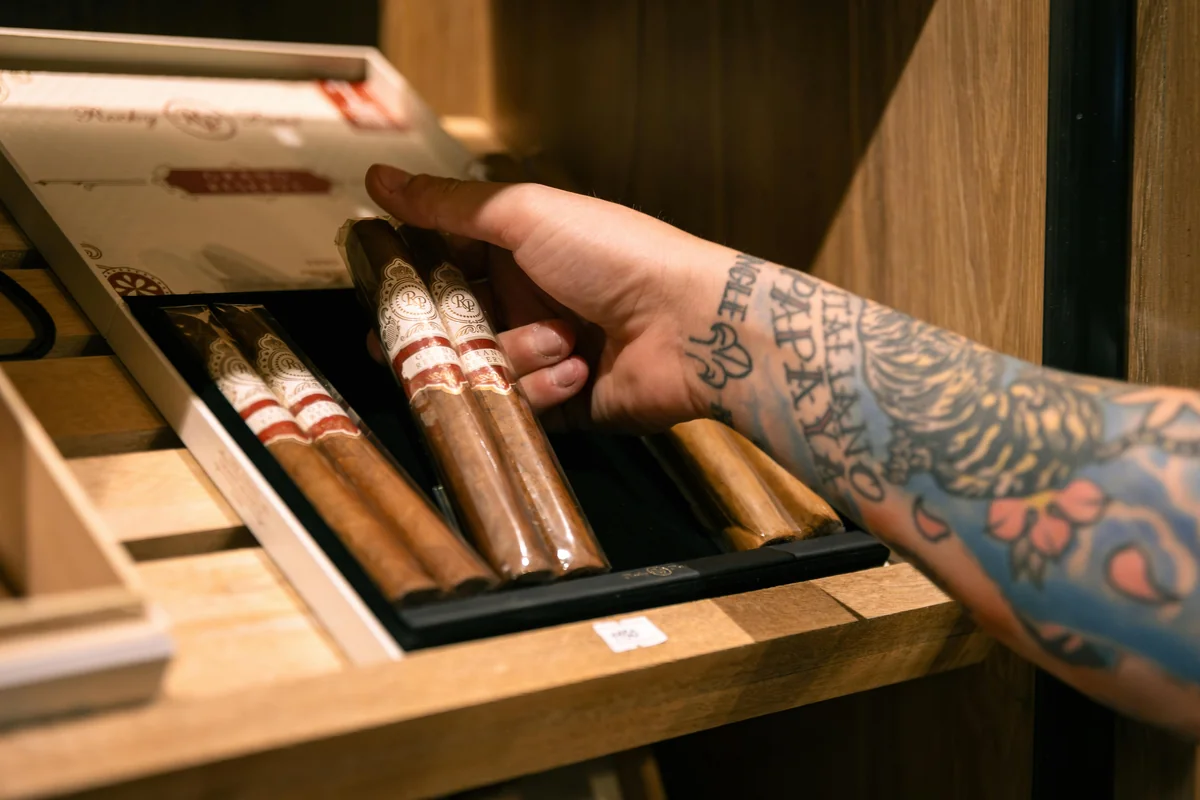
The cigar tradition lives on in a handful of shops, several of which still roll by hand. The Rodriguez Cigar Factory on Fitzpatrick Street is the standout: the oldest family-run cigar company in the Keys, with rollers working on-site, its own respected lines, and hands-on factory tours. The Conch Republic Cigar Factory at 512 Greene Street, a block from Sloppy Joe’s, has hand-rolled premium cigars since 1990. Greene Street Cigar Company in the Historic Seaport district pairs a big walk-in humidor with a beer-and-wine lounge and top national brands. On and around Duval you’ll also find the Cuban Leaf Cigar Factory (310 Duval), Point Break Cigars (known for its novelty Key Lime Pie cigar), and the Key West Havana Cigar Company inside the Speakeasy Inn at 1117 Duval. Hours and locations do change, so it’s worth a quick call before making a special trip to any one shop.

Watch a Cigar Get Rolled: Live Demonstrations
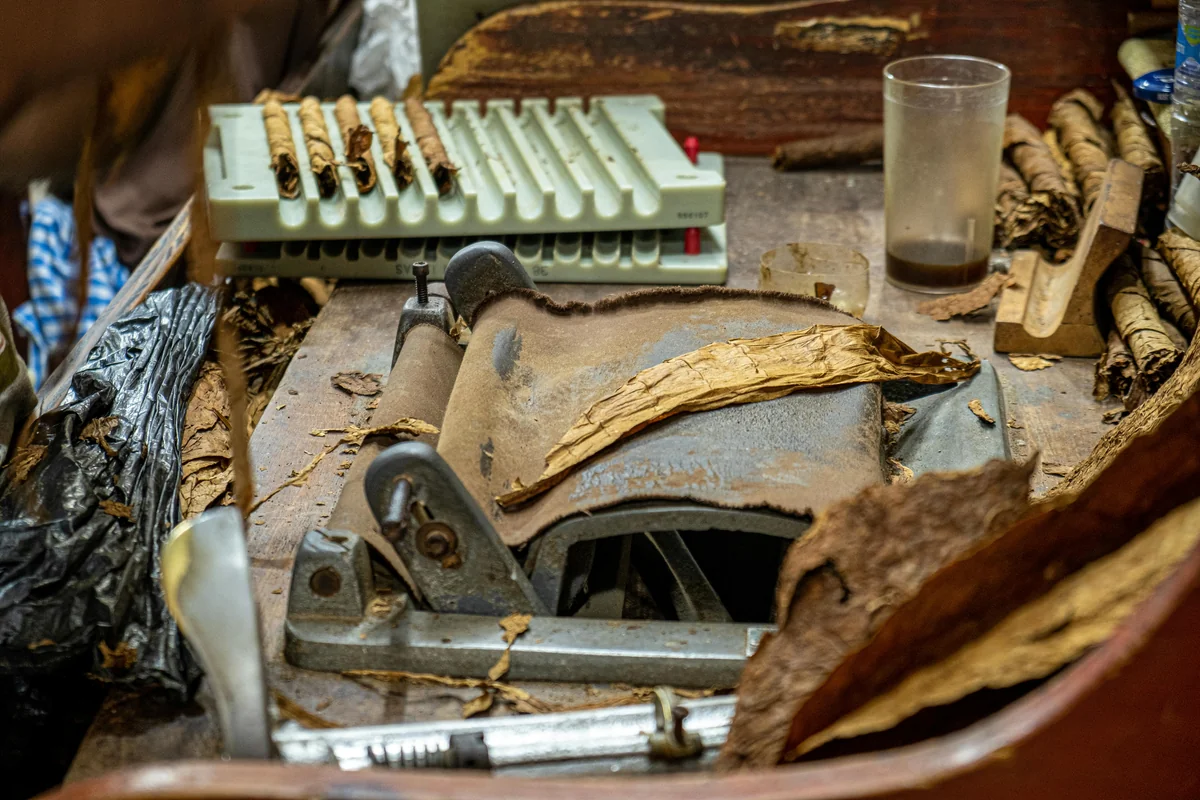
One of the real pleasures of cigar shopping in Key West is watching a torcedor roll one by hand. Several shops keep rollers working right in the storefront, bunching the filler, wrapping it in binder and wrapper leaf, and finishing the cap, all with a speed and precision that’s mesmerizing to watch. The Rodriguez Cigar Factory offers a more in-depth, hands-on factory tour (typically including a cigar and a cup of strong Cuban coffee), while shops like the Cuban Leaf let you watch the rolling for free as you browse. Even if you don’t smoke, seeing the craft up close connects you directly to the artisans who made this island famous.
Gatoville and How Cigar Workers Lived
Behind the millions of cigars were thousands of working families, and their world is still legible in the streets of Key West. Manufacturers like Eduardo Hidalgo Gato built whole neighborhoods of modest cottages around their factories so workers could walk to the rolling floors, and Gato’s cluster of around forty homes gave rise to the district nicknamed “Gatoville.” These narrow shotgun cottages, simple, breezy, built cheap but built well, housed the rollers, strippers, and selectors who made the island run. The cigar workforce was notably diverse and politically engaged, blending Cuban, Afro-Cuban, Bahamian, and Spanish families, and it was unusually literate thanks to the daily readings of the lectores. When you walk Old Town’s residential lanes and notice those repeating little cottages, you’re looking at the housing of an industrial workforce that once made Key West hum.
What to Buy: Local Lines and Price Ranges
You don’t need to be a connoisseur to bring home a good cigar. If you want something local, ask for the Rodriguez house lines, which range from everyday smokes to aged premium blends, or pick up the souvenir-friendly Key Lime Pie cigar for a uniquely Key West gift. Most shops carry a wide range, from a few dollars for a single hand-rolled stick up to premium cigars and boxed sets, and the staff are usually happy to steer a beginner toward something mild and approachable. A single cigar enjoyed at sunset, or a small bundle to take home, is one of the most authentic souvenirs the island offers. Pair it with a stop in our Key West nightlife guide for the full evening.
Cigars, Coffee, and the Key West Ritual
To enjoy a Key West cigar the way the island intends, slow down. Pair it with a thimble of strong Cuban coffee from a window counter in the morning, or with a rum drink as the sun goes down, the two great Cuban contributions to the island daily rhythm. Several shops keep comfortable lounges or shaded patios where you can sit and smoke, and a handful of bars around Old Town are cigar-friendly if you would rather have your stick with live music and a cold drink. There is no rush and no ceremony required; the whole point is to sit, watch the island go by, and savor a tradition that has outlived the factories that started it by a full century.
Frequently Asked Questions
Was Key West the cigar capital of the world?
Yes. In the 1880s and 1890s, Key West held the title, with as many as 100 or more factories producing roughly 100 million hand-rolled cigars a year, before Tampa’s Ybor City inherited the crown.
Are Key West cigars Cuban?
No. Real Cuban cigars cannot legally be sold in the U.S. Today’s Key West cigars are hand-rolled with tobacco from the Dominican Republic, Honduras, Nicaragua, and Ecuador (often Cuban-seed leaf), continuing the Cuban rolling tradition.
Can you buy Cuban cigars in Key West?
No. The U.S. embargo makes selling or importing genuine Cuban cigars illegal nationwide, including in Key West. Anything sold as “Cuban” uses non-Cuban tobacco or is counterfeit.
Where can I buy cigars in Key West?
Top spots include the Rodriguez Cigar Factory (Fitzpatrick Street), Conch Republic Cigar Factory (512 Greene Street), Greene Street Cigar Company, the Cuban Leaf Cigar Factory (310 Duval), Point Break Cigars, and the Key West Havana Cigar Company (1117 Duval).
Why did the cigar industry leave Key West?
A combination of the 1885 labor strike, the Great Fire of 1886, later hurricanes, and Tampa’s lower wages and rail access, led by Vicente Martínez Ybor’s move to found Ybor City. By the early 1930s the big factories were gone.
Who was Eduardo Hidalgo Gato?
A Cuban émigré and patriot who built one of Key West’s largest cigar factories, created “Gatoville” with about forty worker cottages, started the island’s first streetcar line, and financed José Martí’s independence movement. His 1920s factory building still stands at 1100 Simonton Street.
What is a lector?
A factory reader who sat on a raised platform reading novels and newspapers aloud to the cigar rollers, paid directly by the workers themselves rather than the factory.
Can you watch cigars being rolled in Key West?
Yes. The Rodriguez Cigar Factory offers hands-on factory tours, and shops like the Cuban Leaf Cigar Factory keep rollers working live in the storefront for visitors to watch.
Final Thoughts
Key West’s cigar story is the story of the island itself: Cuban hands and American soil, boom and fire and reinvention, a golden age that built a city and a heritage that outlasted it. The factories may have moved to Tampa a century ago, but you can still smell the tradition in a Duval Street shop, watch a roller work the leaf by hand, and carry a piece of it home. Light one at sunset and you’re sharing a ritual that made this island famous long before the tourists arrived. For more of that history, head back to our Key West history guide.
Sources & corrections
Rates, hours and closures verified against operator listings and on-island visits. Prices are peak-season unless noted.