Sheet 15 · Vacation Planning
Key West Water Temperature by Month: Swimming and Diving Guide
Month-by-month sea temperatures from NOAA's Key West gauge, what each range feels like for swimming, snorkeling and diving, when you need a wetsuit, and what winter cold fronts and summer heat waves do to the water.
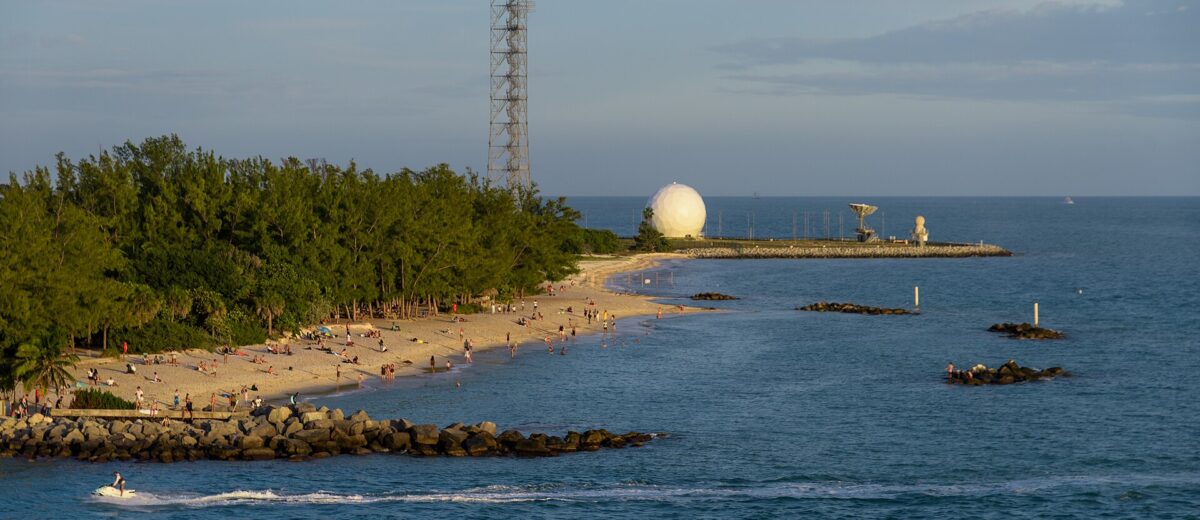
Walk into the water at Smathers Beach on a February morning after a cold front and the first step makes you gasp. Walk in at the same spot in August and it barely feels like getting wet: the sea is about the temperature of a bath that has been left to stand for ten minutes. Both of those are the Key West water temperature, and the gap between them — roughly twenty degrees from the coolest winter month to the warmest summer month — matters far more to how your trip goes than the brochure line that the water here is “warm all year.”
This guide gives month-by-month sea temperatures from NOAA’s own Key West gauge, explains what each range actually feels like for swimming, snorkeling and diving, and covers the two ends of the scale that catch visitors out: winter cold fronts and summer marine heat waves. Temperatures come from NOAA’s hourly readings for 2023 through mid-October 2026; health and water-quality guidance comes from the Florida Department of Health. Everything was checked in October 2026, and the last section shows you how to look up today’s reading yourself before you pack.
Key West water temperature at a glance
| Question | Short answer |
|---|---|
| Warmest months | July and August, averaging about 89°F at the Key West gauge |
| Coolest months | January and February, averaging about 73–75°F, with cold-front dips into the low 60s |
| Easy swimming without a second thought | Roughly May through October |
| Swimmable but bracing for many people | December through March |
| Thin wetsuit worth considering | Winter snorkel trips and any long dive from December to March |
| Water at its most comfortable for most snorkelers | Late spring (May and June) and fall (October and November) |
| Hottest reading at the gauge, 2023–2026 | 93.0°F in August 2023 |
| Coldest reading at the gauge, 2023–2026 | 61.2°F in February 2026 |
| Where to check today’s reading | NOAA station 8724580 (also listed as NDBC station KYWF1) |
Month-by-month sea temperatures
The figures below are monthly averages of NOAA’s hourly water-temperature readings at its Key West tide station (station 8724580). NOAA used to publish a tidy table of long-term coastal water temperature averages for places like Key West, but that product, the NCEI Coastal Water Temperature Guide, was retired in May 2025. The hourly data behind it still exists, so these are the actual monthly means for the last three full years, plus 2026 so far.
| Month | 2023 | 2024 | 2025 | Three-year average | 2026 |
|---|---|---|---|---|---|
| January | 74.9°F | 73.0°F | 69.7°F | 72.5°F | 72.0°F |
| February | 77.2°F | 71.4°F | 75.8°F | 74.8°F | 69.8°F |
| March | 79.2°F | 78.1°F | 75.7°F | 77.7°F | 78.4°F (partial month) |
| April | 82.6°F | 78.4°F | 79.1°F | 80.0°F | 80.3°F (partial month) |
| May | 85.3°F | 85.8°F | 85.0°F | 85.4°F | 86.1°F |
| June | 88.5°F | 86.8°F | 86.9°F | 87.4°F | 88.3°F |
| July | 90.8°F | 89.0°F | 88.3°F | 89.4°F | 89.6°F |
| August | 89.6°F | 88.4°F | 89.9°F | 89.3°F | 89.9°F |
| September | 87.9°F | 88.3°F | 87.1°F | 87.8°F | 88.4°F |
| October | 83.1°F | 82.5°F | 83.8°F | 83.1°F | 85.4°F (October 1–15) |
| November | 79.0°F | 78.2°F | 77.0°F | 78.1°F | — |
| December | 73.3°F | 72.6°F | 76.3°F | 74.1°F | — |
Three things are worth knowing before you read too much into a single number.
- The gauge is in the harbor, not on the reef. The sensor sits in shallow water on the harbor side of the island, about eight feet below the low-water mark. That makes it a good stand-in for the water you will wade into at a Key West beach, and a less exact guide to the open water over the reef several miles offshore.
- Winter varies far more than summer. Look at February: 77.2°F in 2023, 71.4°F in 2024 and 69.8°F in 2026. A run of cold fronts can knock five degrees off a winter month. Summer barely moves: every July and August in the table falls between 88°F and 91°F.
- Averages hide the swings inside a day. Shallow water warms through a sunny afternoon and cools overnight. The live reading on the afternoon of October 15, 2026 was 86.7°F, warmer than the October average, after an unusually warm first half of the month.
If you want the air temperatures, rainfall and hurricane-season picture to go alongside these figures, our Key West weather guide covers them month by month.
What the numbers actually feel like
A sea temperature means very little until you translate it into a body getting into the water. The bands below are a general guide rather than a rule; children, slim swimmers and anyone floating still over a reef will feel the cold sooner than an adult swimming laps.
| Water temperature | How it feels to most people | What to wear for an hour in the water |
|---|---|---|
| Below 70°F | Cold. A quick dip is fine; a long snorkel is not much fun. | A full wetsuit, or skip the long swim |
| 70–75°F | Fresh to chilly. Pleasant for ten minutes, shivery after thirty. | A shorty or a thin full suit for snorkeling |
| 75–80°F | Cool on entry, comfortable once you are moving. | Swimsuit for a swim; a rash guard or thin top for a long snorkel |
| 80–85°F | The sweet spot. Warm enough to float for an hour, still refreshing. | Swimsuit and a rash guard for sun |
| 85–90°F | Bathwater. No chill at all, but not much relief from the heat either. | Swimsuit; sun protection matters more than warmth |
| Above 90°F | Warm enough to feel sluggish; stressful for corals. | Swimsuit, shade, plenty of drinking water |
Put the month-by-month table next to that one and the year sorts itself out. From May to October the water is somewhere between “sweet spot” and “bathwater.” November and April sit around 78–80°F, which most people find perfect for a swim and a touch cool for a long float. December through March is the season when the water is genuinely variable, and when the answer to “is it warm enough?” depends on the week rather than the month.
The year in four seasons
Winter: December to February
Winter is high season in Key West, and the water is the one part of the trip that does not always live up to the sunshine. The three-year averages sit around 73–75°F, which is perfectly swimmable for a lot of visitors from the north, and much of the time the water in December is noticeably milder than in February. The catch is the cold front. In winter a front often sweeps down the Florida peninsula, the wind swings to the north, and for two or three days the shallow water near shore drops sharply. In February 2026 the harbor gauge bottomed out at 61.2°F, and in January 2025 it touched 64.6°F.
On those days the beaches are still lovely to sit on, but the water is for a dash in and out. Snorkel boats can also cancel or move to sheltered sites when a front brings a stiff north wind, and the churned-up water loses some of its clarity. If you are coming in winter specifically to snorkel, build a spare day into the plan and do not book the reef trip for the morning after a front comes through. Our month guides for December, January and February go into what those fronts do to the rest of the trip.
Spring: March to May
Spring is when the water catches up with the air. March averages around 78°F, April around 80°F and May jumps to about 85°F, which makes May one of the best months of the year to be in the sea. March is the awkward one: it coincides with spring break and with the last cold fronts of the season, so a family that books for mid-March can find water anywhere from refreshing to brisk. Most children will happily splash in 77°F water at the beach; fewer will last an hour floating over a reef without a thin wetsuit top.
By late April and May the winds are usually lighter, the water is warm, and the sargassum that can affect Atlantic-facing beaches later in the year has often not yet arrived in force. If your trip is flexible and you want warm water without summer’s heat, May is hard to beat.
Summer: June to August
From June the sea is simply warm, 87°F and up on average, and by July and August it hovers around 89°F at the gauge. There is no adjustment period when you walk in. That sounds ideal, and for snorkelers it mostly is: calm summer mornings often bring flat water and good visibility on the reef. The downside is that bathwater does very little to cool you off on a 90-degree afternoon, so plan to be in the water early and in the shade by midday.
Summer is also when two other things deserve your attention: sargassum seaweed, which can pile up on exposed shorelines (our Key West sargassum guide covers where and when), and the heat stress that very warm water puts on the coral reef. More on that below. Our Key West in July guide has the rest of the summer picture.
Fall: September to November
September is still summer underwater, averaging close to 88°F. October cools to the low 80s and November to about 78°F. These are some of the most comfortable months to swim and snorkel in Key West: the water has lost its bathwater edge but is still warm enough to float for an hour without a wetsuit. The trade-off is that September and October sit at the peak of hurricane season, so a trip in those weeks needs flexible bookings and travel insurance. Our Key West in October guide covers how to plan around that.
Swimming in Key West, month by month
Key West’s beaches are not the long surf beaches of Florida’s east coast. The reef several miles offshore takes the energy out of the waves, so the island’s beaches are mostly shallow, calm and sheltered. That has a direct effect on water temperature: shallow water heats up quickly in the sun and cools quickly when a front comes through, so the beach water swings further than the open sea.
- May to October: swim any time of day. The water is warmest in the late afternoon. Early morning is the most pleasant time to be in it, because the air is cooler and the sun is lower.
- November and April: the water is in the high 70s to around 80°F. Most people swim comfortably; pick the warmest part of the afternoon if you feel the cold.
- December to March: check the forecast for fronts. On calm, sunny days the water is fine for a swim. In the two or three days after a north wind, many visitors stick to a heated hotel pool instead.
That last point is worth a sentence of its own. If you are traveling in winter with children who want to be in water all day, ask your hotel whether the pool is heated before you book. A heated pool can be the difference between a happy week and a week of complaints, and it costs nothing to ask. Our Key West with kids guide has more on choosing a family base.
Snorkeling and diving by water temperature
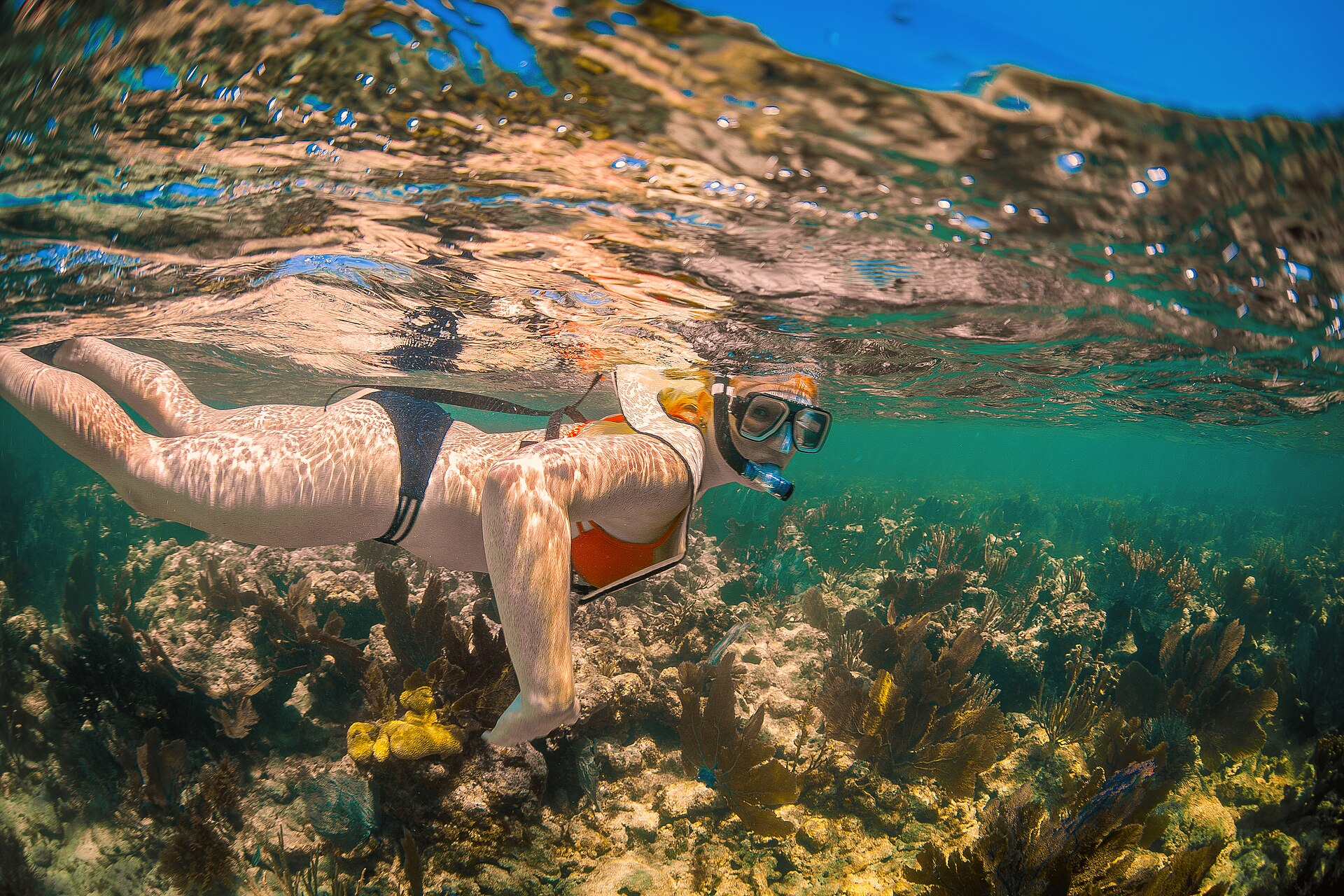
Water temperature matters more for snorkelers than for swimmers, because a snorkeler floats almost motionless for an hour or more and loses heat steadily the whole time. Water that feels fine for a ten-minute swim can leave you shivering by the end of a reef stop.
When to wear what
From May to October, a swimsuit and a rash guard are all most snorkelers want, and the rash guard is there for the sun rather than the cold. In April and November, people who feel the cold appreciate a thin long-sleeved top. From December to March, a shorty wetsuit or a thin full suit makes a long reef stop much more comfortable, especially on a breezy day when you climb back onto the boat wet. Most Key West snorkel and dive operators rent wetsuits; ask what they have when you book rather than assuming it will be on board.

Divers
Scuba divers spend longer in the water than snorkelers and lose heat faster, so most bring or rent more neoprene than a snorkeler would in the same month. Deeper sites, including the wreck dives that draw many divers to Key West, can feel cooler at depth than the surface reading suggests; ask the dive shop what water divers have been reporting that week before you choose a suit. Our Key West scuba diving guide covers the sites and the certification rules, and our Key West snorkeling guide covers the best reef trips and shore spots.
The best months for snorkeling
If water temperature were the only consideration, the best months would be May, June, October and November: warm enough to float for an hour without a wetsuit, without summer’s peak heat. In practice wind matters as much as temperature, because a breezy day stirs up the water and makes the boat ride rough. Late spring and early summer often combine warm water with calmer seas, which is why many regulars rate May and June as the best snorkeling of the year. For a reef further up the chain, our Looe Key Reef guide covers the Lower Keys’ best-known snorkel site.
When the water gets too hot: the summer of 2023
Very warm water is not only a comfort question. In the summer of 2023 the Florida Keys went through a marine heat wave that NOAA described as bringing coral heat stress never recorded before. At the Key West harbor gauge, July 2023 averaged 90.8°F, the warmest month in the table above, and the water peaked at 93.0°F in August.
The readings further up the Keys were more extreme. A sensor at Manatee Bay, in the shallow waters near Everglades National Park, recorded 101.1°F at 6 p.m. one day that July, after a morning low of 91°F, and the Johnson Key buoy recorded 98.4°F. Those numbers made headlines, but NOAA itself pointed out that those sensors sit in places where corals have never lived. The highest reading the head of NOAA’s Coral Reef Watch program had seen from an actual coral reef site was 93.2°F at Sombrero Reef, off Marathon.
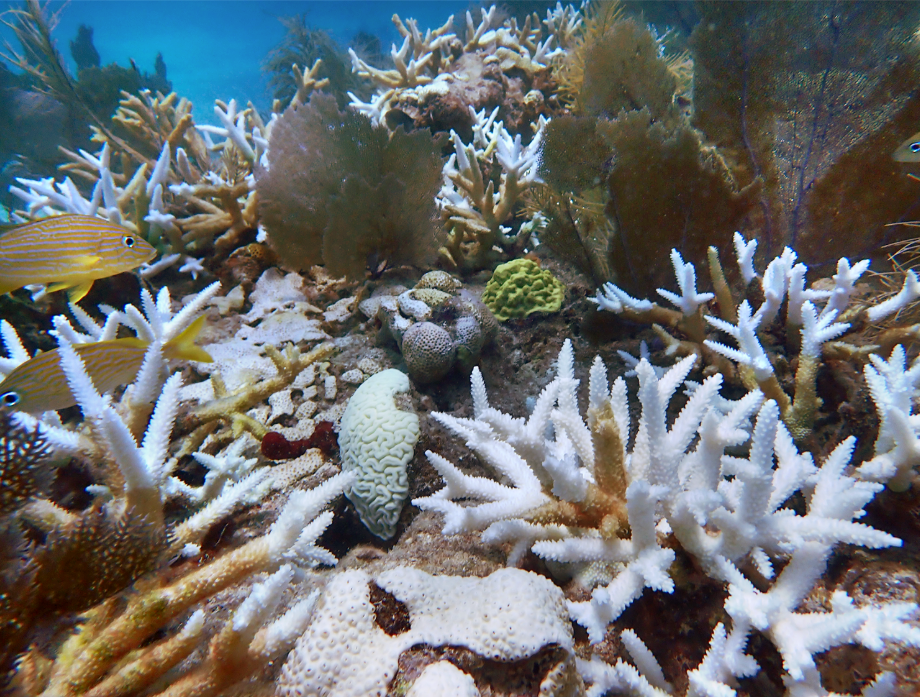
By August 17, 2023, NOAA reported that the whole of the Florida Keys was at its Alert Level 2 for coral heat stress, with the worst conditions in the Lower and Middle Keys, and that the heat stress had arrived five to six weeks earlier than ever recorded. Corals bleached across the reef tract. Follow-up surveys found heavy losses among staghorn and elkhorn corals, while most boulder and brain corals came through.
What that means for your trip
- Snorkeling during a heat wave is still allowed and still worthwhile. The fish do not leave, and many corals survive. But bleached coral is white rather than colorful, so set your expectations accordingly.
- Your behavior matters more on stressed reefs. Do not stand on or touch coral, keep fins off the bottom, and use a reef-safe sunscreen or cover up with a rash guard instead.
- Check NOAA Coral Reef Watch if you are traveling in August or September and want to know whether the reef is under heat stress that year. Its Florida Keys virtual station shows the current alert level.
Cold fronts and the coldest water
The National Weather Service office in Key West notes that the surrounding water keeps the island’s winter remarkably mild: monthly average air temperatures in winter are typically only about 15 degrees lower than in summer, and there is no record of frost, sleet or snow in Key West. The sea does the same job in reverse, and it is the sea that cools more slowly than the air.
But the shallow water close to shore does respond to a hard front. The coldest hourly readings at the harbor gauge since 2023 were 64.6°F in January 2025 and 61.2°F in February 2026. Those are short dips, not averages, and the water usually recovers within a few days as the wind drops and the sun comes back. If your winter trip coincides with one, it is a good few days for the museums, the Hemingway Home and long lunches rather than the beach.
Warm-water health and safety
Warm water brings a few things worth knowing about. None of them is a reason not to swim, but each is a reason to use a little sense.
Vibrio and open cuts
The Florida Department of Health warns that Vibrio vulnificus, a bacterium that occurs naturally in warm, brackish seawater, can infect people who expose an open wound to it. The department’s advice is straightforward: avoid exposing open wounds or broken skin to warm salt or brackish water. If you have a fresh cut, a recent tattoo or surgery, cover it or stay out of the sea until it heals, and get any wound that looks infected after a swim checked quickly.
Beach water quality
The Florida Department of Health’s Healthy Beaches program tests the water at public beaches, including those in Monroe County, for enterococci bacteria. Results are graded Good (0–35 per 100 mL), Moderate (36–70) or Poor (71 or more), and an advisory goes up when a sample tests above 70 and a resample is also above 70. Look up the latest results on the department’s beach water quality page before you swim, especially after heavy rain.
Sargassum
Sargassum seaweed tends to wash up on Atlantic-facing shorelines in the warmer months, and rotting piles can give off a rotten-egg smell. It is the main reason a beach that looks perfect in a winter photo can look very different in July. The sargassum guide explains which beaches are most affected and how to check the forecast.
Sun
Warm water lulls people into staying in longer than they planned, and the back of a floating snorkeler is in direct sun for the whole trip. A rash guard does more than any sunscreen, protects the reef from sunscreen chemicals, and means you will not spend day two of your holiday looking like a boiled shrimp.
How to check the water temperature before you go
The best source is the same one used for this guide: NOAA’s Key West tide station, station 8724580, which is also listed on the National Data Buoy Center as station KYWF1. Both show the latest water temperature, updated through the day, along with air temperature and wind. Read it with the harbor-side caveat in mind, and look at the wind as well: a north wind of 15 knots or more in winter usually means cooler beach water and choppier reef trips for the next day or two.
- NOAA Tides & Currents, station 8724580 (Key West): the latest reading and recent history.
- NDBC station KYWF1: the same station, with wind and pressure on one page.
- NOAA Coral Reef Watch: current heat-stress alert levels for the Florida Keys reef in late summer.
- Florida Department of Health, Healthy Beaches: the latest bacteria test results for Monroe County beaches.
Is it worth planning a trip around the water temperature?
For most visitors, only up to a point. If you are coming mainly for the town, the sunsets and the food, winter’s 73–75°F water is not a problem: you will swim on the warm days and skip it on the cold ones, and the dry, sunny weather more than makes up for it. If you are coming mainly to be in the water, especially to snorkel with children or to dive, the case for May, June, October or November is strong: warm water, no wetsuit, and less of the heat, crowds and prices of the extremes. Summer gives you the warmest water of all, but you pay for it in heat, storms and sargassum. Our best time to visit Key West guide weighs the water against everything else, and the month-by-month guide goes deeper on each month.
Whatever month you choose, pack for the water you will actually get: a rash guard in summer, a thin wetsuit top or shorty in winter if you plan to snorkel, and reef-safe sun protection all year. Our Key West packing list covers the rest.
Frequently Asked Questions
Is the water in Key West warm in winter?
Warm by northern standards, cool by Key West standards. The three-year averages at NOAA’s Key West gauge are about 73°F in January, 75°F in February and 74°F in December. Many visitors swim happily, but after a cold front the shallow water near shore can drop into the 60s for a few days.
What is the warmest month for water in Key West?
July and August are effectively tied, both averaging about 89°F at the Key West gauge from 2023 to 2025. July 2023 was the warmest single month in that period, at 90.8°F.
Can you swim in Key West in December and January?
Yes, on most days. December’s average is about 74°F and January’s about 73°F. Pick a calm, sunny afternoon and the water is refreshing rather than cold. On the days right after a cold front with a north wind, many people stick to a heated pool.
Do I need a wetsuit to snorkel in Key West?
Not from May to October, when the water is in the 80s. From December to March, a shorty or a thin full wetsuit makes a long reef stop much more comfortable. Most snorkel and dive operators rent them; ask when you book.
When is the best time to snorkel in Key West?
For water temperature alone, May, June, October and November are the sweet spot: warm enough to float for an hour without a wetsuit, without summer’s peak heat. Calm wind matters too, and late spring often has both.
Is the water warm enough for kids in March?
For splashing at the beach, usually yes: March has averaged about 78°F. For a long snorkel trip, many children get cold, so a thin wetsuit top or a shorty is worth it. March can also bring a late cold front, so check the forecast before you go.
How warm is the water in Key West in October?
October averaged about 83°F at the Key West gauge from 2023 to 2025, and the first half of October 2026 averaged 85.4°F. It is one of the most comfortable months for swimming and snorkeling, though it falls within hurricane season.
Where can I check the current Key West water temperature?
NOAA’s Tides & Currents page for station 8724580 (Key West) shows the latest reading, and the National Data Buoy Center lists the same station as KYWF1. Both update through the day.
Related Key West Guides
- Key West Weather: Month-by-Month Climate Guide
- Key West Snorkeling: The Best Reefs and Trips
- Key West Scuba Diving Guide
- Key West Sargassum Guide
- Key West Month by Month
- Best Time to Visit Key West
- Looe Key Reef Guide
Photo Credits
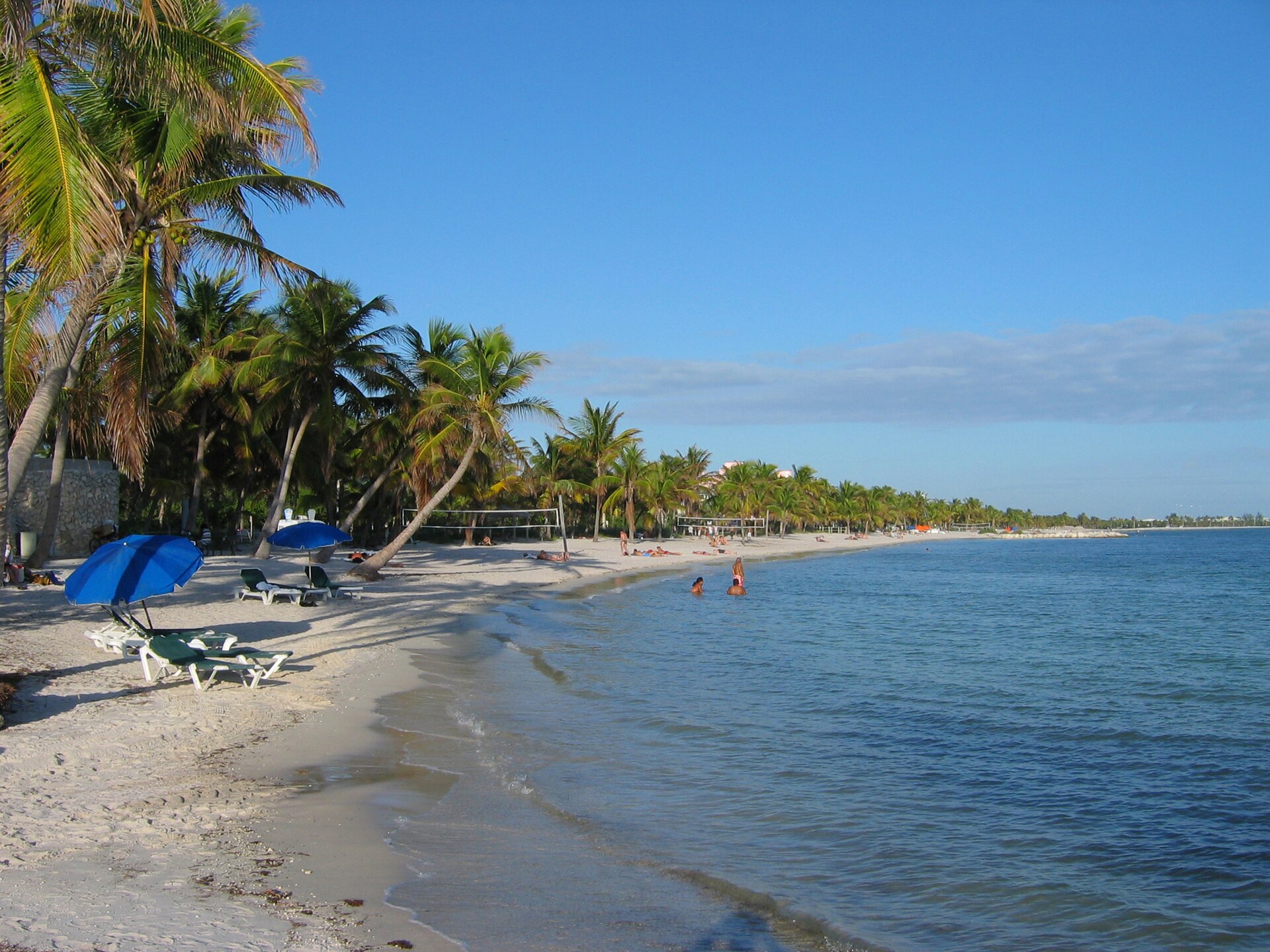
Swimmers at Smathers Beach: Florida Keys Scenic Highway – Smathers Beach in Key West – NARA – 7718453 by an unknown author (U.S. National Archives), Public domain, via Wikimedia Commons.
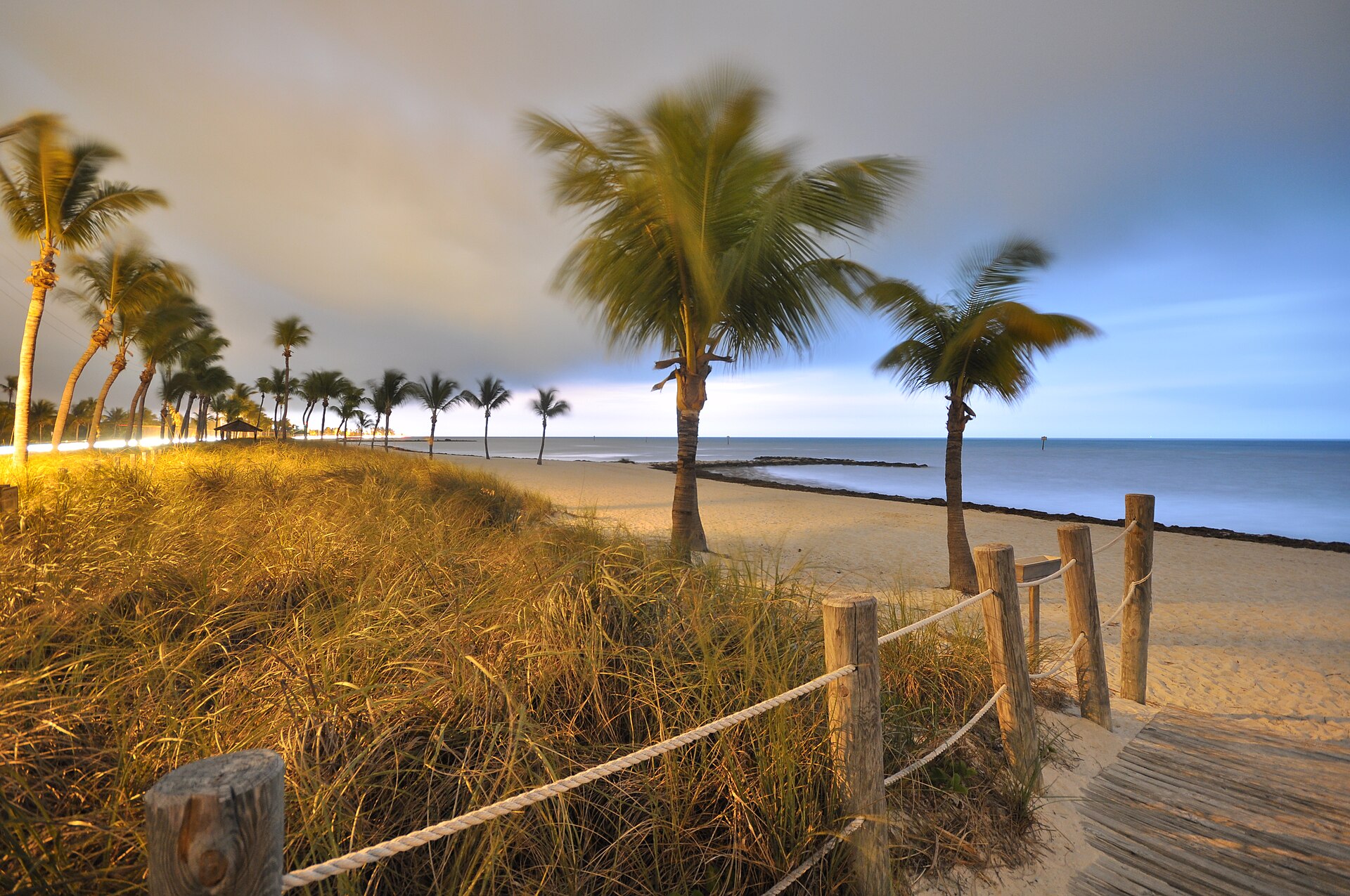
Windy morning at Smathers Beach: Early morning Smathers Beach Key West by Juliancolton, Public domain, via Wikimedia Commons.
Snorkeler over a Florida Keys reef: FKNMS – snorkeler (31136703280) by National Marine Sanctuaries, Public domain, via Wikimedia Commons.
Bleached corals at Sombrero Key Reef, 2023: Bleached brain corals staghorn corals Sombrero Key Reef summer 2023 by Ananda Ellis/NOAA, Public domain, via Wikimedia Commons.
Fort Zachary Taylor beach (featured image): Fort Zachary Taylor Beach from the West, Key West, Florida by Julian Lupyan, CC0, via Wikimedia Commons.
Sources & corrections
Rates, hours and closures verified against operator listings and on-island visits. Prices are peak-season unless noted.