Sheet 09 · Know Before You Go
Key West Accessibility Guide: Wheelchair-Friendly Travel
Flat and compact, with caveats: narrow Old Town sidewalks, historic steps and summer heat. How to get around Key West in a wheelchair or on a scooter, from accessible buses and lift-equipped trolleys to beach wheelchairs, rentals, attractions and parking with a placard.
Key West’s highest natural ground, Solares Hill, rises about 18 feet above sea level, so the hills that make so many old towns hard going are simply not part of the picture here. What the island has instead is history: wooden houses with steps up to the porch, sidewalks that share their width with utility poles and lamp posts, and a main street that can be shoulder to shoulder by evening. So is Key West wheelchair accessible? For the most part, yes, provided you plan around those three things and book the right vehicles before you arrive rather than after.
This guide covers getting to the island, the buses, trolleys and on-demand rides that carry wheelchairs, where to rent a scooter or borrow a beach wheelchair, which attractions you can and cannot get into, and the practical details: parking with a placard, dialysis, hurricane season and service animals. Fares, prices and policies were checked in November 2026 against the operators’ and the City of Key West’s own pages. Treat the figures as the right order of magnitude, and confirm anything you are relying on when you book.
Key West accessibility at a glance
| What | What to expect | Cost (November 2026) |
|---|---|---|
| Terrain | Flat; the highest natural point is about 18 feet | Free |
| Flying in | Concourse A at Key West International (opened April 2025) has eight jet bridges; arrange wheelchair help through your airline | Ask your airline |
| City buses | The City says all Key West Transit buses are fully wheelchair accessible | $2 one way; $1 reduced fare with proof of eligibility |
| Key West Rides (on-demand) | Tap the wheelchair icon in the app before you request a ride | $2 a ride, 6 a.m. to 8 p.m. |
| Old Town Trolley | Lift-equipped trolleys; phone ahead to have one assigned | Adult $54.95 ($52.20 online) |
| Conch Tour Train | Some trains have ramps; 24 hours’ notice preferred | Adult $42.95 ($40.80 online) |
| Scooter or wheelchair rental | Delivered to your hotel | Scooter $150 first day, $125 a day after |
| Beach wheelchairs | Free at Fort Zachary Taylor’s café, first come, first served | Park entry $6 per vehicle plus 50 cents a person |
| Parking with a placard | Up to four hours free at City meters | $250 fine for using an accessible space without a permit |
The lay of the land: flat, but not effortless
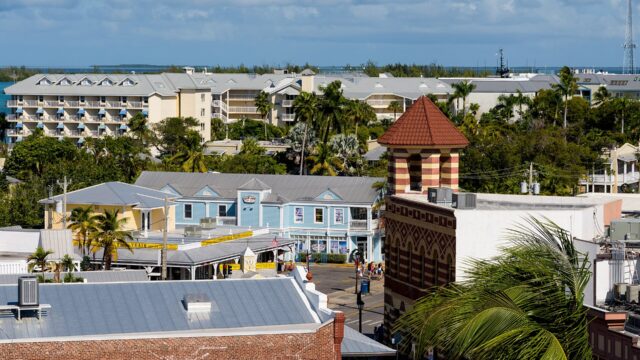
Flat is the good news, and it is genuinely good news. Old Town, where most of the sights, restaurants and guesthouses are, is a compact grid, and Duval Street, its spine, runs a little over a mile from the Gulf of Mexico to the Atlantic. There are no long climbs to dread and no hill towns to skip, which is more than most historic destinations can say.
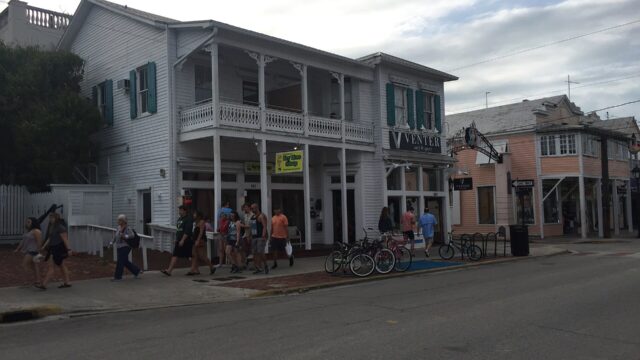
The sidewalks are where Key West earns its caveats. Old Town was laid out long before anyone thought about curb ramps, and plenty of its sidewalks are narrow. Utility poles and lamp posts stand in the path, café tables and parked bicycles take another bite out of the width, and tree roots can lift slabs out of line. Some blocks are perfectly smooth; the next one may send you out into the street to get around a pole. A practical habit is to scout your route on a map’s street view before you set off, and to favor the wider, busier streets over the prettiest lanes when you are on a schedule.
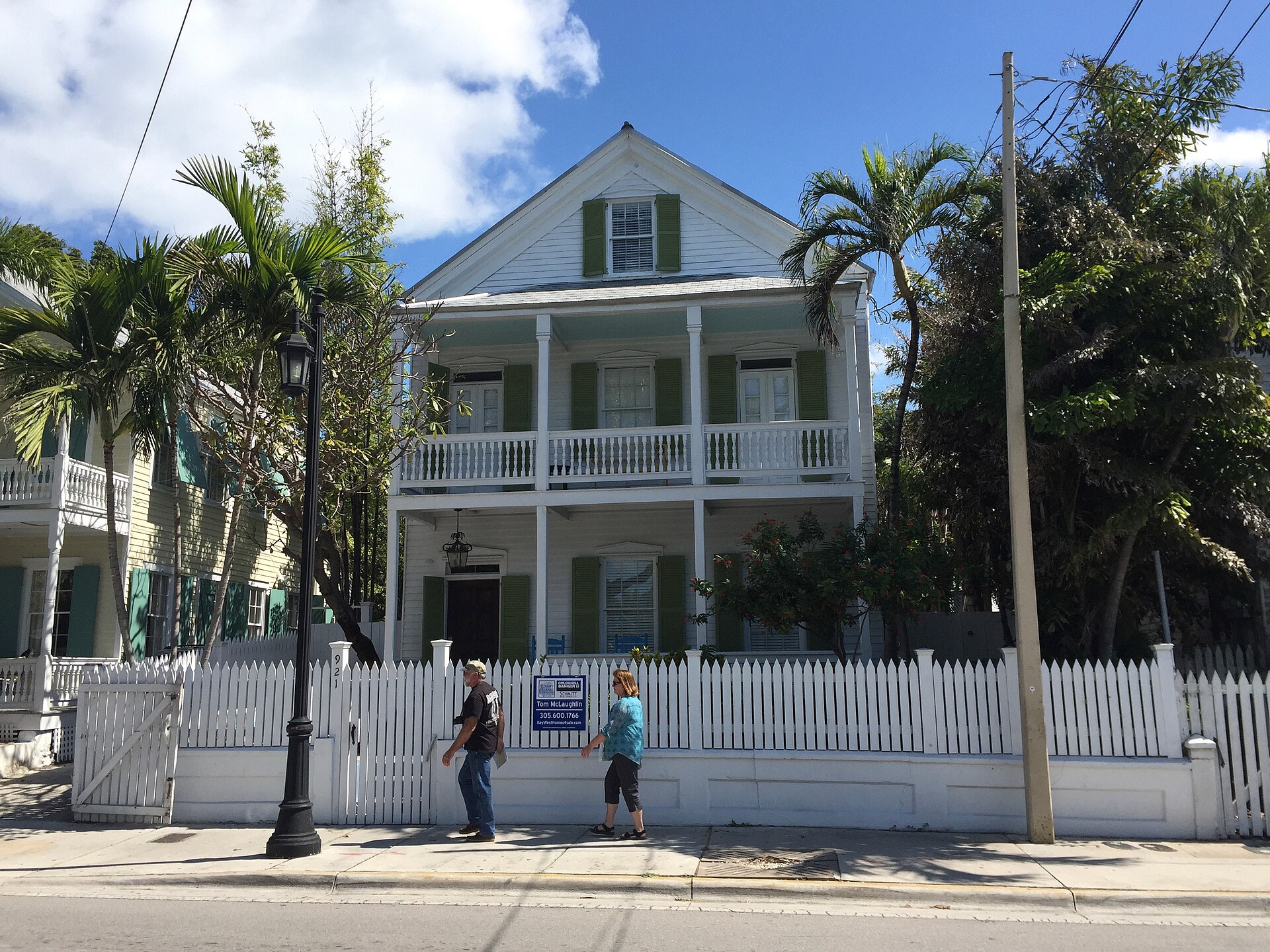
Crowds are the second variable. Duval Street gets busy in the evenings and on days when cruise ships are in, and the Sunset Celebration at Mallory Square draws a dense crowd to the waterfront every night. None of that makes those places off-limits, but it changes when you go: mornings are calmer everywhere.
Then there is the heat. Average highs at Key West International Airport run from about 76°F in January to 90.6°F in August, according to NOAA’s 1991–2020 normals, and the National Weather Service notes that standing in full sun can push the heat index up by as much as 15°F. That matters if you are pushing a manual chair, if you are relying on a scooter battery, and above all if heat affects your health. Plan outdoor sightseeing for the morning, save the middle of a summer day for somewhere air-conditioned, and carry water. December through April is the dry season, per the National Weather Service, and it is the easiest time of year for most travelers with mobility needs, although it is also the busiest and most expensive. Our Key West weather guide has the month-by-month detail.
Getting to Key West
Flying into Key West International
Key West International Airport (EYW) opened its new Concourse A on April 14, 2025, with eight passenger boarding bridges. The airport’s own accessibility page tells travelers to arrange wheelchair assistance, help with boarding and any other needs directly with their airline, ahead of time, and that is the single most useful thing you can do: note the request when you book, then confirm it a few days before you fly. For the security checkpoint, TSA Cares (1-855-787-2227) asks for at least 72 hours’ notice. The airport’s administration office is on (305) 809-5200 if something goes wrong on the ground.
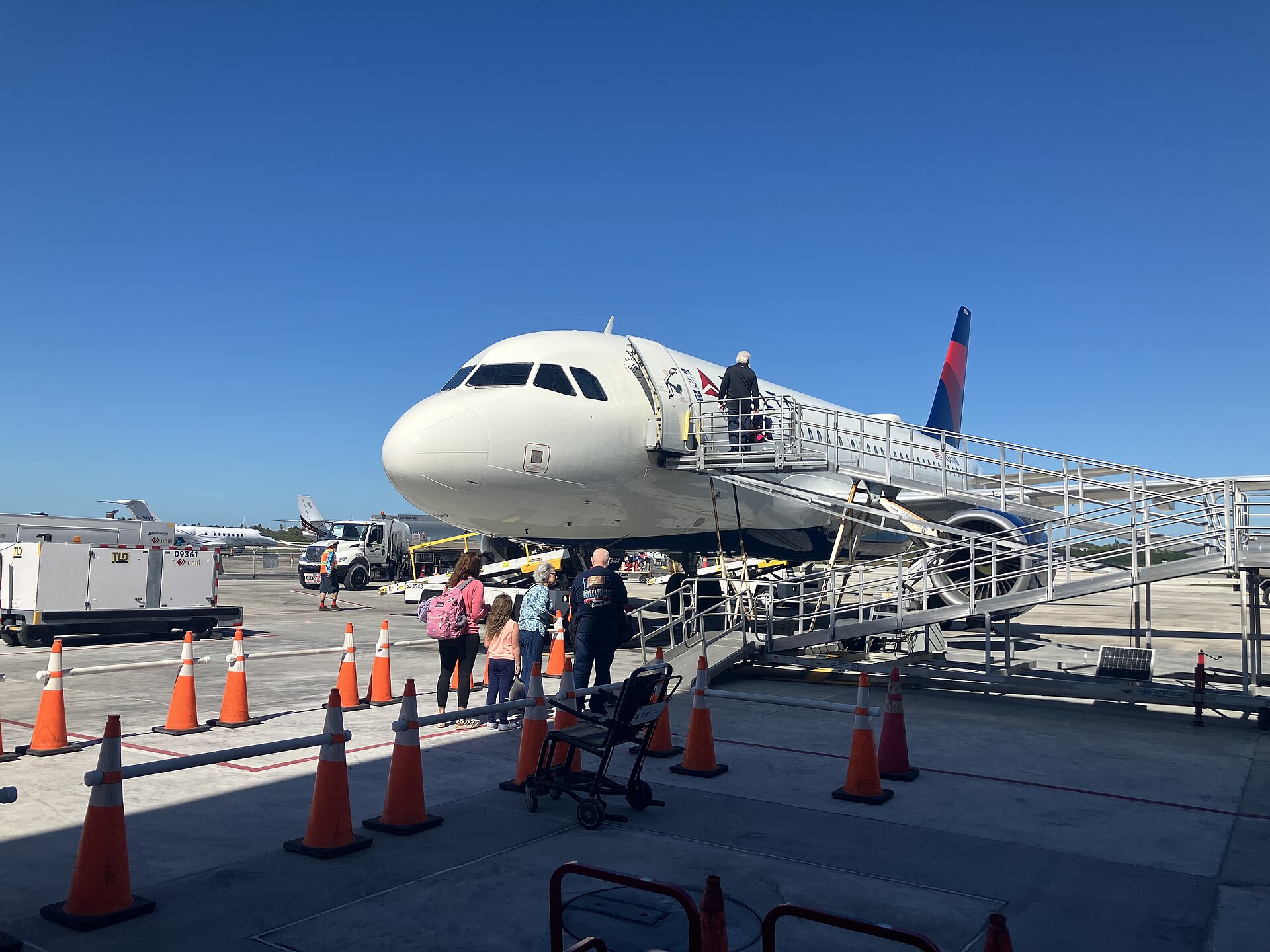
From the airport, the City’s Island Hopper buses stop at Key West International, and the City says all Key West Transit buses, Island Hopper included, are fully wheelchair accessible. The Florida Keys tourism council adds that many hotels arrange accessible shuttles from the airport, so ask yours when you book the room. Our Key West airport guide covers airlines, parking and the rest of the ground transport.
Driving down the Overseas Highway
Driving has real advantages for a traveler with a disability: your own vehicle, your own equipment, and no airline handling your chair. The drive from Miami takes roughly three and a half to four hours with no traffic, and the highway is often slower than that. Plan rest stops in Key Largo, Islamorada or Marathon rather than trying to do it in one push. Our guide to the drive to Key West has the route, and parking with a placard is covered below.
The Key West Express ferry
The Key West Express runs from Fort Myers Beach, leaving at 8 a.m. and taking about three and a half hours. Its FAQ says ramps lead onto the main deck, where all the amenities are, that there are no elevators to the upper seating areas, and that it can take standard-size, single-person mobility devices. A full-fare round trip is $194 for adults and $184 for seniors 62 and over. Our Key West Express guide has the full fare table.
Arriving by cruise ship
If you are coming in on a cruise, talk to the cruise line’s accessibility department before you sail about which pier you are likely to use and how passengers with wheelchairs get ashore, and book any accessible tour vehicles in advance, since a day in port leaves no slack. Our Key West cruise port guide explains where ships dock.
Getting around Key West with a wheelchair or scooter
City buses: Key West Transit
The City of Key West runs the buses, and its transit FAQ is unambiguous: all Key West Transit buses are fully wheelchair accessible. The City describes a fleet of 20 handicap-accessible buses serving Key West, Stock Island, the Lower Keys and Marathon, with the earliest route starting at 5:40 a.m. and the last at 10 p.m. The Island Hopper’s stops include Smathers, Higgs and Simonton beaches, the historic district, the airport, the Botanical Garden and Lower Keys Medical Center.
Fares on the City routes, effective since July 2025, are $2 one way, or $1 at the reduced fare, which covers riders with disabilities (with proof of eligibility), students up to 21 and military. Seniors 60 and over who do not live in Key West pay 50 cents; senior residents ride free. A seven-day pass is $8, or $5 at the reduced fare. On the longer Keys routes a one-way fare is $4, or $2 reduced, and a $12 One Day Super Pass covers both the City and Lower Keys routes. Children under five ride free with a fare-paying adult.
To get the reduced fare, show the driver a photo ID that proves eligibility when you pay. If you do not have one, the City sells a Reduced Fare ID card for $5 at its Department of Transportation office, 5701 College Road; bring a photo ID and proof of eligibility. Drivers do not make change, so carry the exact fare or use the Token Transit app.
Key West Rides, the on-demand service
The Duval Loop shuttle was suspended in January 2026, and its stops are now covered by Key West Rides, the City’s on-demand service across Key West and Stock Island. You book in the app, a ride costs $2, and it runs from 6 a.m. to 8 p.m. every day except Thanksgiving, Christmas and New Year’s Day. If you use a wheelchair or a large mobility device, tap the wheelchair icon in the app before you request the ride, so the right vehicle is sent. For booking help, call 305-809-3910.
ADA paratransit
The City is setting up an ADA complementary paratransit service for riders who cannot use the regular buses: curb-to-curb rides by reservation within three-quarters of a mile of the bus routes, 6:45 a.m. to 6:50 p.m. daily, bookable up to the day before, at $4 a trip. Its plan, dated March 2026, says visitors are served on the same basis as local riders for at least 21 days in any 365-day period, on showing their home system’s paratransit ID or proof of visitor status, plus proof of disability if it is not apparent. Check the City’s paratransit page or call 305-809-3910 to confirm the service has started before you build a trip around it.
Old Town Trolley and the Conch Tour Train
Both of Key West’s narrated sightseeing tours can carry wheelchair users, but neither does it on every vehicle, so the phone call comes first and the ticket second.
- Old Town Trolley says it runs wheelchair-accessible trolleys with hydraulic lifts and asks you to phone (855) 623-8289 in advance so one can be arranged. A one-day ticket is $54.95 for adults at the gate or $52.20 online, and $19.95 for children 4 to 12 ($18.95 online). It is a hop-on, hop-off tour, so ask when you call where along the route the lift can be used.
- The Conch Tour Train says some of its trains have ramps that can take wheelchairs and scooters. It asks for as much notice as possible of the date and time you want to ride, with 24 hours preferred, and for you to be at its departure point by Mallory Square at least 15 minutes before the tour leaves. Adult tickets are $42.95 at the gate or $40.80 online.
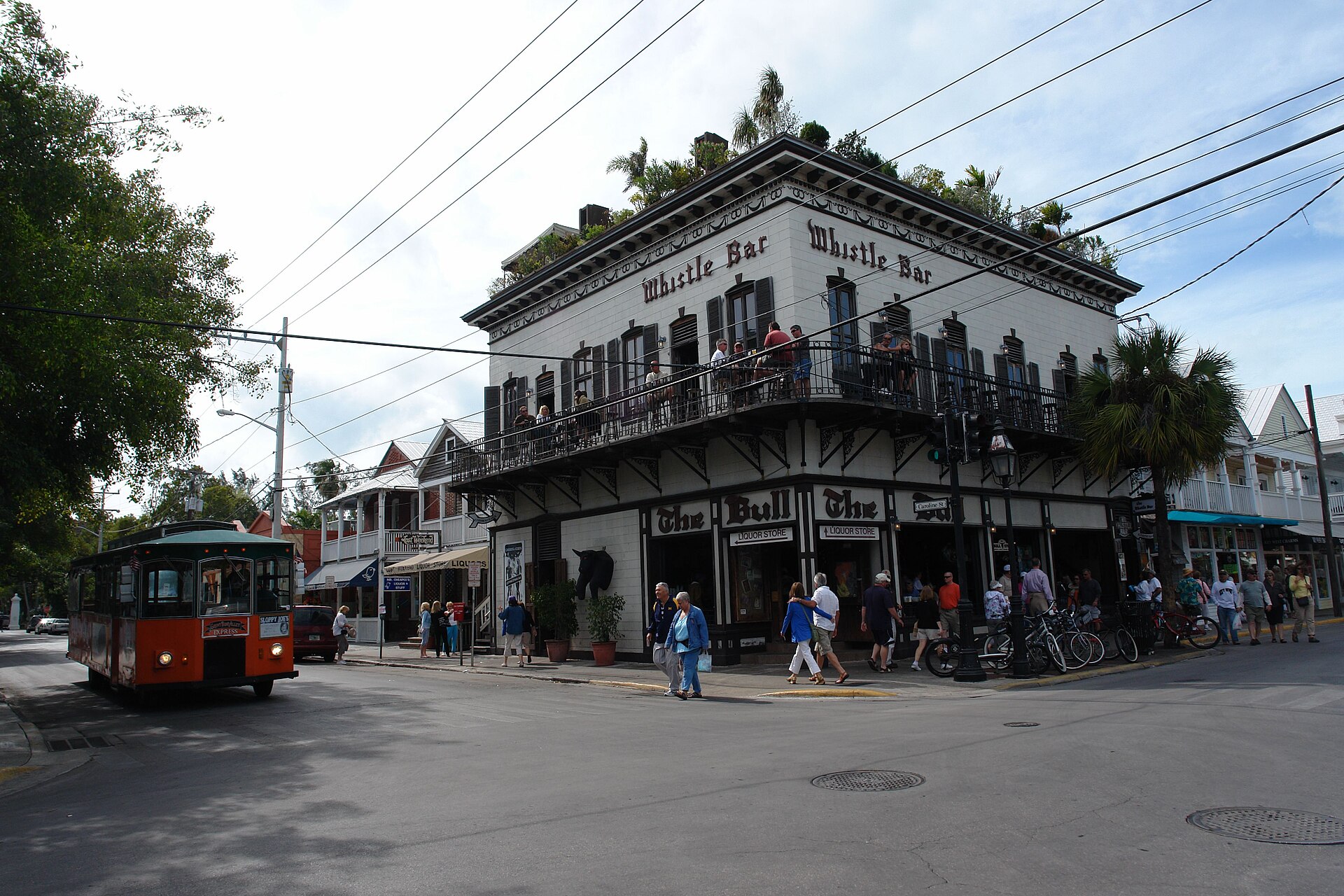
Either tour is the easiest way to see the whole of Old Town in one sitting if a long day of pushing or driving a scooter in the sun does not appeal, and both drivers narrate the history as they go. Our guide to the Conch Tour Train compares the two tours in more detail, and the wider Key West transportation guide covers everything else that moves on the island.
Taxis and ramp vans
A ramp-equipped taxi is not something to count on finding at the curb. If you need one, ask your hotel to arrange it, or call the taxi companies well ahead and ask specifically for a vehicle with a ramp or lift, and book the airport transfer before you fly rather than after you land.
Parking with a disabled placard
If you drive, the City’s parking FAQ says a vehicle carrying a disabled person and displaying a placard may park in a handicapped space, or at a municipal meter for up to four hours without paying, though residential-permit rules still apply. Florida recognizes disabled plates and placards from other states, and from countries that issue permits carrying the international symbol of accessibility, as long as the issuing state does the same for Florida residents (Florida Statute 316.1958). Parking in an accessible space without a valid permit costs $250. Our Key West parking guide lists the City garages and lots, and do you need a car in Key West? weighs whether to bring one at all.
Renting a wheelchair, scooter or beach wheelchair
If you would rather not fly your own equipment in, two Key West companies rent it and bring it to you.
- Island Comfort Mobility, 5170 US Highway 1 (305-453-6456), lists mobility scooters at $150 for the first day and $125 for each additional day, power wheelchairs at $100 and $75, and manual wheelchairs at $50 and $30, with free delivery and pickup. The store is open 8 a.m. to 5 p.m. Monday through Saturday and on call on Sundays, and reservations can be canceled up to 48 hours ahead.
- The Hip Tourist rents wheelchairs, scooters, walkers and other assistive devices, with delivery and setup in Key West. Ask for prices when you book.
Do the arithmetic for a longer stay. At Island Comfort Mobility’s rates, a week with a scooter comes to $900, a week with a power chair $550 and a week with a manual chair $230. If you own a travel scooter or a folding power chair that your airline will carry, bringing it may well cost less and will certainly be set up the way you like it; if you are driving down, bring your own without a second thought. Whichever you choose, book ahead for winter and holiday weeks.
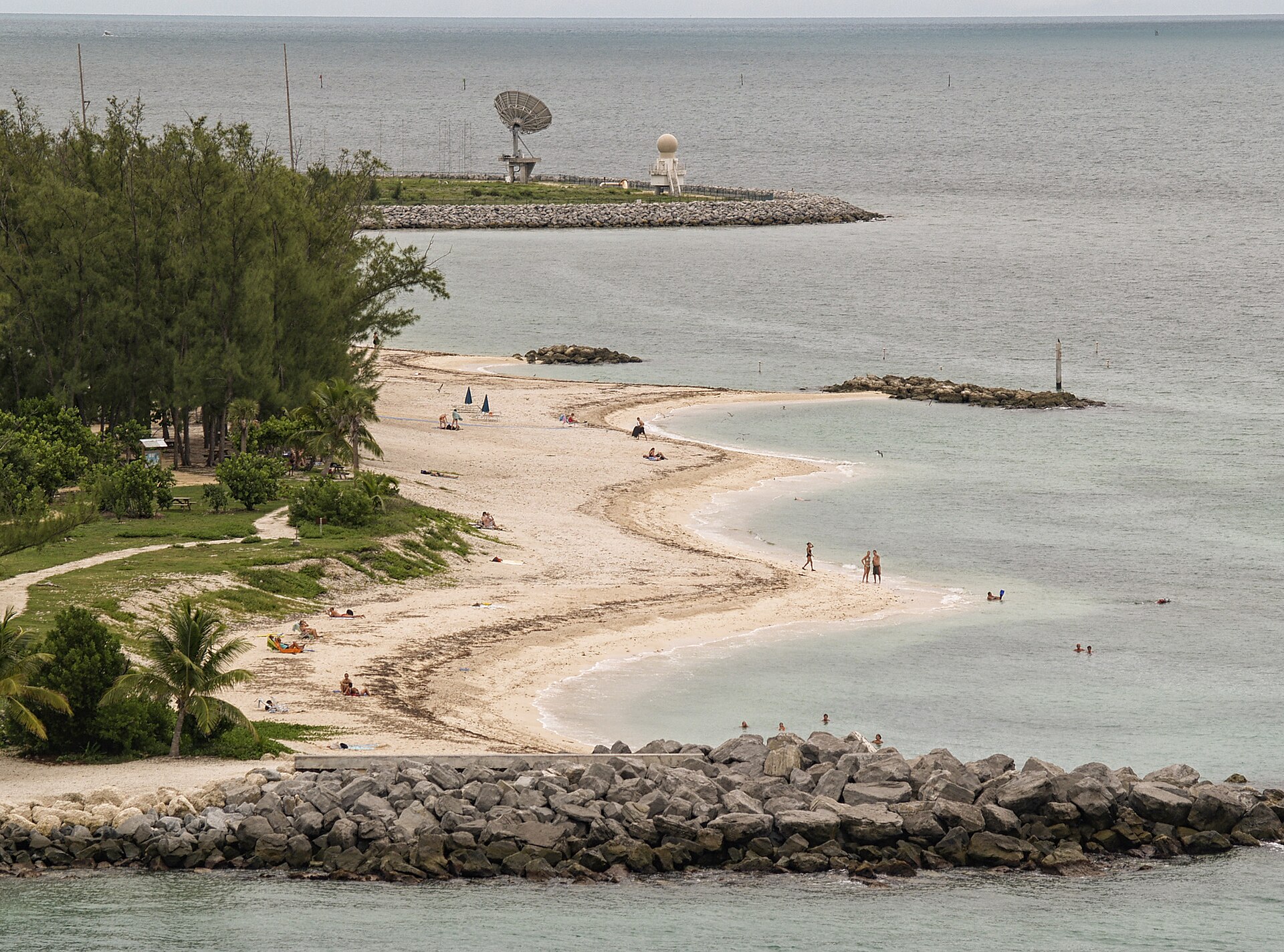
For the sand, Fort Zachary Taylor Historic State Park lends beach wheelchairs free of charge. They are kept at the park’s café and go first come, first served, so arrive early on a busy winter weekend. Further up the Keys, the Florida Keys tourism council says Bahia Honda, Curry Hammock and John Pennekamp state parks also have beach wheelchairs, along with accessible trails and restrooms. For the City’s own beaches, Smathers and Higgs, ask the City of Key West about equipment before you go.
Beaches and the waterfront
Fort Zachary Taylor is the best bet for a wheelchair user who wants to get onto the sand, thanks to those free beach wheelchairs. The park is open from 8 a.m. to sundown every day of the year, with the fort itself closing at 5 p.m. Entry is $6 per vehicle (up to eight people) plus a 50-cent-per-person Monroe County surcharge, $4.50 for a single-occupant vehicle and $2.50 on foot or by bike. Old Town Trolley’s Truman Annex stop is a short distance away. Our Fort Zachary Taylor beach guide has more on the park.
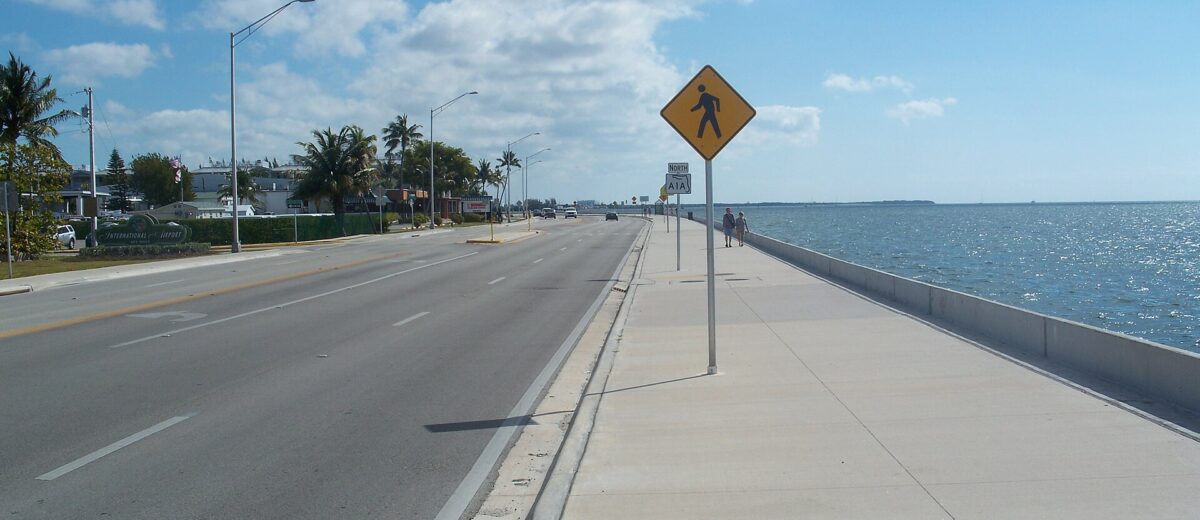
Smathers Beach and Higgs Beach, the City’s two main strands, are both on the Island Hopper’s list of stops, and Old Town Trolley’s Casa Marina stop is the one for Higgs. Along the south shore, a wide seaside sidewalk follows South Roosevelt Boulevard, which makes for a level roll with the Atlantic beside you. Our guides to Smathers Beach and Higgs Beach cover the facilities.
Mallory Square is where Key West gathers every evening for the Sunset Celebration. Its organizers describe it as a nightly arts festival, and it is free to attend. The square is paved and open, which makes it one of the easier evening outings on the island, but the best viewing spots fill fast, so arrive early if you want a clear view rather than a view of backs. In April 2025 the City closed the outer 45 feet of the square, along the seawall, because of structural damage, and the celebration moved back from the water; check the City of Key West’s notices for whether that edge has reopened. Our Mallory Square sunset guide has the rest.
Bahia Honda State Park, at mile marker 37, is a long drive for a beach day but worth it, and it is one of the parks the tourism council lists with beach wheelchairs. Entry is $8 per vehicle plus 50 cents a person. See our Bahia Honda State Park guide before you go.
Attractions: what you can and cannot reach
A handful of Key West’s attractions publish clear accessibility statements. Here is what the operators themselves say, with adult prices as of November 2026.
| Attraction | What the operator says about access | Adult price |
|---|---|---|
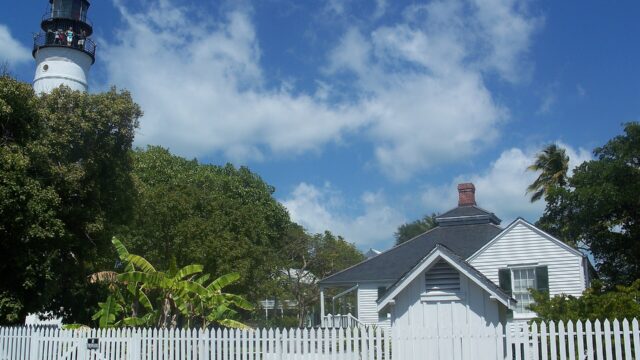
| Key West Lighthouse & Keeper’s Quarters, 938 Whitehead St. | The property is fully ADA accessible except the tower, which is 88 steps | $17 ($15.50 online); seniors $13 |
| Fort East Martello | Fully ADA accessible except the citadel; two restrooms on site | Check the Key West Art & Historical Society’s site |
| Fort Jefferson, Dry Tortugas | Wheelchairs can use the first tier, on grass or brick walkways, plus the outside trail; the upper tiers are out of reach (National Park Service) | Ferry day trip $260, park fee included |
| Fury glass-bottom boat | Manual wheelchairs only, four per trip; no electric wheelchairs | Check when booking |
The lighthouse is a good example of what partial access means in practice. You can explore the grounds, the keeper’s quarters and the museum, but the view from the top is reached only by climbing those 88 steps, so if you are traveling with someone who will make the climb, the grounds are a pleasant place to wait. Our Key West Lighthouse guide covers the museum and the history.
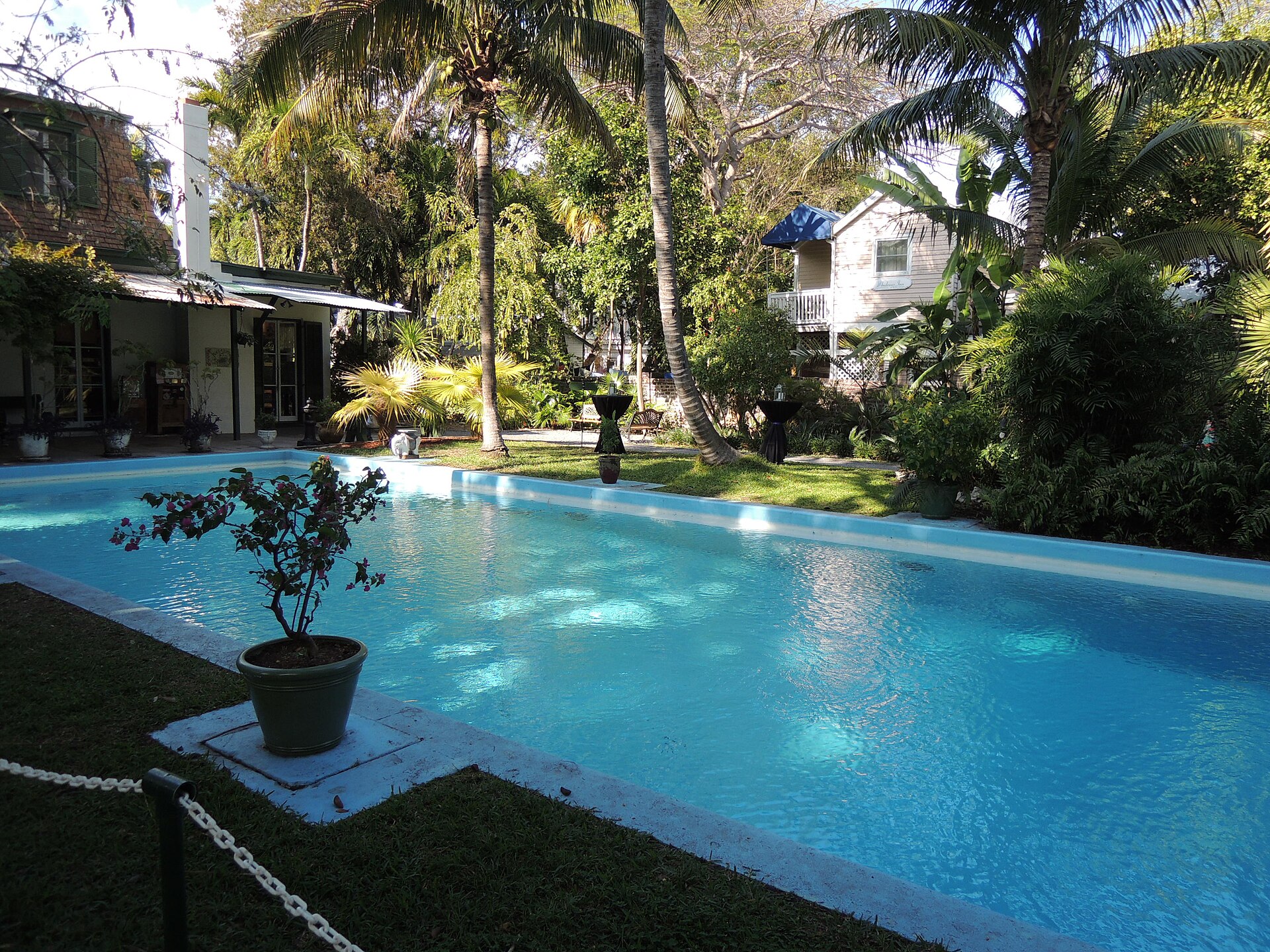
For the rest of the big names, call ahead and ask your specific questions: whether there are steps at the entrance, which floors you can reach, where the accessible restroom is, and whether there is somewhere shaded to sit. That applies to the Ernest Hemingway Home (open 9 a.m. to 5 p.m. daily, adults $19, tickets sold at the gate only; customer line 305-294-1136), the Harry S. Truman Little White House (adults $26), the Mel Fisher Maritime Museum (adults $17.50), the Key West Aquarium (adults $20.99, or $15.99 online), the Key West Shipwreck Treasure Museum (adults $18.26, or $18 online), the Key West Butterfly & Nature Conservatory, the Custom House, now styled the Key West Museum of Art & History, and the Audubon House. Historic buildings vary room by room, and a two-minute call saves a wasted taxi fare. Our guides to the Hemingway House and to Key West’s museums describe what is inside each one.
One famous photo stop has a stand-in for now. While the City rebuilds the street end at South and Whitehead, the original Southernmost Point buoy is boxed up, and a full-size replica stands in a pedestrian plaza at 1400 Duval Street.
Out on the water
Boat policies vary more than anything else in Key West, because they depend on the vessel, the dock and the crew. Fury’s glass-bottom boat publishes a clear one: manual wheelchairs are allowed, up to four per trip; electric wheelchairs are not; one manual wheelchair is available for guests to use on board; and guests need someone to help them to and from the chair. Only service dogs are allowed. Our glass-bottom boat guide covers the trip itself.
For a sunset sail or a snorkel trip, ask the operator four questions before you pay: how passengers board (a level gangway, a ramp or a step down), whether the boat can take a power chair, where the restroom is and whether you can reach it, and what happens if the sea is rough on the day. A crew that answers those clearly is a crew that has done this before. Our sunset cruise guide compares the boats.
Dry Tortugas and Fort Jefferson
A day at Fort Jefferson is possible in a wheelchair, with limits. The National Park Service says the Yankee Freedom ferry has lifts at its Key West dock, which need advance notice, and that there is a ramp at the Fort Jefferson dock suitable for power and manual wheelchairs. On the island, wheelchair users can reach the fort’s first tier, on grass or brick walkways, and the outside trail; the second and third tiers are out of reach. The ferry leaves Key West at 8 a.m. and reaches the fort about two and a half hours later, so it is a long day. The adult fare is $260 and seniors 62 and over pay $250, with the park entrance fee included. Arrange the lift when you book, and call the ferry on 1-800-634-0939 to confirm. The Yankee Freedom allows only service dogs on board, not emotional support animals.

The tourism council also says the ferries to the Dry Tortugas and to Sunset Key offer wheelchair-friendly boarding, and advises confirming the details when you reserve. Our Dry Tortugas day trip guide covers the ferry, the seaplane and what to pack.
Choosing an accessible place to stay
This is the decision that makes or breaks the trip, and it is worth more of your time than any other. Old Town’s guesthouses are mostly converted historic homes, with steps at the entrance and rooms upstairs, and the smallest ones may have no accessible room at all. Larger and newer hotels are more likely to have elevators and purpose-built accessible rooms, but “accessible” can mean anything from a grab bar to a full roll-in shower, so ask the hotel directly, before you pay:
- Is the room on the ground floor, or is there an elevator, and is the route from the parking or the drop-off point step-free?
- Does the bathroom have a roll-in shower or a tub with a bench, and how wide is the bathroom door?
- How high is the bed, and is there clear space beside it for a chair or scooter?
- Is there an outlet near the bed for charging, and somewhere to park a scooter overnight?
- Are the pool, the breakfast room and the restaurant reachable without steps?
The Florida Keys tourism council says many hotels provide accessible rooms with features such as visual alarms, door-knock lights and TTY kits, which are worth requesting if you are deaf or hard of hearing. Get the room type confirmed in writing, and call again a week before arrival. Location matters too: a hotel near an Island Hopper stop, or within easy reach of the sights you care about, cuts down on the daily rolling. Our guide to where to stay in Key West explains the neighborhoods.
Health, hurricanes and service animals
Medical care and dialysis
The island’s hospital is Lower Keys Medical Center, 5900 College Road, (305) 294-5531; in an emergency, call 911. For dialysis, Fresenius Kidney Care has a center in Key West at 3214 Flagler Avenue (1-786-538-3617). Arrange treatments with your own care team well before you travel, since a center needs your records in advance.
Hurricane season
The Atlantic hurricane season runs from June 1 to November 30. If a storm threatens, Monroe County’s evacuation orders put visitors first: ahead of Hurricane Irma in 2017, the county ordered visitors out on the morning of September 6, before the order for residents. Anyone who depends on powered equipment, or who would need help to leave, should take an early evacuation call seriously and travel with a flexible booking. Monroe County Emergency Management runs a Special Needs Registry (305-292-4591) and notifies registrants of evacuations through its alert system; if you spend a long season on the island, call to ask whether it can cover you.
Service animals
Florida law (Statute 413.08) requires businesses open to the public to admit service animals, and it makes knowingly misrepresenting an animal as a service animal a second-degree misdemeanor, with 30 hours of community service on top. The tour operators here draw the line clearly: Old Town Trolley, the Conch Tour Train, the Yankee Freedom ferry and Fury all accept service dogs but not emotional support animals.
An easy accessible day in Key West
Here is one way to string the pieces together, built around the heat and the crowds rather than against them:
- 8 a.m.: Fort Zachary Taylor opens. Borrow a beach wheelchair from the café before the park fills, and get the swim or the sea view in while it is cool.
- 10 a.m.: The Key West Lighthouse and Keeper’s Quarters open. Explore the grounds and the museum; let a companion climb the tower if they want the view.
- Midday: Lunch, then an air-conditioned museum you have called ahead about.
- Afternoon: The Old Town Trolley loop on a lift-equipped trolley you booked by phone, for the narrated overview of everything you did not reach on your own.
- Before sunset: Mallory Square, early enough to claim a good spot before the crowd closes in.
Frequently Asked Questions
Is Key West wheelchair accessible?
Mostly. The island is flat, its highest natural point being about 18 feet, and the City says all Key West Transit buses are fully wheelchair accessible. The difficulties are narrow Old Town sidewalks with poles and lamp posts in them, historic buildings with steps, evening crowds and summer heat. Book accessible vehicles, rentals and rooms ahead and the island works well.
Are Key West buses wheelchair accessible?
Yes. The City of Key West says all Key West Transit buses, including the Island Hopper service, are fully wheelchair accessible. City fares are $2 one way, or $1 at the reduced fare for riders with disabilities who show proof of eligibility. The on-demand Key West Rides service costs $2 a ride; tap the wheelchair icon in the app before you book.
Where can I rent a mobility scooter or wheelchair in Key West?
Island Comfort Mobility (305-453-6456) lists scooters at $150 for the first day and $125 a day after, power wheelchairs at $100 and $75 and manual wheelchairs at $50 and $30, with free delivery and pickup. The Hip Tourist also rents wheelchairs, scooters and walkers with delivery; ask for prices when you book.
Are there beach wheelchairs in Key West?
Yes, at Fort Zachary Taylor Historic State Park, which lends them free from its café on a first-come, first-served basis. The Florida Keys tourism council says Bahia Honda, Curry Hammock and John Pennekamp state parks have beach wheelchairs too. For Smathers and Higgs, ask the City of Key West before you go.
Is the Hemingway House wheelchair accessible?
Call the Ernest Hemingway Home on 305-294-1136 before you go and ask about steps, which rooms you can reach and restrooms, since access in a historic house varies from room to room. The house is open from 9 a.m. to 5 p.m. daily, and adult tickets are $19 at the gate.
Can wheelchair users visit the Dry Tortugas?
Yes, with limits. The National Park Service says the Yankee Freedom ferry has lifts at the Key West dock (book them in advance) and there is a ramp at the Fort Jefferson dock. Wheelchair users can explore the fort’s first tier, on grass or brick walkways, and the outside trail, but not the upper tiers.
Do disabled parking placards get free parking in Key West?
The City says a vehicle carrying a disabled person and displaying a placard can park in a handicapped space, or at a municipal meter for up to four hours without paying; residential-permit rules still apply. Florida recognizes out-of-state placards from states that recognize Florida’s.
Related Key West Guides
- Key West FAQ: Know Before You Go
- Key West Transportation Guide
- Key West Conch Tour Train
- Do You Need a Car in Key West?
- Key West Parking Guide
- Key West Airport Guide
- Key West Beaches Guide
- Dry Tortugas Day Trip
- Where to Stay in Key West
Photo Credits
South Roosevelt Boulevard seaside sidewalk (featured image): Key West FL A1A-01 by Ebyabe, CC BY-SA 3.0, via Wikimedia Commons.
Whitehead Street sidewalk: Whitehead Street, Key West, FL by w_lemay, CC0, via Wikimedia Commons.
Passengers on the apron at Key West International: EYW deplaning onto tarmac during airport expansion by GRALISTAIR, CC BY 4.0, via Wikimedia Commons.
Old Town Trolley by the Bull and Whistle: Key West Whistle Bar by Kolossos, CC BY-SA 3.0, via Wikimedia Commons.
Fort Zachary Taylor Beach: Fort Zachary Taylor State Park 609 by Gillfoto, CC BY-SA 4.0, via Wikimedia Commons.
Hemingway Home pool: ErnestHemingwayHouse021 by Abujoy, CC BY 3.0, via Wikimedia Commons.
Fort Jefferson bastion and moat wall: Bastion and Moat with Moat wall (6022110701) by Dry Tortugas NPS, CC BY 2.0, via Wikimedia Commons.
Sources & corrections
Rates, hours and closures verified against operator listings and on-island visits. Prices are peak-season unless noted.