Sheet 07 · Florida Keys
Bahia Honda State Park: Beaches, Camping, and Snorkeling Guide
The only real natural sand beach in the Florida Keys: how the three beaches differ, 2026 entry fees, the Looe Key snorkel trip, how to actually get a campsite, and the sargassum nobody photographs.
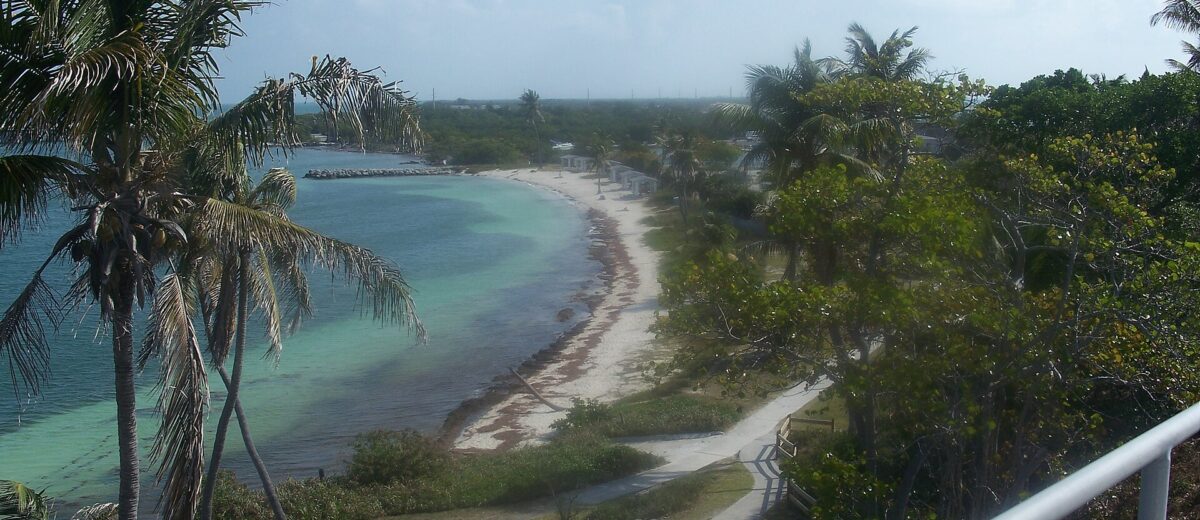
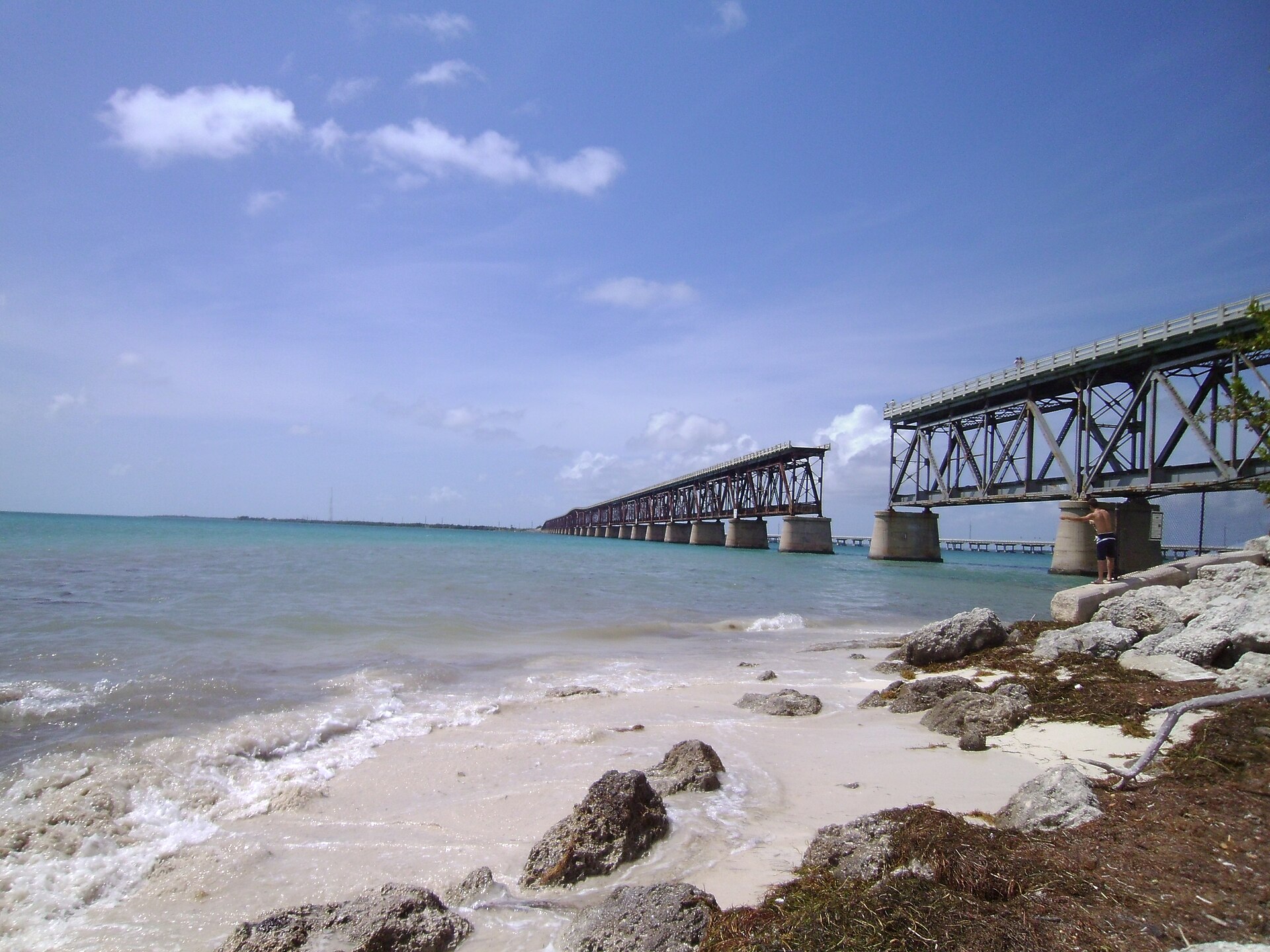
Stand on the abandoned rail bridge at the north end of the park and you can see why the sand is here. A deep tidal channel — bahía honda, deep bay — runs hard past the island, scouring and sorting the bottom in a way that happens almost nowhere else in the archipelago. Everywhere else in the Keys the offshore reef eats the wave energy before it can build a beach. Here it does not, and the result is that Bahia Honda State Park holds the only stretch of genuinely deep, genuinely wide natural sand in the Florida Keys.
This guide covers the three beaches and how they differ, the camping and the cabins and how people actually get them, the snorkel trips and kayaking, the sargassum problem nobody wants to discuss, and the practical business of arriving before the gate closes. Fees and hours were checked in September 2026; confirm with the park before you build a day around one.
At a glance: costs and hours
| Item | 2026 price | Notes |
|---|---|---|
| Entry, vehicle with 2–8 people | $8 plus $0.50 per person | The 50 cents is a Monroe County surcharge |
| Entry, single-occupant vehicle or motorcycle | $4.50 | Surcharge included |
| Entry, pedestrian or cyclist | $2.50 | Surcharge included; also applies to extra passengers |
| Opening hours | 8:00 a.m. to sundown | 365 days a year; gate closes when lots are full |
| Campsite | Around $36 a night plus fees and tax | Three campgrounds; reservations open 11 months ahead |
| Waterfront cabin | From around $160 a night | Six cabins, three duplex buildings; book the day the window opens |
| Reef snorkel trip from the park marina | $40–$60 adult | Roughly 3.5 hours; gear usually included or a small extra |
| Kayak rental | $15–$30 an hour | Single and double; bay-side launch is sheltered |
| Beach chair or umbrella | $10–$15 each | Concession at Calusa; bring your own and save it |
Where it is, and how to arrive
The park occupies most of Bahia Honda Key at MM 36–37, between the west end of the Seven Mile Bridge and Big Pine Key. It is 12 minutes from Big Pine, 25 minutes from Marathon and about 40 minutes from Key West — roughly 37 miles, which makes it the furthest of the genuinely worthwhile day trips out of the southernmost city and the only one where the payoff is sand.
The single most important piece of planning advice about Bahia Honda is about timing, not tickets. The park has finite parking, and when the lots are full the ranger closes the gate and holds cars on the highway shoulder until somebody leaves. On February and March weekends, spring break and every public holiday, that can happen between 10:00 and 11:00 in the morning. Arrive at opening, or arrive after 3:00 p.m. and get the better light. Midweek in May you can turn up at noon and park without a thought.
The three beaches
Calusa Beach
On the bay side at the northern end, in the shelter of the old bridge. Shallow, calm, warm, with the shortest walk from a parking lot, the concession stand, restrooms, picnic pavilions and the boat ramp. This is the beach for small children, for anyone who wants to be near facilities, and for days when the wind is up on the Atlantic side. It also collects less sargassum than the other two, because it faces the wrong way for it.
It is not the beach on the postcards. It is a modest crescent, it can get busy because it is the easiest, and the view is partly of a highway bridge. It is still lovely.
Sandspur Beach
The famous one: a long Atlantic-facing arc at the park’s northeast end, backed by dune vegetation, with the widest sand and the clearest turquoise. This is the photograph that sells the Florida Keys. It is a longer walk from parking, has fewer facilities, and after Hurricane Irma it took years of restoration to bring back.
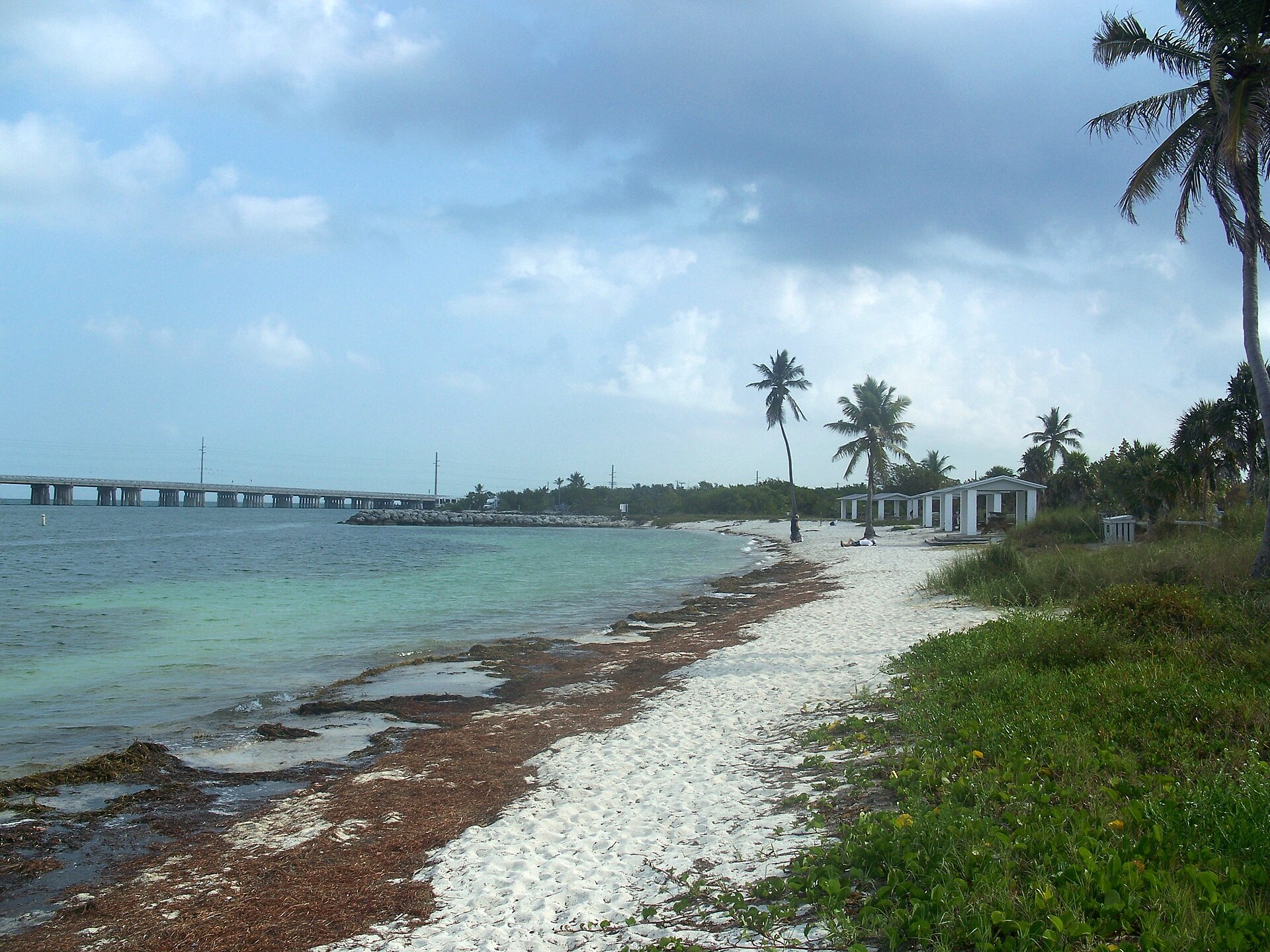
It also takes the full force of the sargassum, and on a bad week from June to September the tide line is a knee-high windrow of brown weed that smells of sulfur. The park does not rake it, on the grounds that it is habitat and removing it accelerates erosion, and they are right, and it is still not what you pictured. Check current conditions before you set your heart on it.
Loggerhead Beach
About 3,000 feet of Atlantic shore on the ocean side, very shallow, very clear on a calm day, and the best of the three for snorkeling straight off the sand — not a reef, but seagrass beds and rock with juvenile fish, small rays and the occasional turtle. Quieter than Calusa and closer to parking than Sandspur, which makes it the sensible compromise most days.
The sargassum question, answered honestly
Sargassum is a free-floating brown macroalgae that drifts in the Atlantic and washes up on windward shores. Season runs roughly March or April through October, peaking mid-summer, and the 2026 bloom was forecast above 75 percent of historical averages — potentially rivalling the record 2022 year. It is not pollution and it is not a sign of a dirty beach; it is a natural cycle that has intensified over the last fifteen years.
What it means for a visit here:
- Atlantic-facing beaches get it — Sandspur and Loggerhead. Calusa on the bay side gets much less.
- It smells when it decomposes, a hydrogen-sulfide smell like rotten eggs, strongest a day or two after landfall on a hot still day.
- It does not affect the reef trips. Offshore water is unaffected; only the shoreline collects it.
- Winter is clear. December through March is reliably clean sand, which is one more reason the park fills up then.
- If you are coming specifically for the beach in July, check a current sargassum report or the park’s own social feeds first, and have Calusa as your fallback.
The wider picture of which Keys beaches are affected and which are sheltered is in our guide to beaches near Key West and in the Key West beaches guide.
Snorkeling and the water
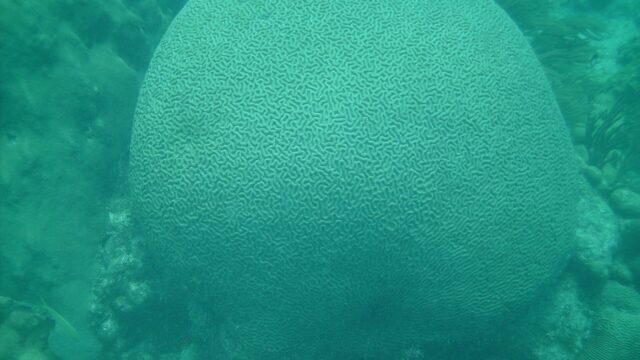
The park’s concession runs a reef snorkel trip out to Looe Key, roughly three and a half hours for $40–$60, and it is one of the best-value water trips anywhere in the Keys. Looe Key Reef, off Ramrod Key, is a Sanctuary Preservation Area — no anchoring, no fishing, mooring buoys only — with a spur-and-groove coral system running from about 5 feet down to 35. That shallow top is why snorkelers get the good coral here rather than looking down at it from a distance, and it holds elkhorn, big brain corals, tarpon and barracuda in the channels.
Departures depend entirely on the sea state. A sustained easterly over 15 knots means either a cancelled trip or a churned-up reef, and a refund is better than a bad snorkel. Book for the earliest slot of your stay so you have a second chance if the first is blown out. Our Key West snorkeling guide covers how the southern reefs compare.
Kayaking is the other thing to do on the water here, and it is genuinely good: the bay side is sheltered from almost any wind, and you can paddle out under the old bridge and around the shallows for an hour or two. Rentals are $15–$30 an hour at the concession. Paddleboards too, although the tidal current through the channel is stronger than it looks — stay inside the bay.
Fishing is permitted from shore with a Florida saltwater licence, and the old bridge and the channel edges hold snapper, jack and tarpon. There is a boat ramp at Calusa and a small marina.
Camping and cabins
Bahia Honda has three campgrounds — Buttonwood, Sandspur and Bayside — totalling around 80 sites, plus six cabins in three duplex buildings on stilts on the bay side. These are among the most sought-after accommodations in the Florida state park system, and the honest answer to “how do I get one?” is: set an alarm.
- The window opens 11 months in advance, to the day, at 8:00 a.m. Eastern. Waterfront sites and all six cabins for peak-season dates are typically gone within minutes.
- Have an account set up, logged in, and your dates and site preferences decided before the window opens. This is not the moment to be reading the map.
- Cancellations happen constantly. Checking the reservation system daily in the fortnight before your trip genuinely works, especially for single nights midweek.
- Sandspur campground is closest to the best beach and the most exposed. Bayside is sheltered and quieter. Buttonwood is the largest and takes RVs.
- The cabins sleep six, have kitchens and linens, and sit on the water on the bay side. They are the best-value accommodation in the entire Florida Keys and consequently the hardest to get.
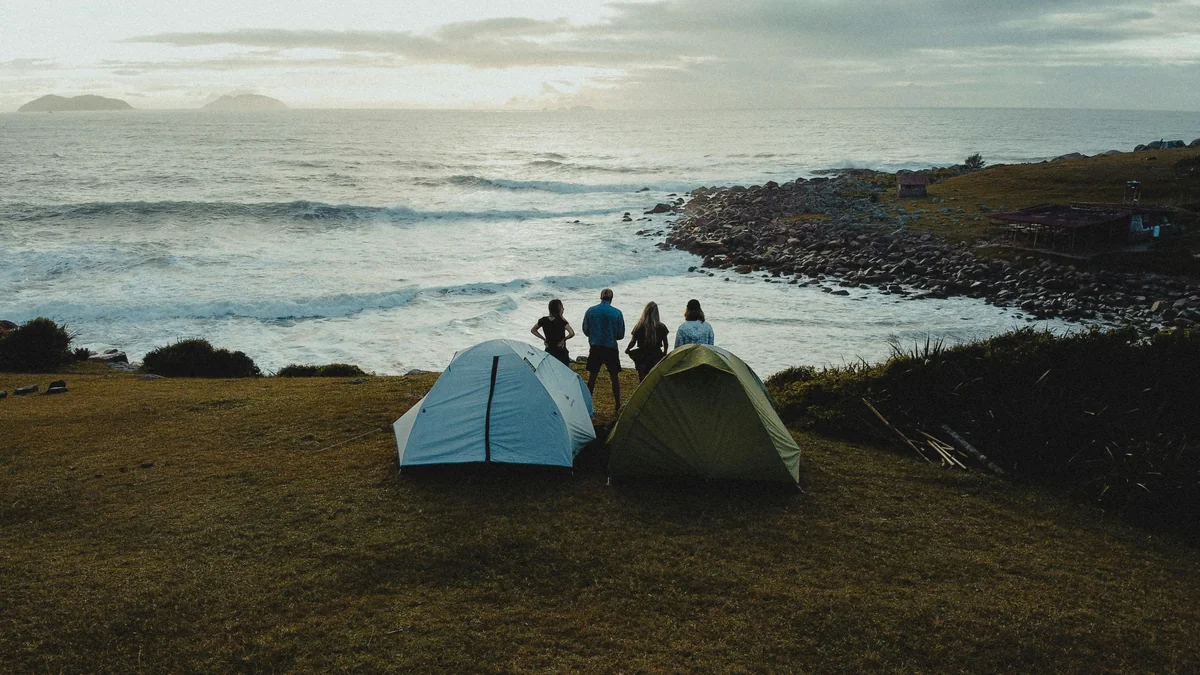
Camping here means no shade at some sites, mosquitoes and no-see-ums at dusk from May to October, and a park that empties of day visitors at sundown and becomes extraordinarily quiet. Our Key West camping guide covers the reservation mechanics across all the Keys parks and the private alternatives.
The old Bahia Honda Bridge
Flagler’s engineers hit their hardest problem here: a channel 35 feet deep and a quarter of a mile wide, in a hurricane zone, with no local materials. What they built between 1908 and 1912 was a steel camelback truss carried on concrete piers — 5,055 feet of it, and the highest span on the railroad.
When the road took over the railbed in the 1930s, the trusses were too narrow for two lanes of traffic, so engineers did something unusual: they laid the roadway on top of the trusses rather than inside them. Drivers crossed on a narrow deck 65 feet above the water with no shoulder and a low railing, which by every account was terrifying. The current bridge opened in 1972 and the old one was retired.
A short section from the park is walkable, and it is the best free view in the Lower Keys — you look straight down into the channel and out along the chain in both directions. The stairs and ramp are steep, there is no shade, and the far end is fenced off because the deck beyond it is unsafe. Go early or late; the light at either end of the day over that water is why photographers keep coming back.
Trails, wildlife and the rest of the park
- Silver Palm Nature Trail — a short loop through coastal berm hammock at the south end, with silver palm, Jamaica dogwood, spiny black olive and Geiger trees. Twenty minutes, mostly shaded, and a decent chance of migrant warblers in spring and fall.
- Birding — the park is a well-known stopover. White-crowned pigeons, roseate spoonbills on the flats, least terns nesting on the sand in summer, and both great white and reddish egrets.
- Turtle nesting — loggerheads nest on Sandspur and Loggerhead from April to October. Marked nests, no lights, no digging.
- Butterflies — the park is good for the endangered Miami blue and for large swallowtails around the hammock trail.
There is a small concession selling drinks, ice cream and sandwiches near Calusa, and nothing else. Bring water, food, shade and reef-safe sunscreen; the nearest supermarket is on Big Pine.
How Bahia Honda compares with the other Keys beaches
It is worth being concrete about this, because “best beach in the Keys” is a claim every island makes and only one of them can hold.
| Beach | Island | Sand | Swimming depth | Cost | Verdict |
|---|---|---|---|---|---|
| Sandspur, Bahia Honda | Bahia Honda, MM 37 | Natural, deep, wide | Shelves properly | $8 a car | The best in the Keys |
| Calusa, Bahia Honda | Bahia Honda, MM 37 | Natural, modest | Shallow and calm | $8 a car | Best for small children |
| Sombrero Beach | Marathon, MM 50 | Natural, good | Reaches swimming depth | Free | Best free beach in the Keys |
| Anne’s Beach | Islamorada, MM 73.4 | Thin, tidal | Shin to waist for 100 yards | Free | A warm wade, not a beach day |
| Fort Zachary Taylor | Key West, MM 0 | Coarse, rocky | Deep quickly | $8 a car | Best in Key West; bring water shoes |
| Smathers Beach | Key West, MM 0 | Imported, raked | Very shallow | Free, paid parking | Convenient, unremarkable |
| Resort beaches, chain-wide | Everywhere | Trucked sand over rock | Shallow, silty, roped | Included | Pleasant; not a beach |
The geology is the whole story. Reef-fronted coasts do not build beaches, because the reef intercepts the wave energy that sorts and piles sand. Bahia Honda is the exception because of that deep channel, and Sombrero and Anne’s are modest exceptions because of local currents. Everything else you see in a brochure was delivered by truck.
A full day at Bahia Honda
- 7:15 a.m. — leave Key West or Marathon. There is no coffee inside the park, so get it in Marathon or on Big Pine on the way.
- 8:00 a.m. — through the gate as it opens. Park at Calusa if you want facilities, or drive on toward Sandspur for the long sand.
- 8:15 a.m. — walk up onto the old bridge while the light is still low and the deck is not yet baking. Twenty minutes, no shade, take water.
- 9:00 a.m. — the beach, before it warms up and before the day-trippers arrive. Loggerhead if you want to snorkel from shore.
- Late morning — the Looe Key snorkel trip if you booked it, or a kayak out under the bridge on the sheltered bay side.
- 1:00 p.m. — lunch out of the cooler under a Calusa pavilion. The concession does sandwiches and ice cream; anything more ambitious you brought yourself.
- 2:30 p.m. — the Silver Palm nature trail while the sun is at its worst, then back to the water.
- 4:30 p.m. — this is the good hour. Day visitors thin out, the light turns, and the Atlantic side goes glassy more often than not.
- On the way home — the Blue Hole and the Key deer on Big Pine, twelve minutes west, or No Name Pub for pizza if it is dinner time.
What to bring
- Shade. There is very little natural shade on Sandspur or Loggerhead and the concession’s umbrellas run out. A pop-up or a beach umbrella changes the day.
- Water. More than you think — there are fountains but the walk from Sandspur parking is real.
- Reef-safe sunscreen, meaning mineral-based without oxybenzone or octinoxate. You will be swimming over living coral and seagrass.
- Water shoes or old trainers for the rocky sections and for shore snorkeling at Loggerhead.
- Insect repellent for the hammock trail and for anything after 5:00 p.m. between May and October.
- Cash — the entry booth takes cards, but small concessions in the Keys are unpredictable.
- A cooler with food. Glass containers are not allowed on the beaches and alcohol is prohibited in the park.
Irma, and why the park looks newer than it should
On 10 September 2017 Hurricane Irma made landfall on Cudjoe Key, ten miles southwest of here, as a Category 4 with sustained winds around 130 mph. Bahia Honda took the surge on its Atlantic side. The campgrounds were destroyed, the cabins badly damaged, the concession buildings wrecked, and Sandspur Beach — the one on the postcards — was substantially stripped of sand and buried in debris.
The park reopened in stages over the following years, and Sandspur was among the last areas restored. That is why the buildings are newer than you would expect in a park established in 1961, why some of the vegetation looks young, and why locals still measure the place in before-and-after terms. It is also the plainest possible argument for taking hurricane season seriously here: the road out is one road, and the state closes the Keys to visitors early and firmly when a storm is inbound.
Accessibility
Calusa Beach has the shortest and flattest access, with paved parking, accessible restrooms and pavilions close to the sand. The park has beach wheelchairs available on request — call ahead, as there are only a couple. The old bridge access involves a steep ramp and stairs and is not usable by wheelchair. The Silver Palm trail is packed natural surface with roots and is difficult.
Rules, and the reasons behind them
State parks in the Keys are more tightly regulated than a municipal beach, and most of the rules exist because of something specific that has gone wrong here before.
- No alcohol anywhere in the park. This is a Florida state park rule and it is enforced. Nor is glass permitted on the beaches.
- Pets are allowed in the campgrounds and on paved areas but not on the beaches or in the cabins. With alligators absent but nesting terns and turtles present, the beach ban has a purpose.
- Do not touch or stand on coral, at Looe Key or anywhere. It is a living animal, it grows at a rate measured in millimetres a year, and a single kick fin can undo a decade.
- Nothing leaves the park. No shells with animals in them, no sand, no sea fans, no coral fragments — living or dead. Removing coral is a federal matter inside the sanctuary.
- Marked turtle nests are off limits from April to October, along with lights and flash photography on the beach after dark.
- Fill in your holes and take your gear home. A hole is a hazard for a nesting turtle and for the ranger who drives the beach at dawn.
- Drones need a permit and are generally not allowed over the beaches or the nesting areas.
- Fishing needs a Florida saltwater licence, available online, and is not permitted at the swimming beaches or anywhere inside the Looe Key preservation area.
Bahia Honda for families
This is the strongest single argument for the park. Calusa is genuinely the best beach in the Keys for children under eight: shallow for a long way out, no surf, warm as a bath by mid-morning, with restrooms, showers, shade pavilions and a snack concession inside a hundred yards. You can park, unload, and be in the water in five minutes, which is not true anywhere else in the chain.
Older children get more out of Loggerhead with a mask — the seagrass beds hold small barracuda, needlefish, pufferfish, occasional rays and, if you are lucky, a green turtle grazing. Anyone twelve and up can handle the Looe Key snorkel trip, and it is the sort of thing they will remember for thirty years. The kayaks work well for two children and a parent on the sheltered bay side.
Two practical warnings for families. The tidal current through the channel by the old bridge is much stronger than the calm surface suggests, and children should not swim outside the marked areas at Calusa. And there is no lifeguard anywhere in the park, on any beach, at any time of year. Compare the picture with the in-town options in our Key West with kids guide — Bahia Honda beats all of them for actual beach time, at the cost of a 40-minute drive.
When to come
December to March is the best of it: clean sand, no sargassum, 74 to 80°F, low humidity, and a gate that closes early on weekends. April and May are the compromise everyone should consider — warm water, light winds, the best snorkel conditions of the year, sargassum only beginning, and thinner crowds.
June to September is hot, humid, thick with weed on the Atlantic beaches, and cheap. Early mornings are still beautiful and the water is 86°F. October and November quieten down and clean up, with the caveat that hurricane season runs to the end of November and this park has been closed for months at a time after a direct hit — Irma in 2017 destroyed the campgrounds and much of Sandspur, and reopening took years.
The honest verdict
Bahia Honda is the best beach in the Florida Keys and, on a clear winter morning at Sandspur, one of the better beaches in the United States. Eight dollars a car for that is absurd value, and the snorkel trip to Looe Key is the best-priced reef trip in the chain.
Two caveats worth taking seriously. First, if you come between June and September expecting the photographs, you may get a sulfur-smelling wall of brown weed instead, and that is nobody’s fault. Second, if you arrive at 11:00 a.m. on a February Saturday, you will sit on the shoulder of US 1 watching the gate. Both problems have the same solution: come early, come midweek, and have Calusa as your fallback. Do that, and this is the best single day out in the Florida Keys.
Frequently asked questions
How much does it cost to enter Bahia Honda State Park?
$8 per vehicle carrying two to eight people, plus a 50-cent per-person Monroe County surcharge. A single-occupant vehicle or motorcycle is $4.50, and pedestrians, cyclists and extra passengers are $2.50 each. The park is open 8:00 a.m. to sundown, every day of the year.
Which Bahia Honda beach is best?
Sandspur for photographs and the widest sand; Calusa for calm shallow water, facilities and small children; Loggerhead for shore snorkeling and fewer people. Calusa collects the least sargassum because it faces the bay.
Does Bahia Honda have a seaweed problem?
From roughly March through October, yes, on the Atlantic-facing beaches. Sargassum piles along the tide line and smells as it decomposes; the park deliberately leaves it in place as habitat and erosion protection. Winter is reliably clear, and the bay-side beach is much less affected year-round.
Can you camp at Bahia Honda?
Yes — three campgrounds totalling around 80 sites at roughly $36 a night, plus six waterfront cabins from about $160. Reservations open 11 months ahead to the day and peak dates go within minutes; watching for cancellations in the last two weeks is the realistic strategy.
Is Bahia Honda worth the drive from Key West?
Yes, once — it is 37 miles and about 40 minutes each way, and it is the only place within reach of Key West with a real, deep, natural sand beach. Leave by 8:00 a.m. so you are through the gate before it fills, and pair it with the Looe Key snorkel trip or a stop on Big Pine on the way back.
Can you snorkel from the beach at Bahia Honda?
From Loggerhead Beach, yes, over seagrass and rock, with small fish, rays and the occasional turtle — pleasant, but not a reef. The actual reef is at Looe Key, five miles offshore, reached on the park’s own boat trip for $40–$60.
Do you need to book Bahia Honda in advance?
Not for day entry — it is first come, first served, which is exactly the problem. The gate closes when the parking fills, sometimes by 10:00 a.m. on winter weekends and holidays. Camping and cabins, on the other hand, need booking the day the 11-month window opens.
Related Key West Guides
- The Florida Keys beyond Key West — the whole chain, island by island
- Big Pine Key and the Lower Keys — the quiet islands twelve minutes west
- Marathon Florida Keys — Sombrero Beach and the family island to the east
- Beaches near Key West — every beach within reach of Old Town, ranked
- Key West beaches guide — the in-town beaches and what they are really like
- Key West camping — the reservation game across all the Keys parks
- Key West snorkeling — how the southern reefs compare with Looe Key
Photo Credits
Calusa Beach from the old bridge ramp: Bahia Honda FL SP06 by Ebyabe, CC BY-SA 3.0, via Wikimedia Commons.
Sargassum along the tide line at Bahia Honda: Bahia Honda FL beach01 by Ebyabe, CC BY-SA 3.0, via Wikimedia Commons.
Sources & corrections
Rates, hours and closures verified against operator listings and on-island visits. Prices are peak-season unless noted.