Sheet 07 · Florida Keys
The Turtle Hospital in Marathon: Tours, Tickets, and Tips
A working veterinary hospital, not an aquarium: what the 90-minute tour covers, what it costs, why you must book, what is wrong with the patients, and who should skip it.
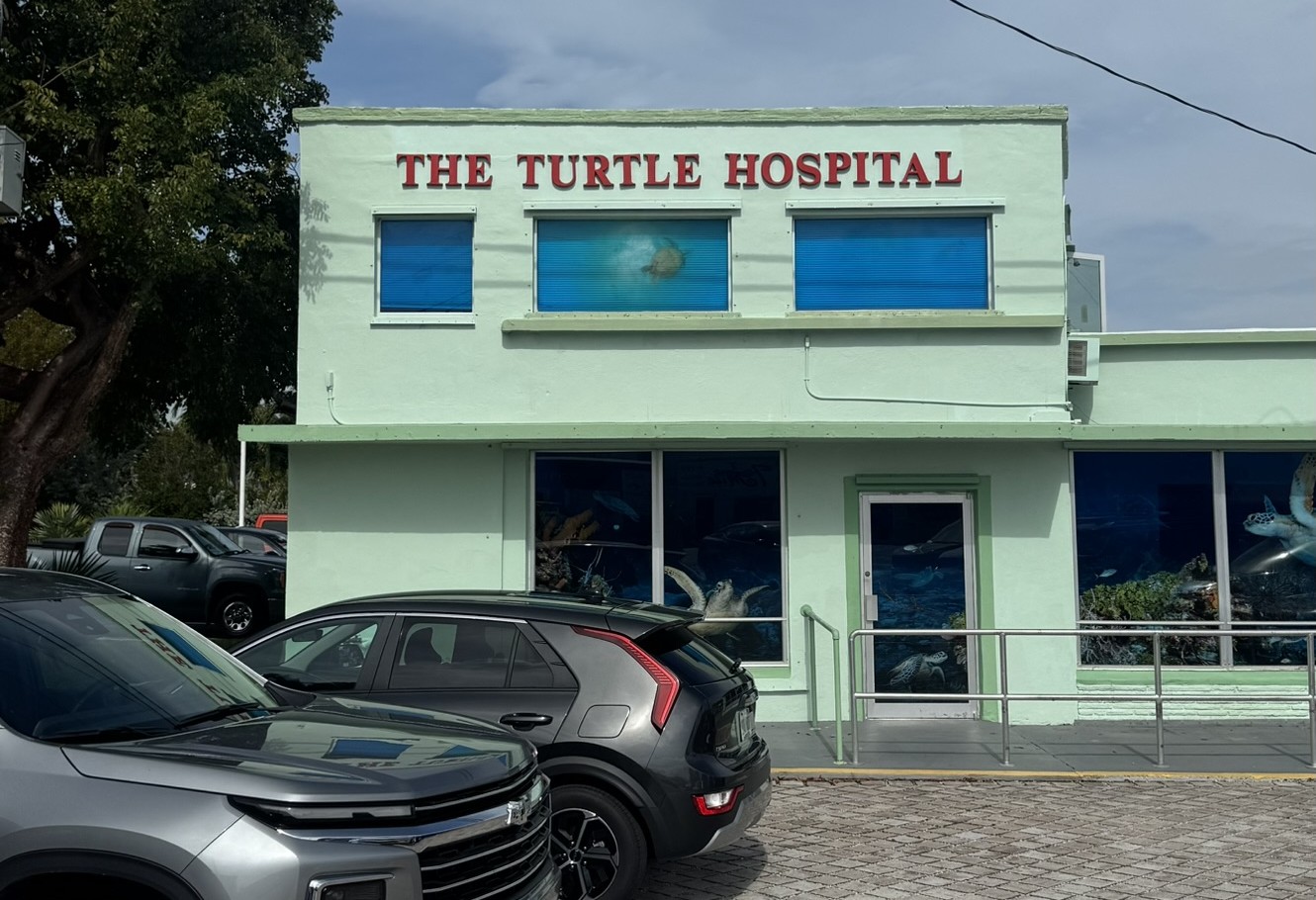
The building at 2396 Overseas Highway is a mint-green 1940s motel with murals of sea turtles painted across the windows, and there is a queue of people outside it at nine in the morning who have all made the same wrong assumption. The Turtle Hospital Marathon is not an aquarium and it is not a swim-with-turtles attraction. It is a licensed veterinary hospital with an operating theatre, an X-ray machine, a resident vet and a caseload, and the tour you take is a tour of a working medical facility whose patients weigh up to 300 pounds.
This guide covers what the tour actually involves, what it costs, how to book it and why you must, what you will and will not be allowed to do, and whether it is worth $38 of a family’s day. Prices and times below were checked in September 2026 against operator listings and the hospital’s own contact details; confirm the current figures when you book on 305-743-2552, because they do move.
At a glance
| Detail | Information |
|---|---|
| Address | 2396 Overseas Highway, Marathon, MM 48.5 bayside |
| Adult admission | About $38 |
| Child 4–12 | About $19 |
| Under 4 | Generally free, but the tour is not well suited to toddlers |
| Tour times | On the hour and half hour, 9:00 a.m. to 4:00 p.m. |
| Duration | About 90 minutes |
| Reservations | Strongly recommended — call 305-743-2552 or book online |
| Swimming with turtles | Not offered, and never has been |
| Founded | 1986 |
| Turtles treated | Well over 2,000 admitted and released since opening |
| Accessibility | Ground level throughout; call ahead about the tour route |
What it is, and how it came to be here
The Turtle Hospital was founded in 1986 by Richie Moretti, who owned the Hidden Harbor Motel on this site, with the stated aim of treating and releasing injured sea turtles and of finding a cure for the tumor-causing disease that was appearing in turtles all over the Keys. The motel’s saltwater pool became a rehabilitation tank. Over the following decades the operation grew into a fully equipped veterinary facility with a surgical suite, an X-ray room, water quality laboratories, ambulances, and permits from the Florida Fish and Wildlife Conservation Commission and the US Fish and Wildlife Service.
The scale is what surprises people. The hospital admits and treats hundreds of turtles a year and has released well over two thousand back into the ocean since it opened. It runs a 100,000-gallon saltwater pool for permanent residents, several dozen smaller tanks for individual patients, and an ambulance service that collects turtles from anywhere in the Keys and, on occasion, well beyond.
It is a not-for-profit. Ticket revenue and donations fund the veterinary work, which is a large part of the answer to “is $38 a lot for a 90-minute tour.”
What the tour actually involves
Roughly 90 minutes, in three parts, led by a staff member or trained volunteer.
The briefing
Twenty minutes in a small classroom with slides: the seven species of sea turtle, the five found in Florida waters, their life cycles, the threats they face and how the hospital works. It is pitched to be intelligible to a nine-year-old without boring an adult, which is harder than it sounds and they do it well.
The hospital
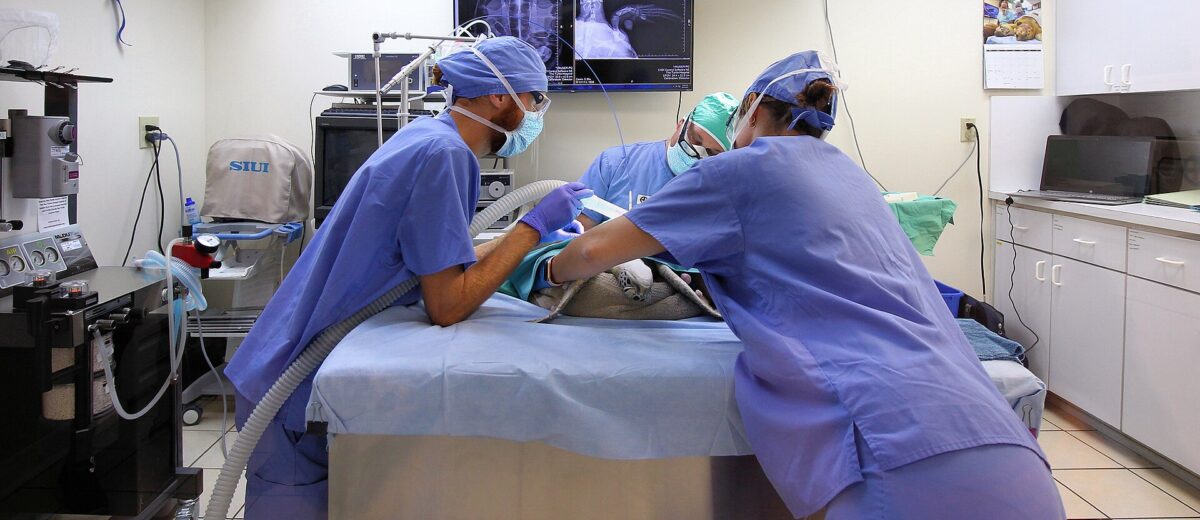
Then you walk through the working facility — the surgical suite with its operating table, anesthesia machine and imaging, the treatment room, the water quality lab. If a procedure is happening you may see it through glass. The X-rays on the wall are of actual patients: a flipper with a fish hook through it, a shell fractured by a boat propeller, a gut full of swallowed plastic.

The tanks
The last and longest section: the outdoor rehabilitation tanks and the big saltwater pool. You meet the current patients — loggerheads, greens, hawksbills, Kemp’s ridleys — and the permanent residents who cannot be released. Every turtle has a name and a case history and your guide knows both. Then you feed the residents, which is the part every child remembers.
What is wrong with the patients
The case list is a fair summary of what humans do to sea turtles, and the tour does not soften it.
- Boat strikes — propeller wounds and shell fractures, the most common serious admission. Some heal; some leave the animal permanently unable to dive.
- “Bubble butt” syndrome — shell damage that traps air in the body cavity, leaving the turtle permanently buoyant and unable to dive to feed. The hospital’s solution is to epoxy weights onto the shell; the original patient, a green turtle named Bubble Butt struck by a boat in 1989, was the reason they invented the technique and lived at the hospital for decades.
- Fibropapillomatosis — a herpesvirus-associated disease causing cauliflower-like tumors on the eyes, mouth and flippers, common in green turtles in the Keys and probably linked to water quality. Tumors are surgically removed, often with a laser, and often recur.
- Entanglement — monofilament line, crab trap rope and abandoned netting, which cut into flippers and cause amputations.
- Ingested plastic and fishing gear — hooks, line, bags and balloons. Turtles eat balloons because they look like jellyfish.
- Cold stunning — after a hard cold front, turtles in shallow water become hypothermic and float helplessly. The hospital takes in batches of them.
The honest note here: not every patient makes it, and the guides will tell you so. It is a hospital, and hospitals lose some.
The turtles you will meet
Five of the world’s seven sea turtle species occur in Florida waters, and the hospital treats all five. Knowing which is which makes the tank walk considerably more interesting.
- Loggerhead — the commonest nester on Florida beaches, reddish-brown, with an enormous blocky head and jaws built for crushing conch and crab shells. Adults reach about 250 pounds. Most of the nests on Sombrero Beach are loggerheads.
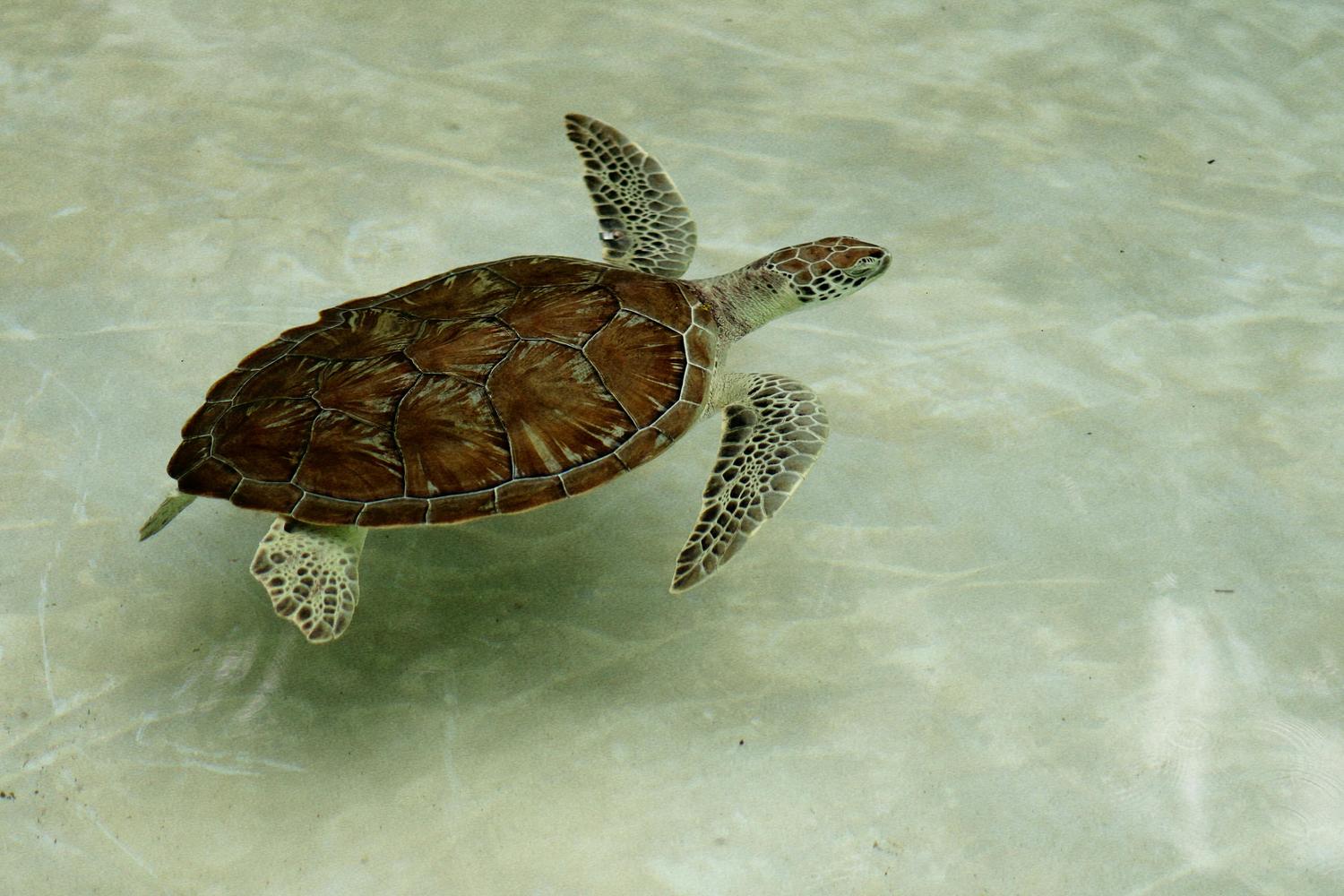
- Green turtle — smaller-headed, smooth-shelled, and the only largely herbivorous sea turtle as an adult, grazing seagrass beds. Greens are the species most affected by fibropapillomatosis in the Keys, which makes them a large share of the hospital’s caseload.
- Hawksbill — a narrow, beak-like mouth for extracting sponges from reef crevices, and the beautifully patterned shell that got the species hunted almost to extinction for tortoiseshell. Critically endangered.
- Kemp’s ridley — the smallest and the most endangered sea turtle in the world, nesting almost entirely on a single stretch of Mexican coast. Grey-green, nearly circular shell, and a startling thing to see in a tank in Marathon.
- Leatherback — the giant, up to 2,000 pounds, with a leathery ridged carapace instead of a hard shell, feeding on jellyfish and diving deeper than any other reptile. Rarely admitted, because a leatherback that needs help is usually beyond it.
The residents
Some patients can never go back. A turtle that cannot dive, cannot see well enough to feed, or has lost too much of a flipper to swim straight would not survive release, so the hospital keeps it. These animals live in the big saltwater pool, they have names, and they are the ones you feed at the end of the tour.
They also do the most useful work in the building. A permanently buoyant turtle with weights epoxied to its shell explains boat-strike injury to a nine-year-old more effectively than any amount of signage, and the whole weighting technique was developed on one of them.
What happens at release
A turtle judged fit is cleared by the vet, tagged — a flipper tag and often a passive microchip — and taken to a beach or out by boat. Public releases happen when the logistics allow, are announced at short notice, and draw a few hundred people onto a beach at eight in the morning. Some released turtles carry satellite transmitters, and their tracks are published, which means you can follow an animal you met in a tank for months afterwards. Ask your guide whether anything currently in the tanks is close to release.
Booking, and why walk-ups get turned away
Tours are capped — small groups, through working clinical space — and they sell out. In high season, from roughly December through April and again around spring break, arriving without a reservation frequently means being told to come back tomorrow.
- Book by phone on 305-743-2552 or through the hospital’s online reservation system, ideally two or three days ahead in season.
- Arrive 15 minutes early. There is a small gift shop and a waiting area, and check-in takes a few minutes.
- Tours run rain or shine — most of the walking is under cover or a short dash between buildings, but a poncho is not a bad idea in July.
- Parking is free on site, and the lot is small. There is more space on the side street.
- If a turtle is in surgery, the route may be adjusted. That is not a downgrade; it means something is actually happening.
Is it worth it? The honest verdict
Yes, and it is one of the few paid attractions in the Florida Keys we would recommend without qualification.
The reason is the gap between expectation and delivery. People pay $38 expecting a small aquarium and get taken through an operating theatre by somebody who can tell them which vertebra the propeller hit and how the epoxy weights are positioned. Children who arrived wanting to touch a turtle leave able to explain what fibropapillomatosis is. And every dollar funds the veterinary work rather than a shareholder, which is not true of the marine parks up the chain.
Where it is not worth it:
- Toddlers. Ninety minutes, a lot of standing, a lot of talking, no touching. Under-fours will struggle and so will you.
- Anyone hoping to swim with, hold or touch a turtle. That is not on offer here at any price, and anywhere that does offer it should give you pause.
- People who find sick animals distressing. The injuries are real and visible, and some of them are hard to look at.
- Anyone in a hurry. It genuinely takes 90 minutes and the tour does not run short.
If you want a conventional aquarium experience with touch tanks and shorter attention spans in mind, our Key West Aquarium guide covers the option at MM 0, which is cheaper, shorter and a different sort of thing entirely.
Fitting it into a day
The hospital sits at MM 48.5, five minutes from Sombrero Beach and ten from the foot of the Seven Mile Bridge, which makes an easy day:
- Morning — Sombrero Beach while the parking lot is empty, or the old Seven Mile Bridge walk out toward Pigeon Key before the deck heats up.
- 1:00 or 1:30 p.m. — the Turtle Hospital tour, booked in advance.
- 3:30 p.m. — the Dolphin Research Center at MM 59, ten minutes north, if the children still have energy. Last admission is 4:00 p.m.
- Late afternoon — a lobster reuben at Keys Fisheries on the working waterfront.
Our Marathon Florida Keys guide has the rest of the island — the beaches, Crane Point, the aquarium encounter facility and where to eat — and the Key West with kids guide sets out how a family week down the chain fits together.
Turtle nesting season, and the part you can do
Loggerheads and, less often, green turtles nest on the Keys beaches from about April through October, with Sombrero Beach and Coco Plum in Marathon both designated nesting sites. A female hauls out at night, digs a chamber a couple of feet deep, lays around a hundred eggs, covers them and returns to the sea. Incubation takes roughly two months, and the hatchlings emerge after dark and head for the brightest horizon — which for the whole of evolutionary history has been moonlight on water.
Artificial light breaks that. A porch light or a phone screen pulls hatchlings inland where they die of exhaustion or get taken before dawn. So during the season: no white lights or flash photography on a nesting beach after dark, fill in any hole you dug, take your chairs and umbrellas away with you, and never touch a marked nest or a crawl track.
If you find a stranded, injured or entangled turtle anywhere in the Keys — or a hatchling wandering in daylight — do not put it in the water and do not try to treat it. Call the Turtle Hospital on 305-743-2552 or the Florida Fish and Wildlife Conservation Commission’s wildlife alert line, and note where you are by mile marker. The hospital runs the ambulance and they would rather have ten unnecessary calls than miss one animal.
The hospital and local volunteer groups also run permitted nest excavations and releases during the season. These depend entirely on what nature does that week and are not scheduled far ahead, so ask when you take the tour — a release is a genuinely extraordinary thing to witness.
Supporting the hospital without buying a ticket
Because it is a not-for-profit rather than an attraction, several of the things visitors can do here cost nothing or almost nothing and matter more than the admission price.
- Take your monofilament home. Discarded fishing line is one of the most common causes of flipper amputation, and most Keys marinas and bridges have collection tubes for it.
- Do not release balloons, ever. A deflated balloon in the water looks exactly like a jellyfish to a leatherback or a green turtle, and it kills them slowly.
- Slow down in shallow water. Turtles surface to breathe and cannot get out of the way of a boat on plane. Trim up, keep a lookout on the bow, and stay in the channels over seagrass.
- Sponsor or adopt a patient — the hospital runs symbolic adoptions that fund a named animal’s care, which is the gift shop purchase actually worth making.
- Report every stranding. The ambulance goes out on public calls, and a turtle reported at nine in the morning has a much better chance than one found at four in the afternoon.
Accessibility and practical details
The facility is single-storey and the tour route is largely flat, on paved paths and concrete decks, moving between indoor rooms and outdoor tank areas. It is generally workable for a wheelchair or a walker, but the route is adjusted around whatever clinical work is happening, so call ahead on 305-743-2552 and tell them what you need — the staff are used to arranging it.
Other practicalities: there is a small gift shop and restrooms; there is no cafe, so eat before or after. Bring a hat and water in summer, because part of the tour is outdoors in full sun. Photography is allowed and encouraged in the tank areas, with no flash near the animals, and there may be restrictions in the clinical rooms depending on what is happening. Strollers are awkward in the narrower indoor sections. Dogs are not permitted.
Frequently asked questions
How much does the Turtle Hospital cost?
Around $38 for adults and $19 for children aged 4 to 12, for the guided 90-minute tour. Confirm the current price when you book on 305-743-2552; these figures were checked in September 2026.
What time are the tours?
On the hour and the half hour from 9:00 a.m. to 4:00 p.m., seven days a week. Each tour lasts about 90 minutes, so the last one finishes around 5:30 p.m.
Do you need reservations for the Turtle Hospital?
Strongly recommended, and effectively essential from December through April. Tours are capped because they go through working clinical space, and walk-ups are regularly turned away in season.
Can you swim with the turtles at the Turtle Hospital?
No. There is no swimming, no touching and no holding — these are patients in a veterinary hospital under state and federal permits. The one hands-on element is feeding the permanent residents at the end of the tour.
Is the Turtle Hospital good for young children?
Good for about six and up. Younger than four is a struggle: 90 minutes, a lot of standing and a lot of narration. Children who like animals and can follow a talk get an enormous amount out of it.
How long does the Turtle Hospital tour take?
About 90 minutes: roughly 20 minutes of briefing, 20 to 30 minutes in the hospital buildings, and the remainder at the rehabilitation tanks and the residents’ pool.
Where is the Turtle Hospital?
2396 Overseas Highway, Marathon, on the bayside at about MM 48.5 — 50 miles and roughly an hour and twenty minutes from Key West, and 55 miles from Key Largo. Free on-site parking.
What should you do if you find an injured sea turtle?
Call the Turtle Hospital on 305-743-2552 or the FWC wildlife alert line, note your location by mile marker, and stay with the animal if it is safe to do so. Do not push it back into the water and do not attempt first aid; the hospital runs an ambulance service throughout the Keys.
Related Key West Guides
- Marathon Florida Keys — the island the hospital sits on, and the rest of the day
- Key West with kids — the family itinerary for the whole chain
- Key West Aquarium — the cheaper, shorter alternative at MM 0
- The Florida Keys beyond Key West — the whole chain, island by island
- Bahia Honda State Park — nesting beaches and the best sand in the Keys
- Seven Mile Bridge — ten minutes west, and free to walk
Photo Credits
Surgery at the Turtle Hospital: The Turtle Hospital Operating Room Marathon Florida 2022 by Larry D. Moore, CC BY 4.0, via Wikimedia Commons.
The Turtle Hospital exterior: The Turtle Hospital exterior by Redhead3434, CC BY 4.0, via Wikimedia Commons.
Sources & corrections
Rates, hours and closures verified against operator listings and on-island visits. Prices are peak-season unless noted.