Sheet 07 · Florida Keys
John Pennekamp Coral Reef State Park: Complete Visitor Guide
Every boat trip the first undersea park in America runs, what each costs, the reef sites you visit, the Christ of the Abyss, the mangrove canoe trail almost nobody takes, and when to skip the glass-bottom boat.
The thing that surprises first-time visitors is how little of it is above water. You drive in at mile marker 102.6, pay eight dollars, park, and find a visitor center, a couple of small swimming beaches and two short trails — perhaps ninety minutes of land. Then a boat takes you six miles offshore and you understand: John Pennekamp Coral Reef State Park is 70 nautical square miles of protected sea with a car park attached, and everything that matters about it happens over the side of a boat.
This guide covers the park as a day out: the entry fees and hours, every boat trip the concession runs and what each one costs, the reef sites you actually visit, the mangrove kayak trail that almost nobody takes, the aquarium and the trails on land, and the honest verdict on the glass-bottom boat. Prices and hours were checked in September 2026 — confirm departures with the concession the day before, because everything here is weather-dependent.
At a glance: fees, hours and trip prices
| Item | 2026 price | Notes |
|---|---|---|
| Entry, vehicle with 2–8 people | $8 plus $0.50 per person | Monroe County surcharge on top of the base fee |
| Entry, single-occupant vehicle or motorcycle | $4.50 | Surcharge included |
| Entry, pedestrian or cyclist | $2.50 | Surcharge included; also for extra passengers |
| Park hours | 8:00 a.m. to sundown | 365 days a year |
| Glass-bottom boat, about 2.5 hours | $40–$55 adult, less for children | Large catamaran; three departures on a typical day |
| Snorkel trip, about 2.5 hours | $40–$60 adult | Two to three departures; gear usually a small extra |
| Two-tank scuba trip | $95–$140 | Plus gear rental; certification card required |
| Kayak rental | $20–$40 for two hours | Single and double; paddleboards similar |
| Canoe rental | $25–$40 for two hours | For the marked mangrove trail |
| Campsite | Around $36 a night plus fees | 47 sites; reservations open 11 months ahead |
| Sailing or private charter | $60–$120 per person | Smaller boats, fewer people, longer on the reef |
What the park actually is, and why it exists
Pennekamp was dedicated in 1963 as the first undersea park in the United States, and it exists because of a specific 1950s scandal. Commercial operators were dynamiting and dredging the reef off Key Largo to sell coral as souvenirs and to feed the curio trade, and by the mid-fifties the damage was visible from the surface. A Miami Herald editor named John Pennekamp, who had already been instrumental in creating Everglades National Park, led the campaign that got the reef put under state protection instead.
The park covers roughly 70 nautical square miles — about three miles of shoreline and everything out to the state waters boundary — and is adjoined seaward by the Florida Keys National Marine Sanctuary, which extends the protection out over the whole reef tract. The practical consequence for a visitor is that the coral here has had more than sixty years of no-take, no-anchor, no-souvenir management. It is not pristine; nowhere in the Caribbean is, after the bleaching events and the stony coral tissue loss disease of recent years. But it is the healthiest thing you will see this close to a car park in the United States.
The boat trips, in order of who they suit
The snorkel trip — the best thing the park sells
Two and a half hours, $40–$60, two or three departures a day, on a purpose-built boat with a crew who brief you properly and get in the water with you. You go to Molasses Reef, Key Largo Dry Rocks, or one of the closer patch reefs depending on conditions, tie to a mooring buoy, and get an hour or so in the water.
This is better value than any private operator in the Upper Keys and the equal of most of them on quality. Book the earliest departure of your stay: mornings are calmer than afternoons almost without exception, and if the first trip gets blown out you still have a second chance. Bring a rash guard rather than relying on sunscreen — you will be face-down in tropical sun for an hour.
Confidence in the water matters more than skill. Everyone gets a flotation vest, the crew keeps a headcount, and people who have never snorkeled before do this successfully every day. But if a two-foot chop makes you anxious, take the calm-morning trip and not the 2:00 p.m. one. Our Key West snorkeling guide covers the equivalent trips at the southern end of the chain.
The glass-bottom boat — with a caveat
A large catamaran with a viewing well in the hull, two and a half hours, $40–$55, out to Molasses Reef. It is the right choice for people who will not or cannot get in the water: non-swimmers, anyone with mobility limitations, small children, grandparents, people who simply do not want to be wet.
The caveat is honest and important. In anything more than a light chop, the boat pitches, the water over the viewing well goes cloudy with stirred sediment, and a proportion of the passengers get seasick. On a flat morning it is genuinely good — you see coral heads, big schools of grunt and snapper, turtles reasonably often. On a windy afternoon you have paid $50 to look at green soup while feeling unwell. Ask the ticket desk what the sea state is doing before you buy, take the motion tablets an hour before boarding rather than after you feel it, and pick a morning slot. Our Key West glass bottom boat guide makes the same argument about the boats at MM 0.
Scuba
Two-tank guided reef dives, $95–$140 plus gear, with sites chosen by conditions and certification level. The park’s own trips stay on the reef; for the deep wrecks — the Spiegel Grove at 130 feet, the Duane at 120 — you go with a private operator outside the park, and you will need Advanced Open Water and a recent deep dive to do them as a buddy pair. Bring your certification card; nobody will take your word for it.
Sailing and private charters
Several small operators work out of the park’s marina with catamarans and dive boats taking six to twelve people rather than forty. Expect $60–$120 per person for a half day. You get more time in the water, a shorter briefing, and a crew that learns your name. Worth the premium if there are four of you.
The reef sites you will actually visit
- Molasses Reef — the workhorse and deservedly the most-visited site in Key Largo. A spur-and-groove system in 15 to 50 feet with dozens of numbered mooring buoys, so operators spread out rather than piling onto one spot. Big schools of grunt, snapper and sergeant major, resident barracuda, green turtles on most trips. The shallow end suits snorkelers, the deeper grooves suit divers.
- Key Largo Dry Rocks — the shallow site holding the Christ of the Abyss. Coral heads in 10 to 25 feet, and the whole site is snorkelable.
- French Reef — more three-dimensional than Molasses, with swim-throughs, ledges and small caves in 20 to 45 feet. Usually quieter.
- Grecian Rocks — a shallow, sheltered horseshoe of coral often used when the wind is up, and very good for beginners and children.
- White Banks Dry Rocks — inshore patch reefs, shallow and calm, the fallback when the outer reef is unworkable.
The Christ of the Abyss
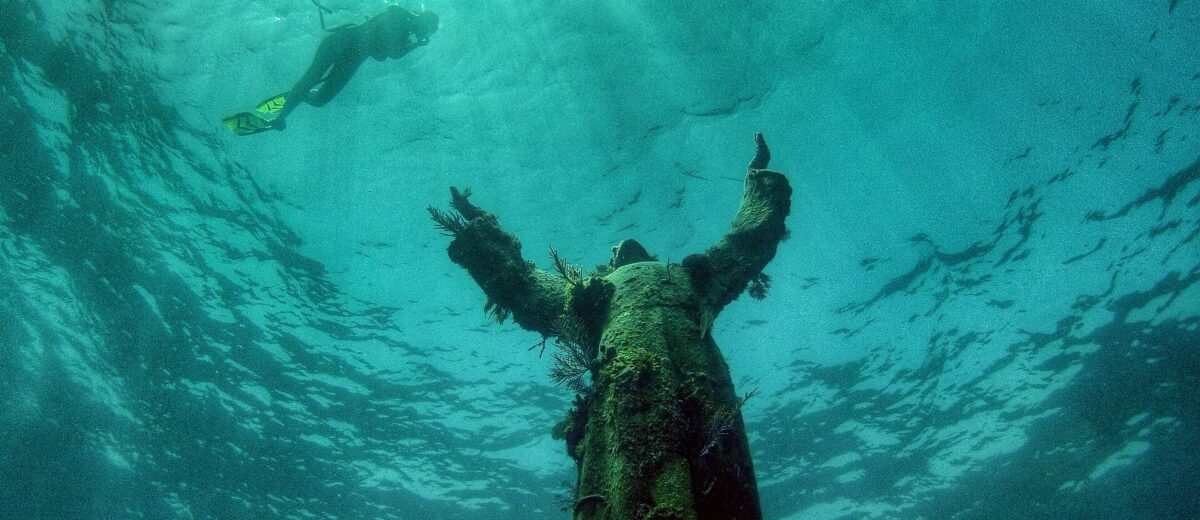
At Key Largo Dry Rocks, in roughly 25 feet of water, a nine-foot bronze figure stands on a concrete base with its arms raised. It is one of three casts of Il Cristo degli Abissi by the Italian sculptor Guido Galletti; the original was placed off Portofino in 1954. This one was donated by an Italian industrialist and set in place in 1965, and it has been growing coral and fire coral ever since.
Two honest notes. First, whether it is remarkable or underwhelming depends entirely on visibility, which depends on wind. Go on a calm clear morning and it is one of the strangest and most affecting things in the Keys; go after three days of easterly and you will see a green silhouette. Second, do not touch it — the fire coral on the arms will let you know about it for two days, and this is a protected site inside the park.
Snorkelers can free-dive down to it comfortably on a calm day, and the top of the statue’s hands sit shallow enough that you get a good look from the surface regardless.
The mangrove canoe trail, and why you should take it
This is the part of the park almost nobody does, and it is the part we would send a friend to. A marked route runs from behind the visitor center through a tidal mangrove creek system: about two and a half miles, an hour and a half at a gentle pace, entirely sheltered from wind.
What you see is the nursery half of the reef ecosystem. Mangrove prop roots hold juvenile snapper, grunt and barracuda that will move out to the reef when they are big enough; there are sponges and tunicates on the roots, sometimes a small nurse shark in a channel, and wading birds — yellow-crowned night herons, little blue herons, white ibis — a paddle’s length away. It is silent, shaded in places, and if you go at eight in the morning you will very likely have it to yourself.
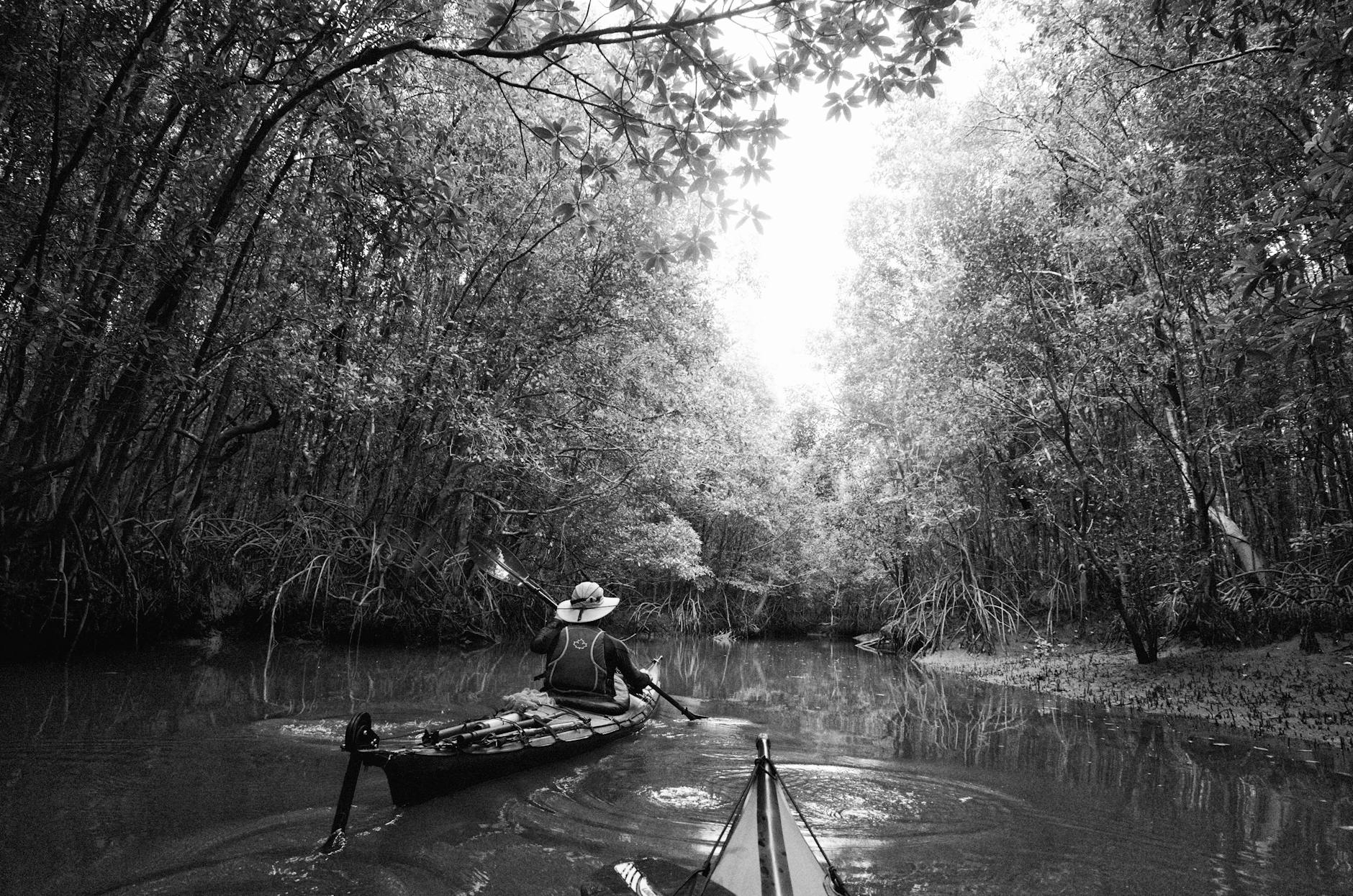
Rentals are $20–$40 for two hours. Check the tide: the trail is easy on a rising or high tide and can be a scrape through mud near low water. Take repellent and a hat.
On land: the visitor center, the beaches and the trails
The visitor center and aquarium
A 30,000-gallon reef tank sits at the center of the visitor center, with living coral, tarpon, angelfish, grouper and a moray or two. There are smaller tanks, a theatre showing short films, and interpretive displays on the reef and the park’s history. It is well done, it takes 45 minutes, and it is the right thing to do first — seeing a named fish in a tank makes the same fish on the reef an hour later much more interesting for children.
Cannon Beach
A small crescent of imported sand with a shallow snorkel attraction about 100 feet offshore: the ballast stones, replica cannon and scattered remains representing an early Spanish shipwreck site. In three to eight feet of water, reachable by any swimmer, with small fish around the rocks. It is a good half hour for children and a nice warm-up for a reef trip. It is not a reef, and anybody who tells you that you can snorkel the Florida Reef from the beach in Key Largo is mistaken — it is six miles out.
Far Beach
The second swimming beach, quieter, with a small mangrove-fringed lagoon and picnic tables. Shallow, seagrassy, and calm. Bring water shoes.
The trails
- Wild Tamarind Trail — a short loop through tropical hardwood hammock: gumbo limbo, wild tamarind, poisonwood, mahogany. Shaded, twenty minutes, and a decent chance of migrant warblers in spring and fall. Learn to recognize poisonwood before you set off; the interpretive signs show it.
- Mangrove Trail — a boardwalk through red mangrove with an observation platform, ten minutes, wheelchair-accessible.
Neither is a hike. Both are worth doing while you wait for a boat.
Camping
Forty-seven sites, around $36 a night, most of them small and shaded under hardwood hammock, with electric and water at most and a bathhouse. The reservation window opens eleven months in advance and peak-season dates are taken quickly, though not with the ferocity of Bahia Honda’s waterfront sites. Watching for cancellations in the fortnight before your trip is realistic here.
The advantage of camping in the park is being inside the gate at 7:00 a.m. before the day visitors, and being able to walk to the boat dock. The disadvantage is mosquitoes: this is a mangrove and hammock site, and from May through October repellent is essential at dawn and dusk. Our Key West camping guide covers the reservation mechanics for all the Keys parks, and the Bahia Honda State Park guide covers the one campground that is harder to get.
What you will actually see on the reef
It helps to know the cast before you get in, because a reef reads as an undifferentiated blur until you can name three or four things in it. Here is what a snorkeler on Molasses or Grecian Rocks sees on an ordinary day.
The fish you will definitely see
- Yellowtail snapper — silver with a yellow stripe and a forked yellow tail, in loose schools mid-water. The commonest fish on the Keys reef and the one most likely to be on a restaurant menu that evening.
- French and bluestriped grunts — yellow-and-blue striped, hanging in dense stationary schools under ledges. They grunt audibly by grinding their throat teeth.
- Sergeant majors — small, black-barred, yellow-topped, aggressive around anything that looks like food.
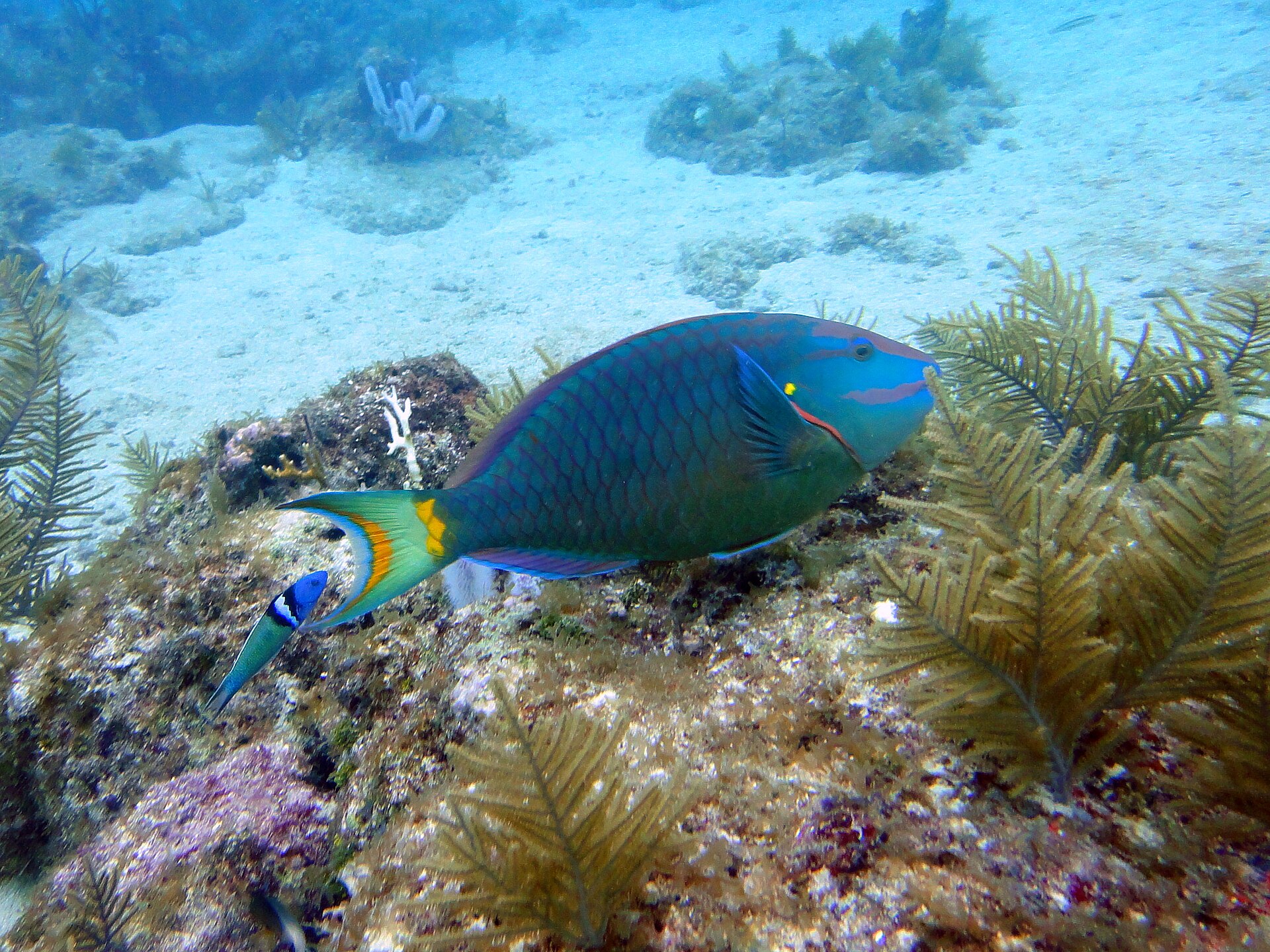
- Parrotfish — several species, blue-green and pink, and you can hear them scraping algae off the coral if you hold still. They excrete the sand you walked on to get here.
- Blue-headed and yellowhead wrasses, blue tangs in roving groups, and butterflyfish in pairs.
The ones that make a trip
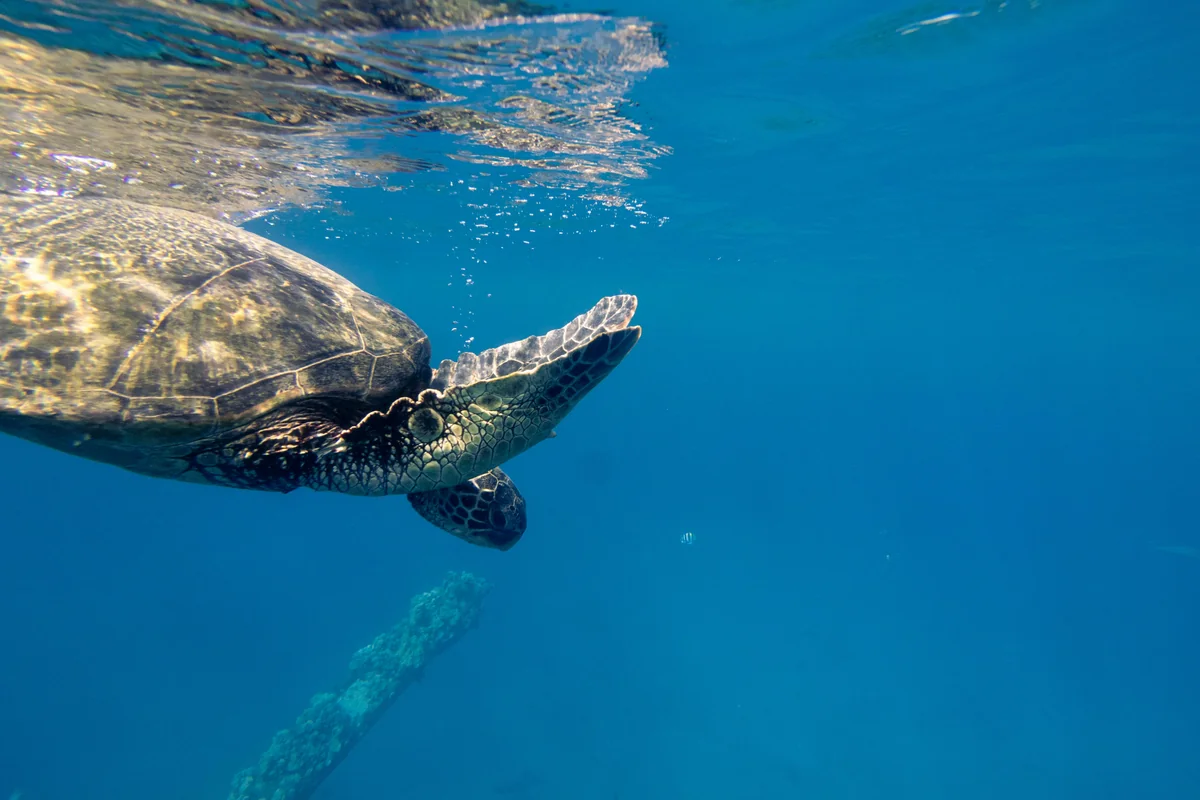
- Green turtles — regular on Molasses, grazing on seagrass or resting under a ledge. Keep well back; harassment is a federal offense under the Endangered Species Act, and “swimming toward it” counts.
- Great barracuda — a resident individual hangs at several mooring buoys, motionless, three or four feet long, with an expression that alarms first-timers. It is entirely uninterested in you. Do not wear a shiny watch or dangling jewelry.
- Nurse sharks — docile, bottom-resting, often asleep under a ledge in the sand.
- Southern stingrays and spotted eagle rays over the sand between coral heads.
- Goliath grouper — several hundred pounds, occasionally seen on the deeper sites. Unmistakable and unforgettable.
The coral
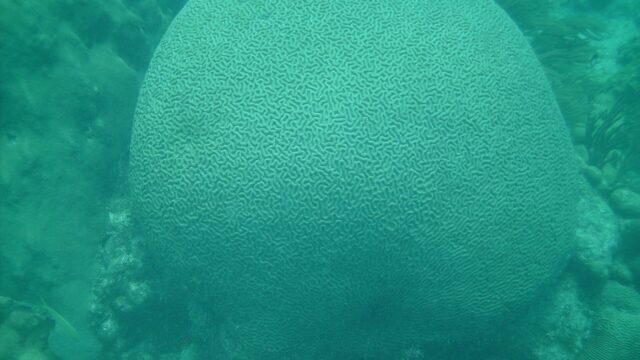
Brain corals, star corals, mustard hill coral, sea fans and sea rods waving in the surge, and — increasingly rarely — elkhorn coral, once the dominant reef-builder here and now a fraction of its former cover after decades of bleaching and disease. Restoration projects are outplanting nursery-grown elkhorn and staghorn on several Keys sites, and the crews will sometimes be working while you are on the water. That is worth watching for. It is also the reason nobody is allowed to touch anything.
Practicalities
Arriving
MM 102.6, oceanside, an hour from Miami International in light traffic and about three and a half hours from Key West. The gate opens at 8:00 a.m. Unlike Bahia Honda, Pennekamp does not usually turn cars away, but on winter weekends and holidays the lots do fill and there can be a queue at the booth. If you have a boat trip booked, arrive 45 minutes early — the check-in, the waiver, the gear fitting and the walk to the dock take longer than you expect.
Booking the boats
Book the boat trips in advance, online or by phone, especially December to April. Trips cancel for weather regularly and the concession will refund or rebook, which is a good sign rather than a bad one. Understand before you pay that a 20-knot easterly means either no trip or a poor one.
What to bring
- Reef-safe sunscreen — mineral-based, no oxybenzone or octinoxate — plus a rash guard, which works better than either.
- A towel and dry clothes, because the boat ride back at 20 knots is cold when you are wet.
- Motion sickness tablets if you are at all susceptible, taken an hour before boarding.
- Water shoes for the beaches and the boat dock.
- Insect repellent for the trails and the canoe route.
- Your certification card if you are diving.
Rules
No touching or standing on coral. Nothing leaves the park — no shells, no sand, no coral, living or dead. No spearfishing, no lobstering, no collecting anywhere in the park. Fishing is permitted in designated areas with a Florida licence but not on the reef sites. Alcohol is prohibited, as in all Florida state parks. Drones need a permit.
Accessibility
The visitor center, restrooms, the mangrove boardwalk and the picnic areas are accessible, and the paths around the main parking area are paved and level. The glass-bottom boat is the accessible way to see the reef and the staff are used to arranging it — call ahead about boarding assistance. Cannon Beach has a firm approach but the sand itself is soft; beach wheelchairs may be available on request. The Wild Tamarind trail is natural surface with roots and is difficult.
When to go
Water clarity is everything here and clarity is a function of wind, not season. Late spring — May into early June — has the lightest average winds of the year and the best visibility, with warm water and prices below the winter peak. That is the answer if the reef is the reason you are coming.
December through April brings pleasant air temperatures, big crowds, and cold fronts that push through every week or two with two or three days of hard north wind and cancelled boats. Book a three-day window rather than a single afternoon. July and August are hot, often glassy, and superb underwater; sargassum affects the shoreline from about March through October but not the reef, and the park has almost no beach to spoil. September and October are the cheapest and quietest weeks and the peak of hurricane season.
The honest verdict
Eight dollars a carload for access to the only living coral barrier reef in the continental United States, with a state-run snorkel trip at $40–$60 that beats the private operators on price and matches them on quality, is the best-value attraction in the Florida Keys. Take the earliest snorkel departure of your stay, do the canoe trail the following morning, and look at the aquarium while you wait for a boat.
What Pennekamp is not is a beach park. The two swimming beaches are small, shallow and made of imported sand; if that is what you came for, drive 65 miles southwest to Bahia Honda instead. And if the wind has been blowing 20 knots from the east for two days, do not spend $50 on a glass-bottom boat ticket in the hope that it will be different offshore. It will not be. Go and look at the mangroves instead, and try the reef tomorrow.
Frequently asked questions
How much does John Pennekamp Coral Reef State Park cost?
$8 per vehicle carrying two to eight people, plus a 50-cent per-person Monroe County surcharge. A single-occupant vehicle or motorcycle is $4.50, and pedestrians and cyclists are $2.50 each. Boat trips are separate: $40–$60 for snorkeling, $40–$55 for the glass-bottom boat, $95–$140 for a two-tank dive.
What are the park’s opening hours?
8:00 a.m. until sundown, every day of the year. The visitor center and concession keep shorter hours, and boat departures are typically morning and early afternoon.
Can you snorkel from the shore at Pennekamp?
Only at Cannon Beach, where replica cannon and ballast stones sit in three to eight feet of water about 100 feet out. The actual reef is six miles offshore and reachable only by boat.
Is the glass-bottom boat worth it?
On a calm morning, yes, and it is the only way to see the reef if you cannot get in the water. In a chop it is a poor experience and a reliable cause of seasickness. Ask about the sea state before you buy, choose a morning departure, and take motion tablets in advance.
How deep is the Christ of the Abyss?
About 25 feet, at Key Largo Dry Rocks. The statue stands nine feet tall on a concrete base, so its raised hands are shallow enough to see clearly from the surface, and a confident snorkeler can free-dive to it on a calm day.
Do you need to book Pennekamp in advance?
Not for day entry, though the lots can fill on winter weekends. Boat trips should be booked ahead from December to April, and campsites need the eleven-month window.
Is Pennekamp good for children?
Yes, from about age six. The aquarium in the visitor center, Cannon Beach, the kayaks on the sheltered mangrove trail and the glass-bottom boat all work well, and the snorkel trip suits confident swimmers from around eight or nine. There is no lifeguard on either beach.
How long do you need at Pennekamp?
Half a day for a boat trip plus the visitor center. A full day if you want the boat, the canoe trail and the beaches. Two mornings if the reef is the point of your trip, so a windy day does not cost you it.
Related Key West Guides
- Key Largo guide — the island the park sits on, and where to stay on it
- The Florida Keys beyond Key West — the whole chain, island by island
- Key West snorkeling — the equivalent trips at the southern end
- Key West glass bottom boat — what to expect, and when not to bother
- Bahia Honda State Park — the beach park, 65 miles southwest
- Key West camping — the state park reservation window explained
Photo Credits
Christ of the Abyss at Key Largo Dry Rocks: Christ of the Abyss, Key Largo, FL by Sebastian Carlosena, CC BY-SA 3.0, via Wikimedia Commons.
Stoplight parrotfish on Molasses Reef: Blue Parrotfish on Molasses Outer Reef, Key Largo by Matt Kieffer, CC BY-SA 2.0, via Wikimedia Commons.
Sources & corrections
Rates, hours and closures verified against operator listings and on-island visits. Prices are peak-season unless noted.