Sheet 11 · Restaurants
Key West Stone Crab Season: When to Go and Where to Eat
Stone crab season runs October 15 to May 1: the FWC rules, how the claw harvest really works, the best months, claw sizes and prices, how to eat them, and where to eat and buy claws in Key West and up the Keys.
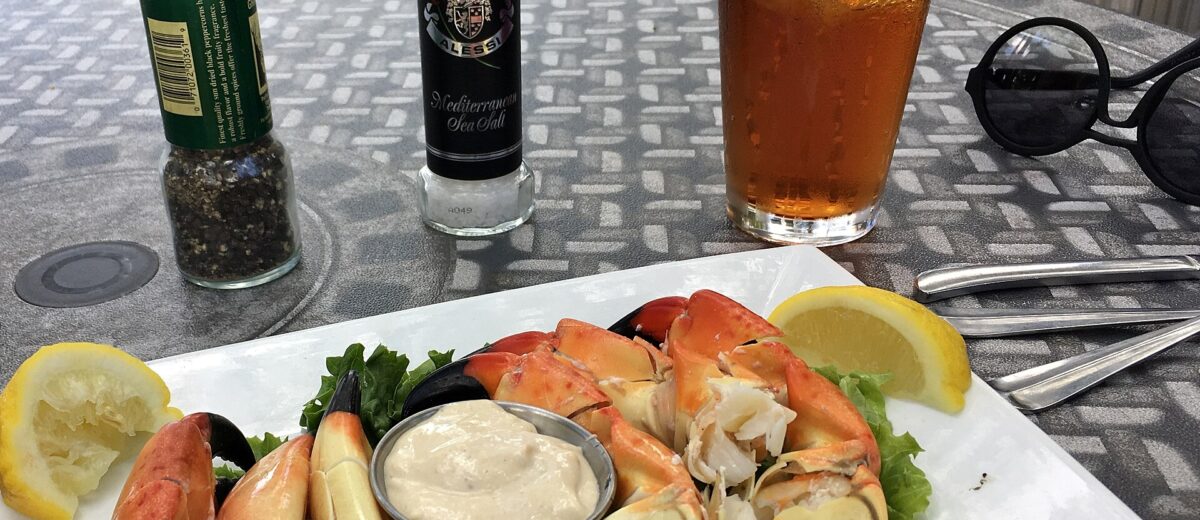
In the middle of October, the chalkboards outside Key West’s raw bars get a new line, and it’s usually the same three words: “Stone crab’s back.” Once the season opens, the first claws of the year start turning up at raw bars and seafood markets around the island, cracked and served cold. For the next six and a half months they’re the island’s signature splurge. Key West stone crab season runs from October 15 to May 1, and if you’re here in that window, a plate of claws at a waterfront table is one of the essential Key West meals. It’s expensive, it’s messy, and it’s worth it at least once.
This guide covers the season dates and the rules behind them, what stone crab actually is and how the claw harvest works (including the honest version of the sustainability story), the best months to eat it, sizes and prices, how to eat claws properly, where to eat and buy them in Key West and up the Keys, and what isn’t worth the money. Regulations were checked in October 2026. Prices move with every season’s catch, so treat them as the right order of magnitude and ask for the day’s market price.
Key West stone crab season at a glance
| Detail | Stone crab in Key West |
|---|---|
| Season | October 15 to May 1; closed May 2 to October 14 |
| What you eat | The claws only. They’re cooked straight after harvest, then chilled |
| How it’s served | Cold and cracked, with mustard sauce, lemon and sometimes drawn butter |
| Sizes | Medium, large, jumbo and colossal |
| Retail prices | Roughly $30–$35 a pound for medium, up to about $65–$79 for colossal at Florida seafood markets |
| Restaurant pricing | “Market price”, noticeably above retail. Always ask before ordering |
| Best months | Mid-October to December for freshness and fewer crowds; January to March for peak-season buzz |
| Overlap with lobster | October 15 to March 31, the best months for Keys seafood |
| Where to eat | Historic Seaport raw bars, The Stoned Crab, and seafood markets for takeaway claws |
What stone crab is, and how the harvest works
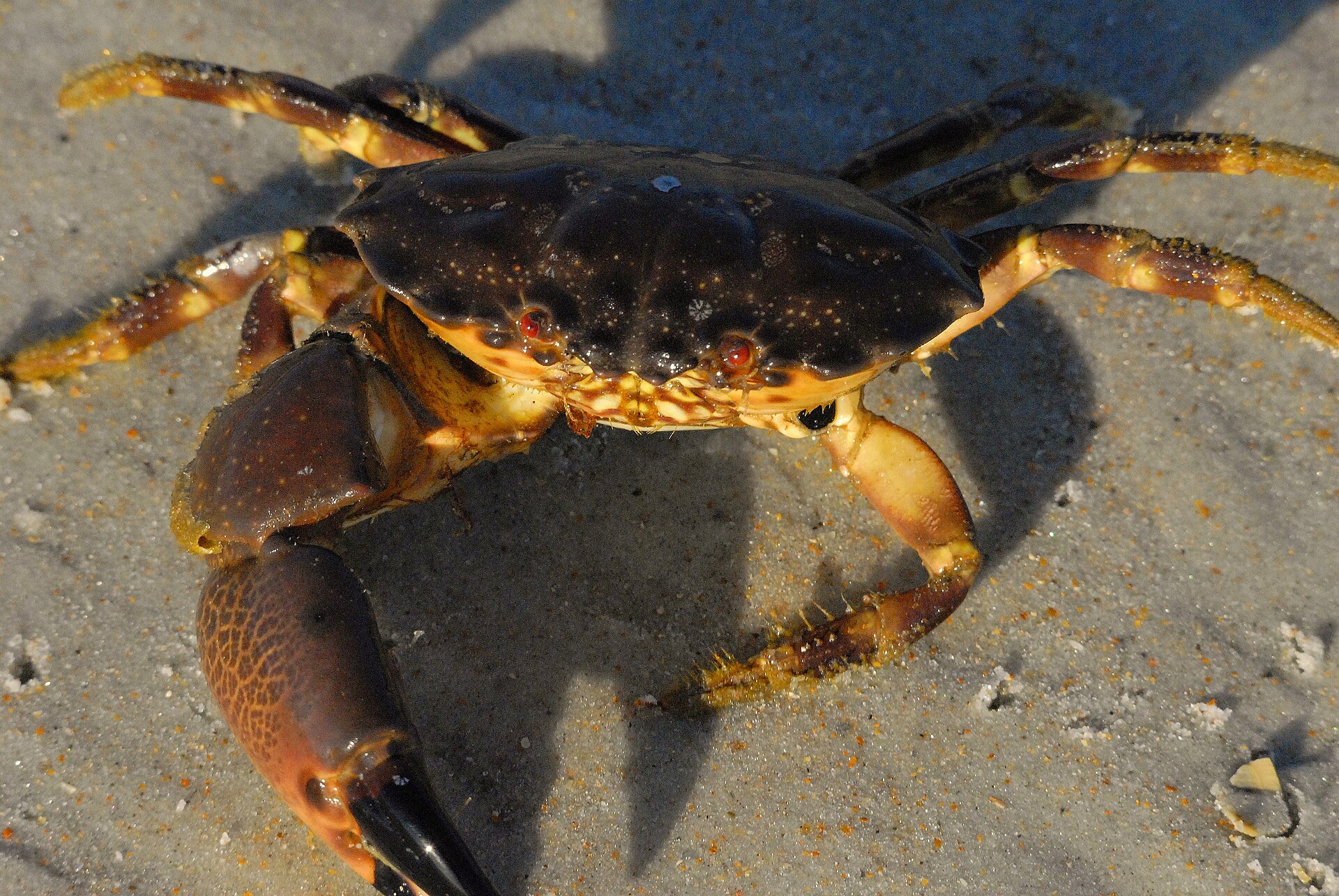
The Florida stone crab is a stocky, dark-shelled crab of the warm, shallow waters of Florida and the Gulf, with two big claws tipped in black. It’s the claws people eat, and nothing else. When a crabber pulls a trap, any crab with a claw over the legal minimum has that claw carefully twisted off, and the crab goes back into the water alive. Taking whole crabs is illegal, and so is taking claws from egg-bearing females. Over time, and several molts, a crab can regrow a lost claw.
The claws are cooked almost immediately, usually boiled at the dock or on the boat. That isn’t just tradition. If raw claws are frozen or left too long, the meat sticks to the shell and turns mushy. After cooking they’re chilled on ice and sold cold, which is why stone crab is always served chilled or at room temperature rather than hot like lobster. The meat is sweet, firm and a little briny, somewhere between lobster and a very good blue crab, and it needs almost nothing added to it.
Florida produces almost all of the country’s stone crab. The working waterfront on Stock Island, just east of Key West, is where much of the local fleet ties up. See our Key West seafood restaurants guide for the wider seafood scene.
How stone crab became a Florida institution
For a long time, Floridians didn’t think much of stone crabs. The story most often told is that in the early 1920s a marine researcher brought a sack of them to Joe Weiss, who ran a small lunch counter on Miami Beach. Weiss boiled the claws, chilled them and served them cracked with a mustard sauce, and Joe’s Stone Crab became one of the most famous restaurants in the South. Whether or not every detail of that story is true, cold claws with mustard sauce became the way Florida eats stone crab, and they’ve been a winter ritual from Miami to Key West ever since.
In the Keys, stone crab grew up alongside the lobster and shrimp fisheries as part of the working waterfront that has kept the islands fed and employed for generations. Today crabbers from Key West, Stock Island, Marathon and the rest of the Keys set their traps in the fall, and the claws they bring back supply restaurants across Florida and beyond. When you eat stone crab in Key West, there’s a good chance it came off a boat you could walk to.
The season and the rules
Florida’s stone crab season is set by the Florida Fish and Wildlife Conservation Commission (FWC), and it was tightened in recent years to protect the fishery. The current rules are:
| Rule | Current requirement |
|---|---|
| Season | October 15 through May 1 (closes May 2), recreational and commercial |
| Minimum claw size | 2 7/8 inches |
| Recreational bag limit | 1 gallon of claws per person, or 2 gallons per vessel, whichever is less |
| Trap escape rings | An unobstructed escape ring 2 3/16 inches across in an outer trap wall, recreational and commercial |
| Recreational trap registration | Free annual registration required for recreational trappers aged 16 and over |
| Whole crabs | Illegal to keep. Claws only, and the crab is returned alive |
| Egg-bearing females | Claws may not be taken |
Unless you’re a resident with a boat, you’ll be buying your stone crab rather than catching it, but these rules explain a lot about what you’re paying for: a short season, a size limit that keeps small claws off the market, and a catch that depends on the crabs regrowing.
The honest version of the sustainability story
Menus love to tell you that stone crab is the ultimate sustainable seafood, because the crab goes back and grows a new claw. That’s partly true, and it’s the reason the fishery works at all. But it isn’t the whole story. Studies of declawed crabs have found that a significant share don’t survive the process, and survival is worse when both claws are taken. Crabs that do survive take time, and several molts, to regrow a claw of legal size. Some recent seasons have also been lean, with smaller catches pushing prices up.
None of that means you shouldn’t eat stone crab. It’s a regulated, well-managed Florida fishery, and the rules have been tightened to protect it. But it’s worth knowing that the “free lunch” story is an oversimplification. It’s a luxury with a real cost, which is one more reason to eat it in season, from local boats, and to savor it rather than treat it as bar food.
When to eat stone crab in Key West
Any time between October 15 and May 1 will do, but the season has a shape:
| Months | Stone crab | Lobster | Weather and crowds |
|---|---|---|---|
| October 15–31 | Opening weeks: the first claws of the season | In season | Warm and humid |
| November – December | Plentiful and fresh | In season | Dry and comfortable; moderate crowds until Christmas |
| January – March | Good supply through peak tourist season | In season until March 31 | Best weather, biggest crowds, highest room rates |
| April 1 – May 1 | The last weeks of the season | Closed | Warm, crowds easing after Easter |
| May 2 – October 14 | Closed. Eaton Street Seafood, for one, sells its off-season claws frozen | Sport season late July, opens August 6 | Summer and hurricane season |
If you have a choice, November and early December are the sweet spot. The claws are fresh and abundant, lobster is also in season, the weather is superb, and restaurant tables are easier to get than in the winter rush. Our Key West in November guide makes the case in full. The opening days in mid-October are fun for the occasion, as described in our Key West in October guide. Around the holidays, claws are part of the festive table. See our Key West in December guide.
Sizes and prices
Stone crab claws are sold by size, and the size changes the experience as much as the price. Bigger claws give you larger, meatier pieces and less cracking per bite. Smaller claws are sweeter to some tastes and better value.
| Size | Roughly how many per pound | Florida market prices (per pound) |
|---|---|---|
| Medium | About 6–7 claws | About $30–$35 |
| Large | About 4–5 claws | About $40–$46 |
| Jumbo | About 2–3 claws | About $55–$60 |
| Colossal | About 1–2 claws | About $65–$79 |
Those figures are a guide to what Florida seafood markets charge. Restaurants add their own markup and usually list stone crab at “market price”, sometimes by the pound and sometimes by the claw. There’s nothing sneaky about that, because the price genuinely moves with the catch, but always ask the server what the market price is today and roughly how many claws it buys before you order. A plate of jumbos for two can easily become the most expensive thing on the bill.
Which size to order? For most people, large claws are the best balance of value and meatiness. Mediums are the budget choice and perfectly good. Jumbos and colossals are for a celebration.
How to eat stone crab claws
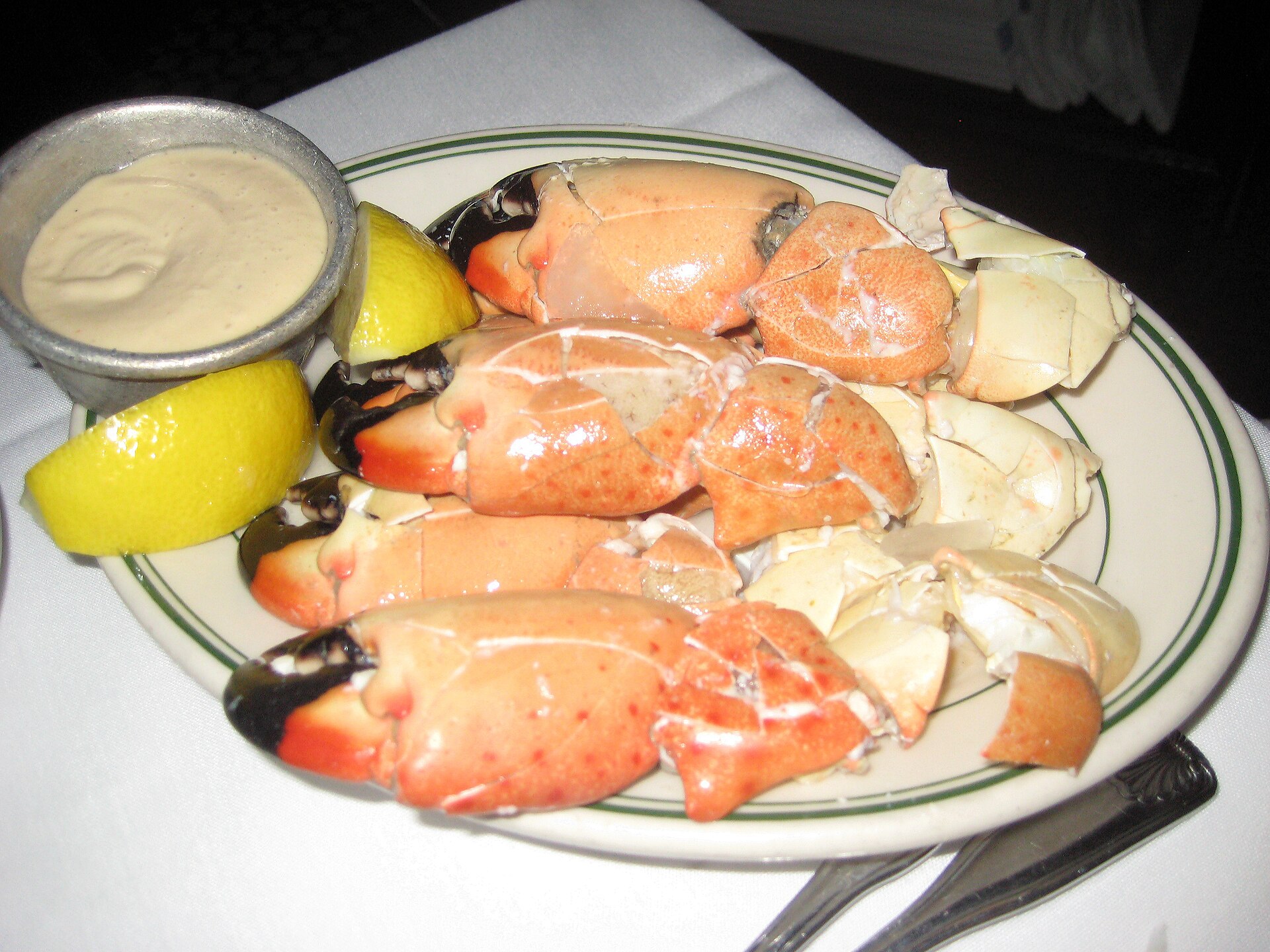
- They come cracked. Restaurants crack the shells in the kitchen, usually with a mallet or the back of a heavy spoon, so you can lift the pieces off by hand. If you buy uncracked claws from a market, crack them gently across the knuckles and along the claw with the back of a spoon, enough to break the shell without smashing the meat.
- Eat them cold. Stone crab is traditionally served chilled. Some places offer them warm with butter, but cold is the classic, and it lets the sweetness come through.
- Use the mustard sauce. The classic partner is a cold mustard sauce made from mayonnaise, dry mustard and a dash of Worcestershire or steak sauce, popularized by Joe’s Stone Crab in Miami Beach, the century-old restaurant that made stone crab famous. Lemon and drawn butter are the alternatives.
- Pull the meat out whole. Lift it out of the shell in one piece and dip.
- Don’t forget the pincer. The movable finger of the claw holds a small, sweet piece of meat.
- Accept the mess. Ask for extra napkins. This is finger food.
Where to eat stone crab in Key West
Many Key West seafood restaurants serve stone crab in season. These are the places locals and regular visitors point to most often. Menus and availability change daily with the catch, so check that claws are on the board before you sit down.
The Historic Seaport
The harborfront around Key West Bight is the natural home of a stone crab dinner, with boats tied up alongside and the sunset over the water.
- Half Shell Raw Bar: casual, funky and loud, with picnic-style tables, a classic raw bar and cold beer. Stone crab in season suits it perfectly, and its small seafood market sometimes sells claws to take away.
- Alonzo’s Oyster Bar: a relaxed waterfront oyster bar on the seaport boardwalk, good for claws and oysters side by side.
- Conch Republic Seafood Company: a big, open-air seafood restaurant on the harbor, lively and easy for groups.

The Stoned Crab
The Stoned Crab is a seafood restaurant beside Ibis Bay Beach Resort, with boats bringing in stone crab and other catches. It’s a little more polished than the seaport raw bars and a good choice for a stone crab dinner.
For a special occasion
Several of Key West’s fine-dining and romantic restaurants feature stone crab in season, often as a starter or a chilled seafood platter. See our Key West fine dining and romantic restaurants guides, and our Key West waterfront restaurants guide for more tables with a view.
Ordering stone crab like a local
- Ask what came in today. A good raw bar will tell you which sizes they have and whether the claws are from that morning’s boats.
- Ask the market price and the count. “How much is a pound of large, and how many claws is that?” is a perfectly normal question.
- Share a plate as a starter. A pound of large claws split between two people, followed by fish or lobster, is a better dinner than a mountain of claws each.
- Go at lunch or happy hour. Raw bars are calmer in the afternoon, and a plate of claws with a cold beer at 3 p.m. is a very Key West way to spend an hour.
- Skip the heavy sides. Coleslaw, a squeeze of lemon and the mustard sauce are all the claws need.
Buying claws to take away: the budget move
The best-value way to eat stone crab in Key West is to buy cooked, chilled claws from a seafood market and eat them yourself. Ask the market to crack them for you, pick up a tub of mustard sauce, a lemon and something cold to drink, and take them to your balcony, a picnic table at Fort Zachary Taylor or a quiet spot on the water for sunset.
- Eaton Street Seafood Market in Old Town is the convenient choice for claws to go. Expect to pay a bit more than on Stock Island.
- The seafood markets on Stock Island, where much of the fleet is based, are often the best-priced source on the island.
- The Half Shell Raw Bar’s market at the seaport sometimes has claws as well.
Market prices are retail prices, so you’ll typically pay well under a restaurant’s market price for the same claws. Keep them on ice and eat them the same day.
Stone crab up the Keys
If you’re driving down the Overseas Highway in season, it’s worth a detour for stone crab at the source.
- Keys Fisheries in Marathon is one of the most famous seafood spots in the Florida Keys: an open-air, order-at-the-window waterfront place attached to a working seafood business, serving some of the freshest stone crab claws you’ll find in season. See our Marathon guide.
- Seafood festivals. The Marathon Seafood Festival is set for March 13–14, 2027, and Key West has held its own Florida Keys Seafood Festival in February. Both are good for stone crab when it’s in season.
- Islamorada‘s dockside restaurants serve claws in season too, and you can pair a stop with feeding the tarpon at Robbie’s.
Stone crab and lobster: the best months for Keys seafood
From October 15 to March 31, Florida’s two great crustacean seasons overlap: stone crab and spiny lobster. That makes late fall and winter the best time of year to eat seafood in the Keys. You can order cold stone crab claws to start, a grilled lobster tail to follow and key lime pie to finish, all local and all in season. Our Key West lobster season guide covers the other half of the pairing, and our best key lime pie in Key West guide covers dessert.

Catching your own stone crab
Recreational stone crabbing is legal in Florida, but it’s realistically a pastime for residents and people with their own boats. You’ll need a Florida saltwater fishing license (unless exempt), the free annual recreational trap registration if you’re 16 or older, traps with the required escape rings, a claw gauge, and knowledge of the bag limits above. You can take only legal-sized claws and must return the crab to the water. For a visitor, a guided fishing trip and a seafood market are far easier. See our Key West fishing seasons guide for what else is biting while stone crab is in season.
What isn’t worth it
- “Stone crab” in summer. Between May 2 and October 14 the harvest is closed, so claws offered then are not fresh from the trap; Eaton Street Seafood, for one, sells its off-season claws frozen. Frozen cooked claws are legitimate and can be fine, but they’re not the point of eating stone crab in Key West. Wait for the season.
- Ordering at market price without asking. Ask the day’s price and how many claws it buys. It avoids an unpleasant surprise.
- Drowning them in butter. Good claws need little more than a dab of mustard sauce and a squeeze of lemon.
- Claws that have been sitting out. Cold is the point. Claws should arrive chilled, not lukewarm.
Frequently asked questions
When is stone crab season in Key West?
From October 15 through May 1 each year, statewide in Florida. The season is closed from May 2 to October 14.
How much do stone crab claws cost?
Florida seafood markets typically charge roughly $30–$35 a pound for medium claws, $40–$46 for large, $55–$60 for jumbo and $65–$79 for colossal. Restaurants charge more, usually listed as “market price”.
Are stone crab claws served hot or cold?
Traditionally cold. They’re cooked immediately after harvest, chilled, cracked and served with mustard sauce and lemon. Some restaurants offer them warm with butter.
Do stone crabs grow their claws back?
Yes, over several molts, which is why only claws are harvested and the crab is returned alive. However, research shows that not all declawed crabs survive, especially when both claws are taken.
Where is the best stone crab in Key West?
Popular choices include the Historic Seaport raw bars, such as Half Shell Raw Bar, Alonzo’s Oyster Bar and Conch Republic Seafood Company, and The Stoned Crab. For value, buy cooked claws from Eaton Street Seafood Market or the Stock Island markets. Up the Keys, Keys Fisheries in Marathon is a classic.
What’s the difference between stone crab sizes?
Medium, large, jumbo and colossal refer to claw size. Roughly six or seven mediums make a pound, compared with one or two colossals. Larger claws are meatier and more expensive.
Can you eat stone crab and lobster at the same time in Key West?
Yes, from October 15 to March 31, when both seasons are open. Those are the best months for Keys seafood.
Related Key West Guides
- Key West seafood restaurants: where to eat fish, shellfish and more
- Key West lobster season: the other great Keys crustacean
- Key West in October: when the season opens
- Key West in November: stone crab and lobster together
- Key West waterfront restaurants: tables with a view
- Best restaurants in Key West: the island’s top tables
Photo Credits
Cracked stone crab claws with mustard sauce: 2017 Sarasota Mar Vista Stone Crab 1 FRD 6870 by Fred Hsu on en.wikipedia, CC BY-SA 3.0, via Wikimedia Commons.
Stone crab claws at Joe’s Stone Crab: JoesStoneCrabs by FoodOfMiami, Public domain, via Wikimedia Commons.
Live stone crab with a missing claw: Live Juvenile Stone crab with Missing Claw – Flickr – Andrea Westmoreland by Andrea Westmoreland from DeLand, United States, CC BY-SA 2.0, via Wikimedia Commons.
Sources & corrections
Rates, hours and closures verified against operator listings and on-island visits. Prices are peak-season unless noted.


