Sheet 09 · Know Before You Go
Key West Reef-Safe Sunscreen Rules: What You Can and Cannot Bring
Is sunscreen banned in Key West? No: the 2019 sales ban on oxybenzone and octinoxate was preempted by state law before it took effect. What the law says now, what NOAA advises, how to read a label for a reef-friendly mineral formula, and what snorkel boats ask.
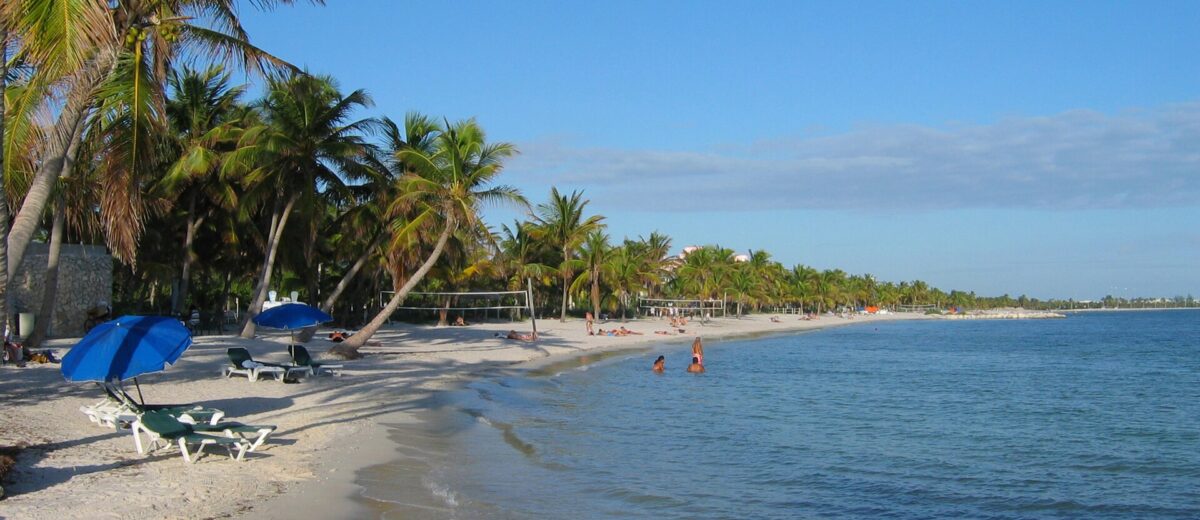
Late on the night of Tuesday, February 5, 2019, Key West’s city commission voted 6-1 to ban the sale of sunscreens containing oxybenzone and octinoxate, two chemical filters that scientists have linked to harm in coral and other marine life. The ban was due to start on January 1, 2021. It never did: a state law passed in 2020 took the power to regulate over-the-counter drugs and cosmetics away from Florida’s cities and counties, and Key West’s ordinance died before it took effect. So here is the short answer on reef safe sunscreen Key West rules: no law stops you bringing, buying or wearing any sunscreen you like. What you put on before you swim over the reef is your call, and it is worth making it carefully.
This guide explains what happened to the ban and where the law stands now, what NOAA says about sunscreen chemicals and coral, what “reef safe” does and does not mean on a label, what snorkel boats and the Dry Tortugas ask of you, and how to pack. The legal and regulatory details were checked in November 2026 against the Florida Statutes, the Florida Senate’s bill records, NOAA, the FDA, the TSA and the operators’ own pages.
Sunscreen in Key West: the short answers
| Question | Answer (November 2026) |
|---|---|
| Is any sunscreen banned in Key West? | No. The City’s 2019 sales ban was preempted by state law before its January 2021 start date. |
| Can shops on the island sell oxybenzone sunscreen? | Yes. Since July 1, 2020, Florida law reserves the regulation of over-the-counter drugs and cosmetics to the state. |
| Do snorkel boats require reef-safe sunscreen? | Policies vary. Fury lists reef-safe sunscreen among what is included on its snorkel trips; ask your operator. |
| What about the Dry Tortugas? | The National Park Service tells visitors to bring sunscreen, because none is sold in the park. |
| What does NOAA suggest? | Mineral sunscreen is “considered a better option,” along with sun-protective clothing and shade from 10 a.m. to 2 p.m. |
| Can sunscreen go in carry-on bags? | Yes, in containers of 3.4 ounces (100 ml) or less, in one quart-size bag; larger bottles go in checked luggage. |
Is sunscreen banned in Key West?
No, and it never actually was, although the island came close.
The 2019 ordinance
The ordinance Key West’s commission passed in February 2019 banned the sale or distribution of any sunscreen containing oxybenzone and/or octinoxate within city limits. It was to take effect on January 1, 2021, and to be enforced through warnings and civil citations, with exceptions for sunscreens prescribed by a licensed medical provider. It covered selling and handing out sunscreen, not bringing or wearing it. Mayor Teri Johnston summed up the argument at the meeting: there are “thousands of sunscreens out there and we have one reef.” The local conservation group Reef Relief was prominent among the ban’s supporters, and WLRN, South Florida’s public radio station, described Key West as the first place in the mainland United States to pass such a ban. Hawaii had passed a similar law the year before, and in late 2018 the Pacific nation of Palau had become the first country to ban such sunscreens, according to NPR.
Florida’s 2020 preemption
Tallahassee responded with Senate Bill 172. It passed the Senate 25-14 and the House 68-47, was approved by the governor on June 29, 2020, and took effect on July 1, 2020, as chapter 2020-118, Laws of Florida. It added a subsection to section 499.002 of the Florida Statutes stating that the regulation of over-the-counter proprietary drugs and cosmetics is expressly preempted to the state, notwithstanding any local ordinance. Sunscreen is regulated as an over-the-counter drug in the United States, so Key West’s ban was dead six months before its start date.
The whole episode in dates:
| Date | What happened |
|---|---|
| 2018 | Hawaii passes a law against selling sunscreens with oxybenzone and octinoxate; Palau follows in late 2018 as the first country to ban such sunscreens (NPR) |
| February 5, 2019 | Key West’s commission votes 6-1 to ban the sale and distribution of oxybenzone and octinoxate sunscreens in the city |
| June 29, 2020 | The governor approves Senate Bill 172, preempting local regulation of over-the-counter drugs and cosmetics |
| July 1, 2020 | The state preemption takes effect |
| January 1, 2021 | The date Key West’s ban would have started; it never took effect |
| 2026 | Section 499.002(7), the preemption, remains in the Florida Statutes |
Where things stand now
The preemption is still in the 2026 edition of the Florida Statutes, as section 499.002(7). In practice, that means:
- You can bring any sunscreen to Key West, and use it anywhere, including in the water.
- Shops on the island can sell any sunscreen that is legal elsewhere in the United States.
- A boat operator, a hotel or an attraction can still set its own policy on its own property, so a captain who asks you to use mineral sunscreen on board is within their rights.
The conservation argument that drove the 2019 vote has not gone away, though, and plenty of visitors choose reef-friendlier sunscreen anyway. Here is what the science agencies actually say.
Why Key West cared: what NOAA says about sunscreen and coral
The Florida Keys National Marine Sanctuary protects some 3,800 square miles of water around the island chain, and NOAA describes the reef there as the only coral barrier reef in the continental United States. Snorkel and dive trips from Key West head out to reefs inside it.
NOAA’s National Ocean Service keeps a page on skincare chemicals and coral reefs. It names ten chemicals found in sunscreens and other products that can harm marine life: oxybenzone, benzophenone-1, benzophenone-8, OD-PABA, 4-methylbenzylidene camphor, 3-benzylidene camphor, nano-titanium dioxide, nano-zinc oxide, octinoxate and octocrylene. It cites an August 2022 National Academy of Sciences study, which found that chemical UV filters can harm aquatic life but that a fuller risk assessment is needed, and it describes the effects as an active area of research. Its practical advice is that mineral sunscreen is considered a better option, and that sun-protective clothing and shade do the job without putting anything in the water at all.
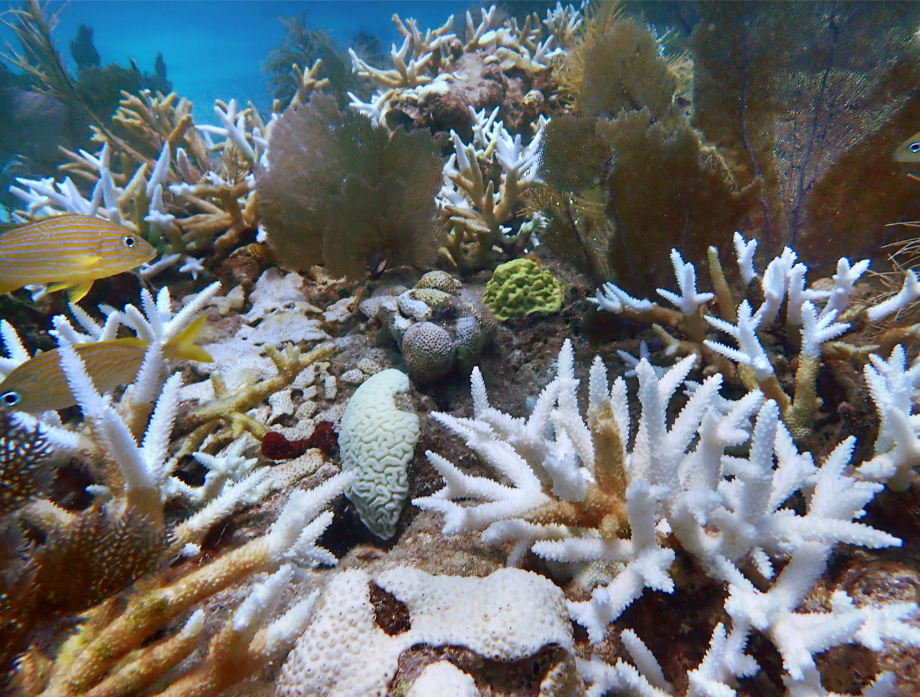
It is worth keeping sunscreen in proportion. NOAA’s own coverage of the 2023 bleaching put the spotlight on heat: during that summer’s marine heat wave, it reported a water temperature of 101.1°F at a sensor in Manatee Bay, near Everglades National Park, and by mid-August it had every part of the Florida Keys at Bleaching Alert Level 2. Choosing a mineral sunscreen will not fix that. It is simply one of the few things a visitor can control, and it costs almost nothing to get right.
What “reef safe” actually means on a label
Less than you might hope. “Reef safe” and “reef friendly” are phrases on the front of the bottle, and NOAA’s guidance does not define them, so the useful information is on the back. In the United States, sunscreen is regulated as a drug by the FDA, which means every bottle carries a Drug Facts panel listing its active ingredients. That list is what to read.
Here is how the common active ingredients line up against NOAA’s list and the FDA’s 2021 proposed order on sunscreen ingredients, which is still a proposal:
| Active ingredient | On NOAA’s list of chemicals that can harm marine life? | FDA 2021 proposed order |
|---|---|---|
| Zinc oxide | Only in nano form | Proposed as generally recognized as safe and effective (up to 25%) |
| Titanium dioxide | Only in nano form | Proposed as generally recognized as safe and effective (up to 25%) |
| Oxybenzone | Yes | Proposed as needing more safety data |
| Octinoxate | Yes | Proposed as needing more safety data |
| Octocrylene | Yes | Proposed as needing more safety data |
| Avobenzone | No | Proposed as needing more safety data |
Two things to note. First, the FDA says that listing an ingredient as needing more data is not a conclusion that it is unsafe for people; it means the agency wants more information. Second, because NOAA’s list includes the nano forms of zinc oxide and titanium dioxide, a sunscreen that avoids everything on it is a mineral formula whose label says “non-nano.” If you want the simplest rule of thumb: zinc oxide or titanium dioxide as the only active ingredients, non-nano, and nothing from the table’s “yes” rows.
Making a mineral sunscreen work
Mineral sunscreens have a reputation for leaving a white sheen, and the thicker ones do. They also tend to be the sunscreens people apply too thinly, precisely because of that sheen, which defeats the point. A few habits help:
- Choose broad spectrum. Look for “broad spectrum” and an SPF of 15 or higher on the label, as the FDA advises; a mineral formula with both is doing the same job as any other.
- Apply at the hotel, not the dock. Rubbing a mineral cream in properly takes a few minutes, and it goes on more evenly on dry skin in the shade than on a rocking boat.
- Use enough. A thin, invisible smear is not much protection. If the white cast bothers you, a tinted mineral sunscreen lets you use a proper amount without looking ghostly.
- Do not forget the edges. Ears, the back of the neck, the tops of the feet and the backs of the knees are where snorkelers burn, because they face the sky while you float.
- Reapply as the label says. Water resistance is time-limited, so check the label and reapply after swimming and toweling off.
What snorkel boats, parks and operators ask
Because the law leaves it to them, policies vary from boat to boat. A few examples from the operators’ own pages:
- Fury Water Adventures lists “Reef Safe Sunscreen” among what is included on its Key West snorkel trips, so you do not need to bring your own for that outing.
- Sunset Watersports, in its March 2026 guide to Key West snorkeling tours, tells guests to bring reef-safe sunscreen and to use one without oxybenzone.
- The Yankee Freedom, the Dry Tortugas ferry, tells passengers to always wear sunscreen.
- Dry Tortugas National Park asks visitors to bring sunscreen with them, because it cannot be bought in the park.
If you are booking a snorkel, dive or sandbar trip, ask the operator two things: whether it supplies sunscreen on board, and whether it asks guests to use a particular kind. Either way, put your sunscreen on before you leave the hotel rather than on a moving deck, where a spray mostly ends up in the wind and on your neighbors. Our guides to snorkeling in Key West and to the reef snorkeling trips compare the boats.
Cover up: clothing is the reef’s best friend
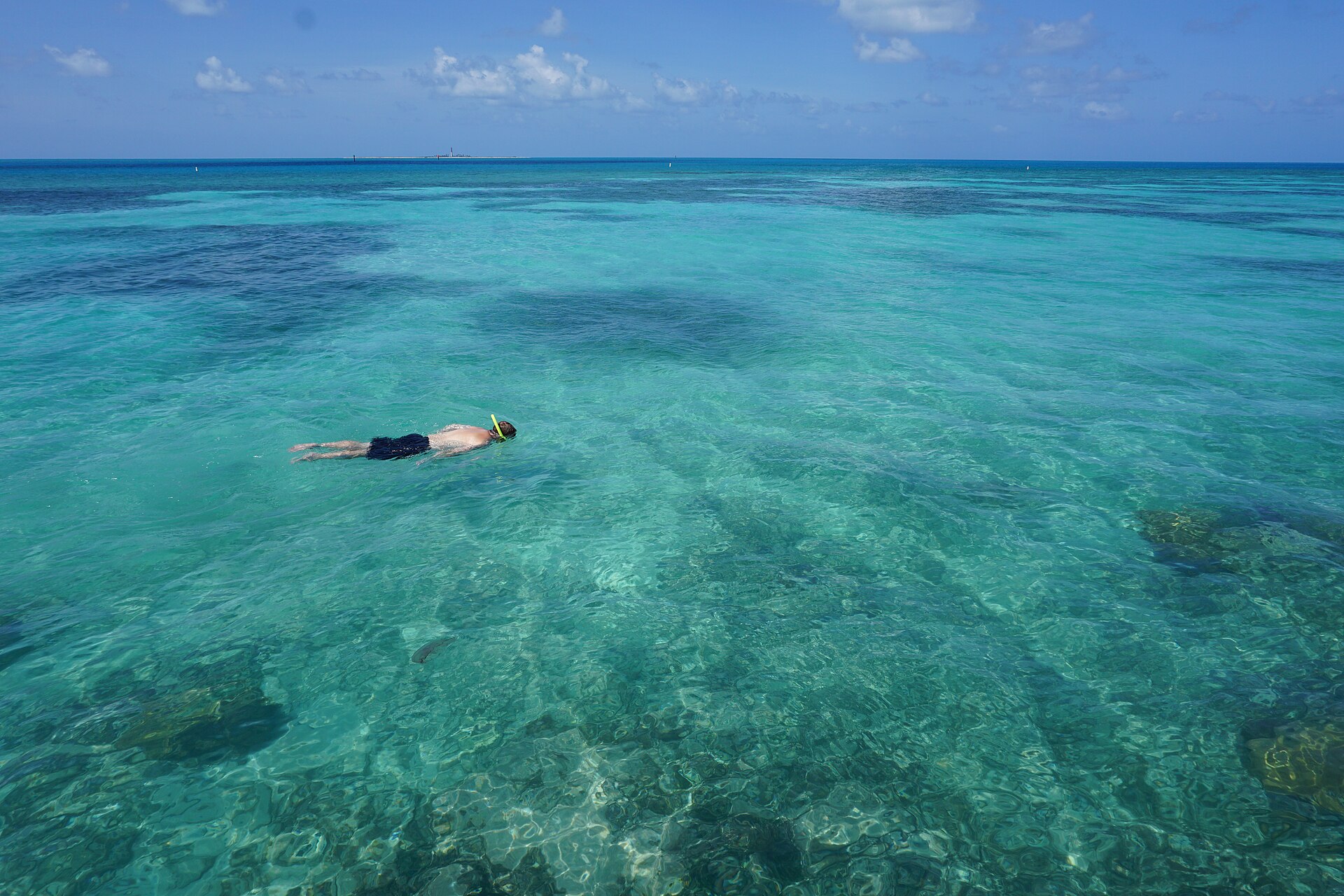
The single most effective reef-friendly sun protection is not a cream at all. NOAA recommends sun-protective clothing and staying in the shade between 10 a.m. and 2 p.m., and for a snorkeler that translates into a long-sleeved rash guard or a thin full-length skin suit, which protects your back and shoulders, the parts that burn first when you float face down, without washing anything off into the water. Add a wide-brimmed hat and sunglasses for the boat ride, and you only need sunscreen on your face, neck, hands and the backs of your legs.
For whatever skin is left uncovered, the FDA advises a broad-spectrum sunscreen with an SPF of 15 or higher, and the label tells you how often to reapply, especially after swimming. Do not underestimate the sun here: Key West sits in the subtropics, the summer air is hot and humid, and the National Weather Service notes that standing in full sun can raise the heat index by as much as 15°F. Our what to wear in Key West guide covers sun-smart clothing for every season.
A reef-friendly snorkel day, step by step
Put together, a day on the water that is kind to your skin and to the reef looks something like this:
- Before you leave: pull on a rash guard or skin suit, and apply a mineral sunscreen to your face, neck, ears, hands and any exposed legs while you are still at the hotel.
- On the way out: sit in the shade if the boat has it, wear a hat and sunglasses, and drink water; the boat ride counts as sun time too.
- Before you get in: ask the crew whether they want guests to use the sunscreen they supply, and listen to the reef briefing.
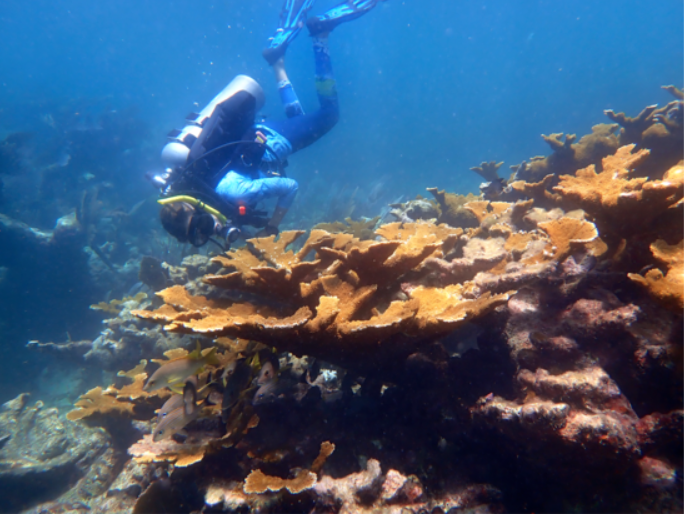
- In the water: float, do not stand. Keep your fins off the bottom and your hands off the coral, which is alive and easily damaged.
- Back on board: towel off, reapply where you need it, and cover up for the ride home.
If you are planning the trip itself, our guide to Looe Key Reef covers one of the Keys’ best-known snorkel sites, and our Key West water temperature guide explains what the water feels like month by month.
Packing and buying sunscreen for Key West
- In your carry-on: the TSA allows liquids, gels, creams and aerosols in containers of 3.4 ounces (100 ml) or less, all in one quart-size bag. Sunscreen counts. Full-size bottles go in your checked bag.
- Buying on the island: because no ban took effect, Key West shops sell the same range of sunscreens as anywhere else, so read the active ingredients if you want a mineral formula rather than relying on the front label.
- For the Dry Tortugas: pack it before you board, since nothing is for sale once you are there.
- Bring more than you think: a reapplication after every swim adds up over a week of beach days.
Spending your days at the beach rather than on a boat? Our guide to swimming in Key West covers the beaches and the water conditions.
Our Key West packing list covers everything else to bring.
Heading somewhere else after Key West?
Sunscreen rules differ from place to place, and they change. Hawaii passed its own law against selling oxybenzone and octinoxate sunscreens in 2018, according to NPR’s reporting at the time. If your trip continues to another island or reef destination, check that destination’s official guidance before you pack, rather than assuming Key West’s freedom applies there too.
Frequently Asked Questions
Is sunscreen banned in Key West?
No. Key West’s commission voted in February 2019 to ban the sale of sunscreens containing oxybenzone and octinoxate from January 1, 2021, but a Florida law that took effect on July 1, 2020, preempted local regulation of over-the-counter drugs and cosmetics, and the ban never took effect. That preemption is still in the Florida Statutes in 2026.
Can I bring my regular sunscreen to Key West?
Yes. No law in Key West or Florida stops you bringing or wearing any sunscreen. If you want to protect the reef, NOAA considers mineral sunscreen a better option and recommends sun-protective clothing and shade from 10 a.m. to 2 p.m.
What sunscreen is reef safe?
“Reef safe” is a front-of-label phrase, so read the active ingredients instead. To avoid every chemical on NOAA’s list of skincare ingredients that can harm marine life, choose a sunscreen whose only active ingredients are non-nano zinc oxide or titanium dioxide, and skip oxybenzone, octinoxate and octocrylene.
Do snorkel boats in Key West require reef-safe sunscreen?
It depends on the boat, because the law leaves it to each operator. Fury lists reef-safe sunscreen among what is included on its snorkel trips, and Sunset Watersports tells guests to bring reef-safe sunscreen without oxybenzone. Ask your operator when you book.
Do I need reef-safe sunscreen at the Dry Tortugas?
The National Park Service asks visitors to bring sunscreen, because none is sold in the park, and the Yankee Freedom ferry tells passengers to always wear it. A mineral sunscreen and a rash guard are the reef-friendly choice for snorkeling around Fort Jefferson.
Can I bring sunscreen in my carry-on?
Yes, in containers of 3.4 ounces (100 ml) or less, packed in one quart-size bag with your other liquids, gels and aerosols. Larger bottles must go in checked luggage.
Related Key West Guides
- Key West FAQ: Know Before You Go
- Key West Snorkeling Guide
- Key West Reef Snorkeling Trips
- Looe Key Reef
- Key West Packing List
- What to Wear in Key West
- Dry Tortugas Day Trip
- Key West Water Temperature
Photo Credits
Smathers Beach, Key West (featured image): Florida Keys Scenic Highway – Smathers Beach in Key West – NARA – 7718453 by an unknown author (U.S. National Archives), Public domain, via Wikimedia Commons.
Bleached corals at Sombrero Key Reef: Bleached brain corals staghorn corals Sombrero Key Reef summer 2023 by Ananda Ellis/NOAA, Public domain, via Wikimedia Commons.
Snorkeling over Dry Tortugas corals: Snorkeling above corals at Dry Tortugas (50954112442) by Dry Tortugas NPS, Public domain, via Wikimedia Commons.
Diver over elkhorn coral at Horseshoe Reef: Elkhorn coral Horseshoe Reef with diver by Ananda Ellis/NOAA, Public domain, via Wikimedia Commons.
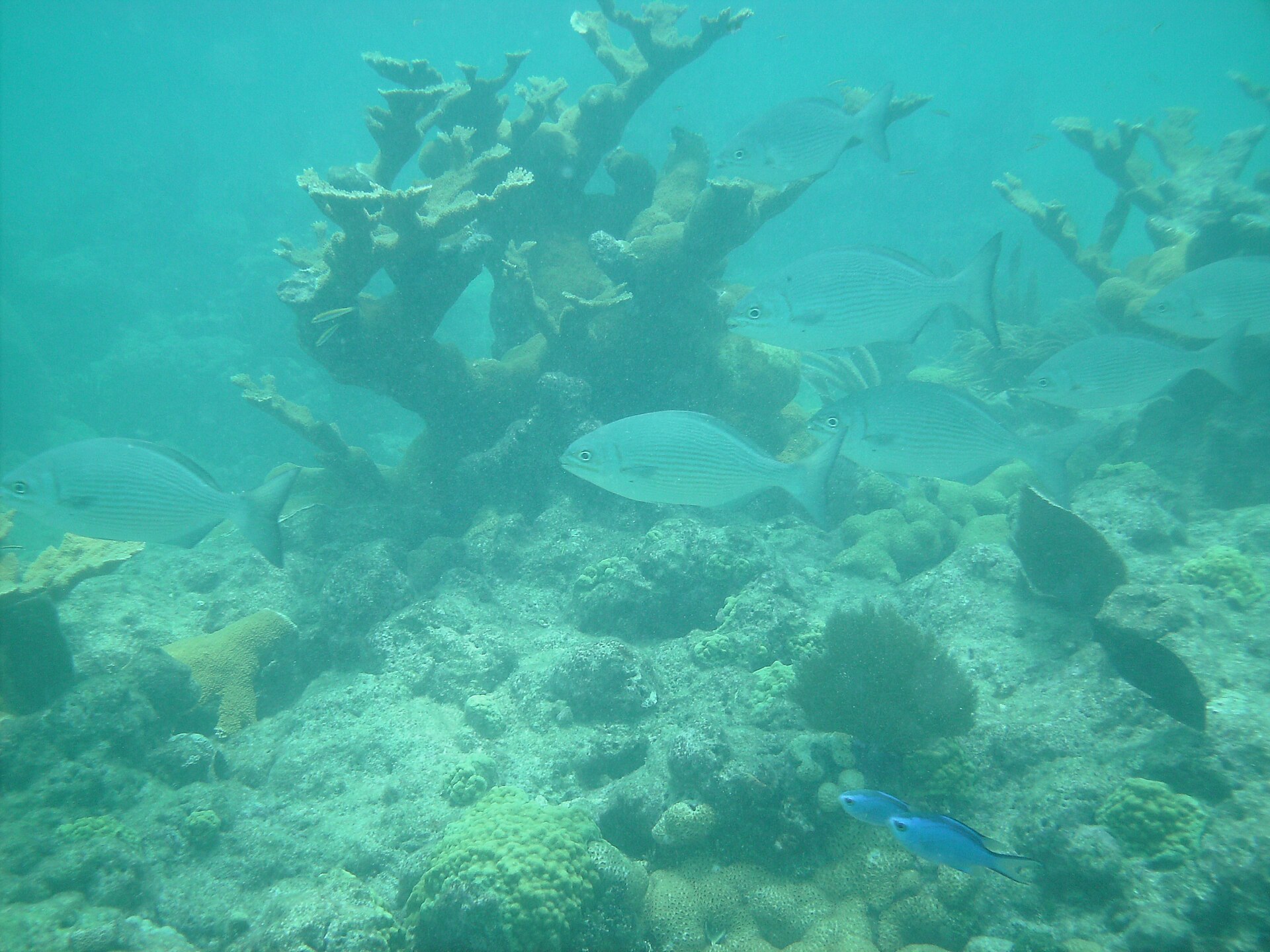
Reef fish at Looe Key: Elkhorn 06 Looe Key 2010 by Jstuby, CC0, via Wikimedia Commons.
Sources & corrections
Rates, hours and closures verified against operator listings and on-island visits. Prices are peak-season unless noted.