Sheet 09 · Know Before You Go
Can You Swim in Key West? Beaches, Currents, and Sharks
Yes, and the water is usually calm, shallow and warm. Where to swim beach by beach, what the water is like through the year, how clean it is, lifeguards, currents, and the truth about sharks.
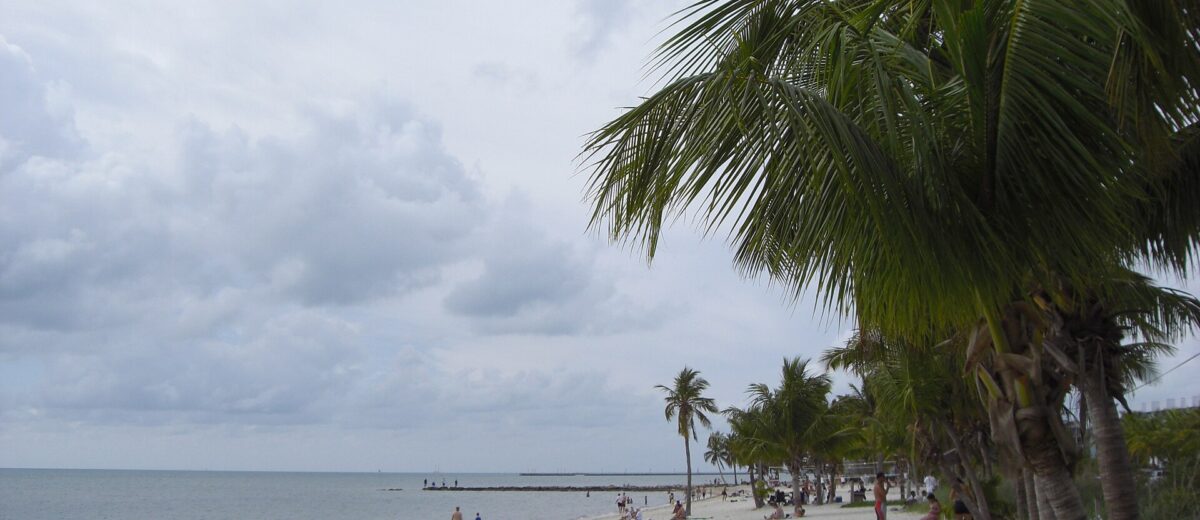
The first surprise for most visitors is how quiet the sea is. Stand on the sand at Higgs Beach on a typical morning and there is no surf to speak of, just a soft lap against the shore and water so clear and shallow that you can watch fish nosing through the seagrass at your ankles. So, can you swim in Key West? Yes, and for much of the year the water is the water is warm and calm. But Key West is not a classic big-sand beach town, and the honest answer comes with some fine print: small beaches, rocky or grassy bottoms in places, no lifeguards to speak of, and a handful of things in the water worth knowing about.
This guide covers where to swim, beach by beach, what the water is actually like through the year, how clean it is, what lives in it (yes, including sharks), and the safety basics that matter here. Fees, hours and rules were checked in November 2026 against the City of Key West, Florida State Parks, the Florida Department of Health, NOAA and the National Weather Service; confirm them before you go.
The short answer
| Question | Short answer |
|---|---|
| Can you swim in the sea? | Yes, at several public beaches on the south and west sides of the island. |
| What is the water like? | Usually calm, shallow and clear, with seagrass or rock underfoot in places. |
| Is it warm? | Around 89°F in July and August; in the low to mid 70s in January and February. |
| Are there lifeguards? | Generally no. Swim at your own risk and read the posted signs. |
| Is the water clean? | Usually, but the state tests it and posts advisories; check before you swim. |
| Sharks? | They live here, as everywhere in Florida waters. Bites are rare. |
| Best beach for an easy swim | Fort Zachary Taylor for clear water and fish; Smathers or Higgs for a shallow, sandy wade. |
Where to swim in Key West, beach by beach
Key West’s beaches are small by Florida standards, and none of them is the endless white strand of the Gulf Coast. What they offer instead is easy, gentle water within a short ride of Old Town. Our full Key West beaches guide covers each one in more depth; here is what matters for swimming.
Fort Zachary Taylor Historic State Park
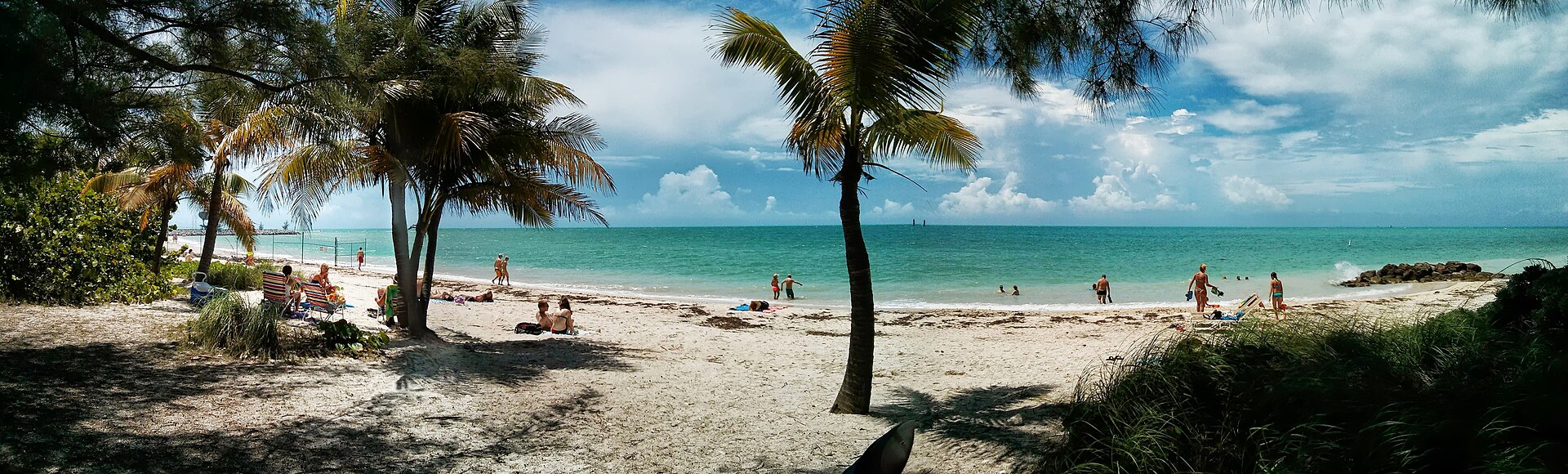
For many people this is the best swimming in Key West. The beach sits at the south end of the state park, on the island’s western tip, and the water off it is often clear, with fish over the rocks a few strokes from shore. The catch is underfoot: this is a coral-rock beach rather than soft sand, and water shoes make getting in and out far more comfortable.
- Hours: 8 a.m. to sundown, 365 days a year.
- Entry: $6 per vehicle with up to eight people, plus 50 cents a person; $4.50 for a single-occupant vehicle; $2.50 on foot or by bike.
- On site: chair, umbrella and snorkel-gear rentals at the chickee hut, the Cayo Hueso Cafe, and outdoor showers.
Smathers Beach
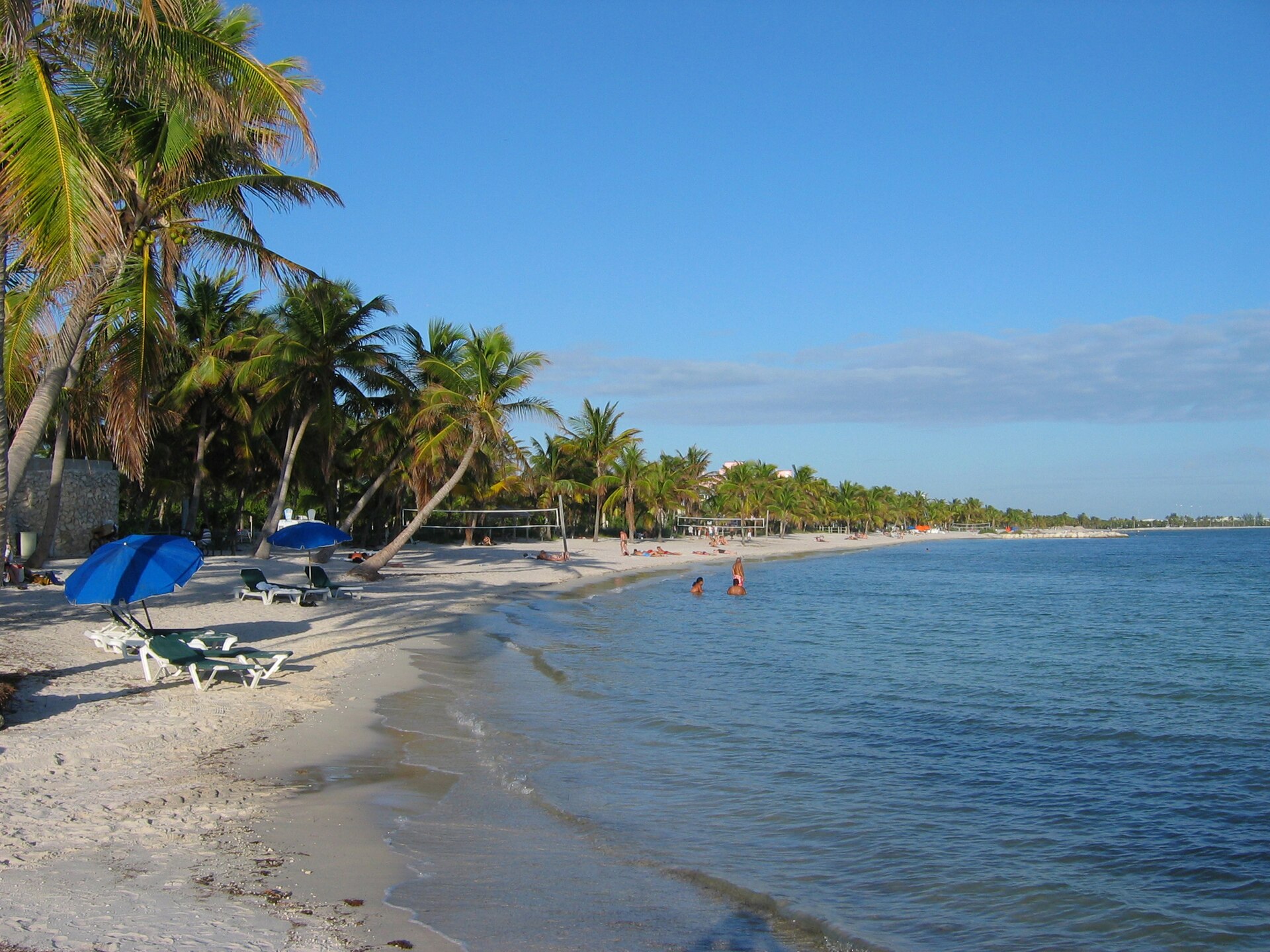
The City describes Smathers as its largest public beach, about half a mile long, on the Atlantic side of South Roosevelt Boulevard. The sand is not native: Florida’s environmental agency records that the beach has been built up with imported sand since the 1960s. The water off it is shallow for a long way out, which makes it an easy, unthreatening wade. It is open sunrise to sunset, restrooms are open 7 a.m. to 6:30 p.m., and parking along the beach is $5 an hour. There are no lifeguards. See our Smathers Beach guide for the rentals and the water sports.
Higgs Beach and Rest Beach
Clarence S. Higgs Memorial Beach, at 1040 Atlantic Boulevard, is a City-run beach, and the City itself describes its water as calm and shallow. It has plenty of facilities: a pier, restrooms, a dog park, a chair and umbrella concession and a restaurant, and it is open 6 a.m. to 11 p.m. Next door, the smaller C.B. Harvey Memorial Rest Beach is quieter. Expect seagrass in the water off both, which is a sign of a healthy shoreline rather than a dirty one, even if it is not to everyone’s taste underfoot.
Smaller spots
- Simonton Street Beach: a small downtown beach on the Gulf side with a boat ramp, open 7 a.m. to 11 p.m. Handy for a quick dip near Duval, but watch for boats using the ramp.
- South Beach: a free public beach near the Atlantic end of Duval Street.
- Dog Beach: a tiny dog-friendly beach at 1500 Vernon Avenue, open sunrise to sunset. Fine for a paddle with your dog; not a swimming destination in its own right. Our Dog Beach guide has the rules.
And one place not to swim: Mallory Square is a seawall and a working waterfront, with boats moving close in. Watch the sunset there, then swim somewhere else.
What the water is actually like
Key West sits behind the Florida Keys reef tract and a broad apron of shallow banks, so the swell that reaches the island’s beaches has usually lost most of its energy. The result is water that is calm on most days, with small waves at most, and shallow enough near shore that adults can stand a long way out at the bigger beaches. Bottoms vary: sand at Smathers and in patches elsewhere, rock and old coral at Fort Zachary Taylor, and seagrass beds off Higgs and Rest Beach.
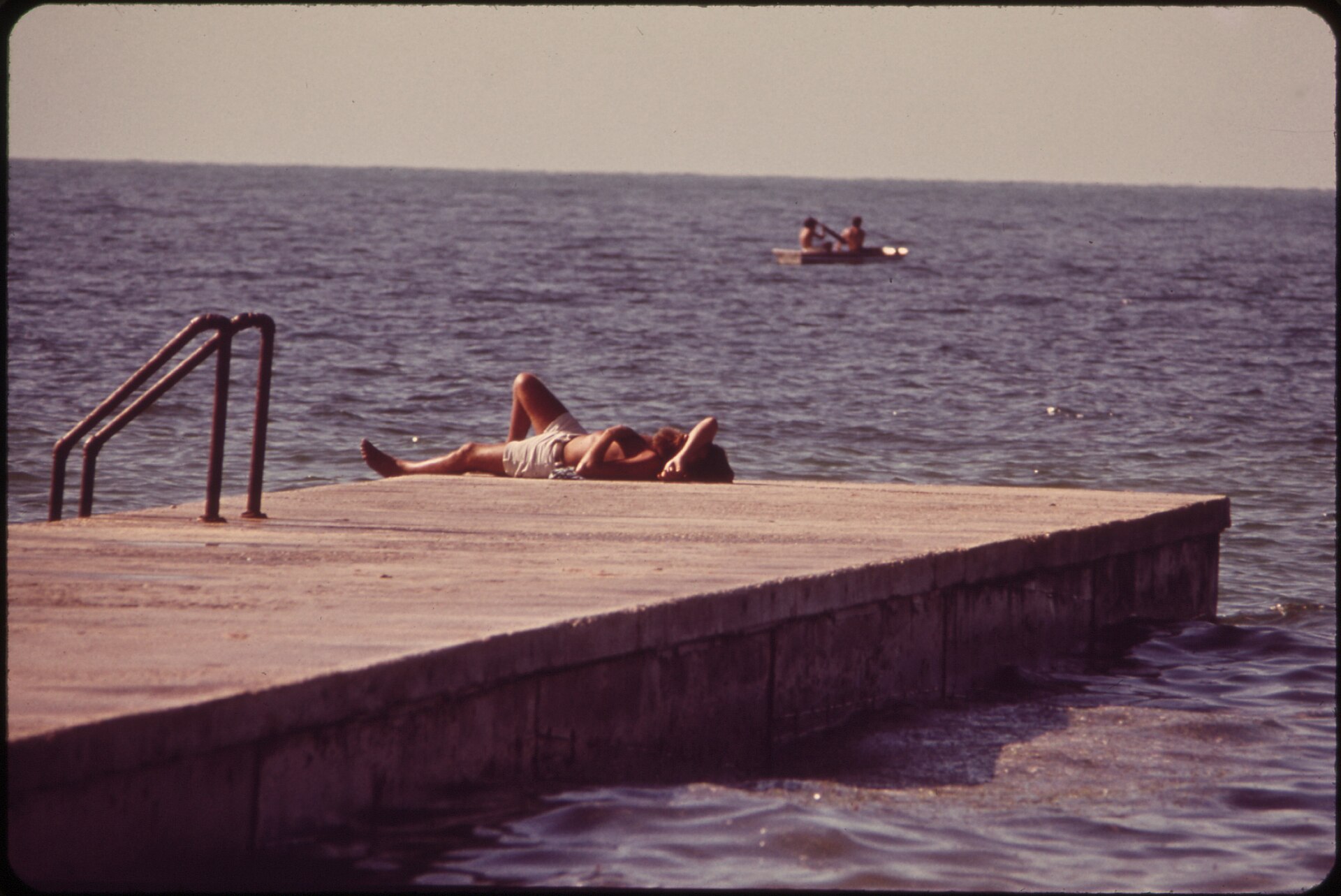
Water temperature through the year
These are averages of NOAA’s hourly readings at its Key West harbor gauge for 2023 through 2025.
| Months | Average sea temperature | What it feels like |
|---|---|---|
| December to February | About 72°F to 75°F | Bracing to get into, fine once you are moving; colder after a front |
| March and April | About 78°F to 80°F | Comfortable for most swimmers |
| May and June | About 85°F to 87°F | Warm and easy |
| July to September | About 88°F to 89°F | Bath-warm; little relief from the heat |
| October and November | About 78°F to 83°F | Ideal for many swimmers |
Winter is more changeable than the averages suggest: in February 2026 the gauge dipped to 61.2°F. For the month-by-month detail, see our Key West water temperature guide.
Lifeguards, currents and boats
Assume there is no lifeguard
Key West’s beaches are not the patrolled, flag-and-tower beaches of Miami or Daytona. The state’s own beach guide to Smathers says plainly that there are no lifeguards and you swim at your own risk, and you should assume the same everywhere on the island unless you see a staffed stand. That changes how you swim: stay within your depth, never swim alone, keep children within arm’s reach, and leave the alcohol until you are out of the water.
Rip currents
The calm water makes rip currents far less of a worry here than on Florida’s surf beaches, but the National Weather Service’s general advice still applies: check the local beach forecast before you go, and know that rips can form even on calm, sunny days. If you are ever pulled away from shore, do not fight it head-on; swim parallel to the beach until you are out of the current, then swim back in.
Boats and channels
The bigger risk off Key West is not the sea but what is moving on it. Jet skis, tour boats and private boats work close to several beaches, and the channels near the harbor are busy. Stay inside any marked swim area, do not swim across a channel, and if you snorkel away from the beach, tow a dive flag. Florida law requires boats to make a reasonable effort to stay at least 300 feet from a displayed divers-down flag in open water, and 100 feet in channels and inlets, and to slow to idle speed if they must come closer. That only works if they can see you.
Is the water clean?
Usually, yes, but it is worth a 30-second check before you swim. The Florida Department of Health’s Healthy Beaches program samples beaches for enterococci bacteria, an indicator of contamination, and grades each result: good (0 to 35 per 100 mL), moderate (36 to 70) or poor (71 or more). When a sample comes back above 70 and the resample is also high, the beach gets an advisory against swimming until the numbers come down. Results by county, Monroe included, are on the Department of Health’s beach water quality pages. Heavy rain is the usual trigger, so be most cautious for a day or two after a big storm.
Two other things to know:
- Vibrio. These bacteria occur naturally in warm salt and brackish water. The Department of Health advises keeping open wounds and broken skin out of warm seawater, and people with liver disease or weakened immune systems should take that advice seriously.
- Sargassum. This floating brown seaweed reaches Keys shores mainly in the warmer months, and 2026 was forecast as another major year. It is harmless in the water, but piles of it rotting on the sand smell of sulfur and make a beach unappealing. Our Key West sargassum guide explains when and where it collects.
Sharks and other things in the water
Sharks
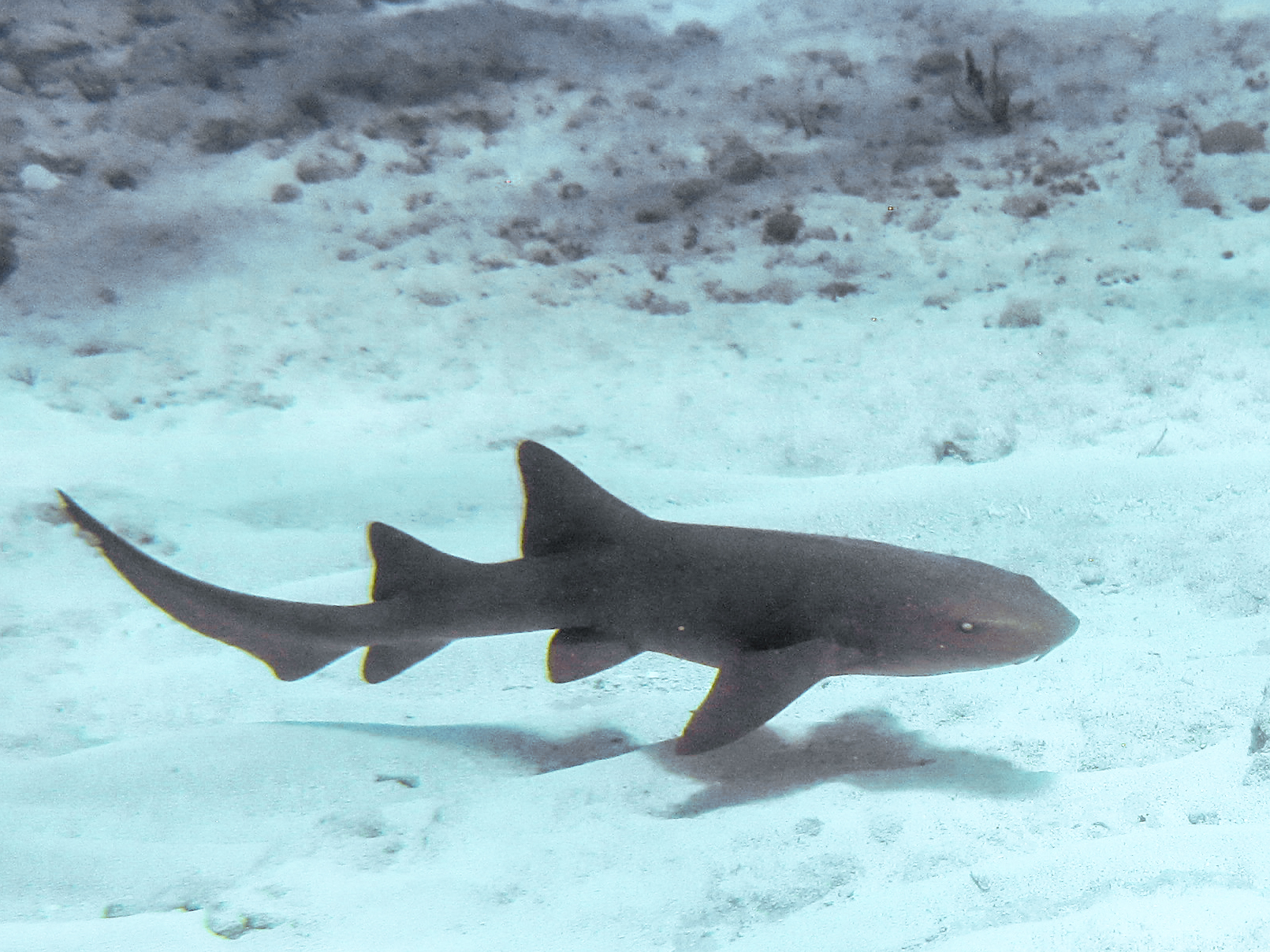
Sharks are a normal part of Florida’s waters, and the Keys are no exception. The shark you are most likely to see is the nurse shark, a slow bottom-dweller that spends its days resting under ledges; leave it alone and it will return the favor. The numbers put the risk in perspective. The International Shark Attack File, kept by the Florida Museum, counted 65 confirmed unprovoked bites worldwide in 2025, 11 of them in Florida, and the Florida cases it listed by county were in Volusia, Broward, Lee and Miami-Dade, not Monroe. Florida’s tally is spread over only a handful of counties, and Volusia County alone accounted for six of the 11.
Sensible habits lower an already small risk: avoid swimming at dawn and dusk, stay out of the water near people fishing or cleaning fish, skip the shiny jewelry, and do not swim where you see bait fish jumping.
Rays, jellyfish and urchins
- Stingrays rest half-buried in sandy shallows. Shuffle your feet as you wade so they feel you coming and swim off; a sting happens when someone steps squarely on one.
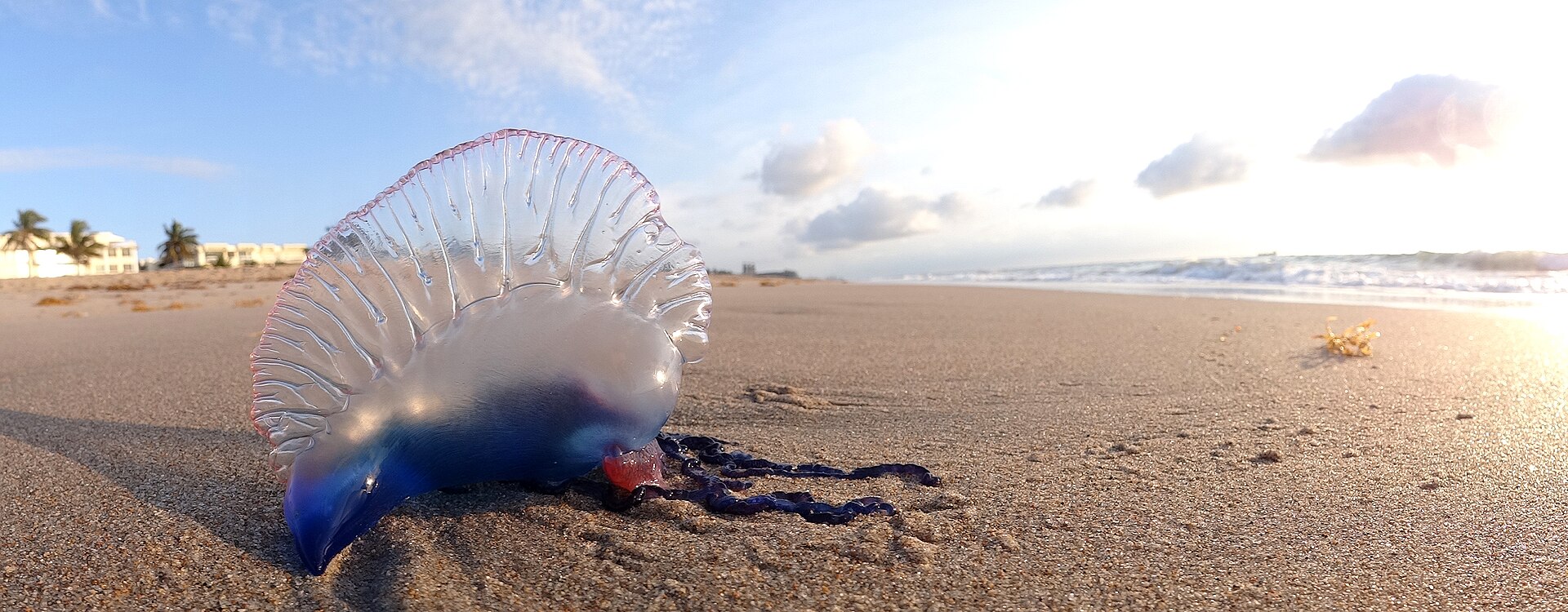
- Jellyfish and Portuguese man o’ war turn up from time to time, often pushed in by the wind. If you see blue, balloon-like floats on the sand, stay out of the water at that beach. For a sting, call Poison Control at 1-800-222-1222 for advice; get medical help for a severe reaction.
- Sea urchins can live among rocks and on the reef. Another reason for water shoes.
Coral
Once you snorkel out over rock or reef, look but do not touch. Federal rules in the Florida Keys National Marine Sanctuary prohibit touching or damaging coral, living or dead, and some of it, fire coral in particular, will give you a painful rash for your trouble. Wear reef-safe sunscreen and keep your fins off the bottom.
Swimming with children
Key West is a good place for small children to get used to the sea, with one big proviso: nobody is watching them except you. The shallow, gentle water at Smathers and Higgs is ideal for paddling, and Fort Zachary Taylor rewards older kids who can manage a mask and snorkel. Bring water shoes for everyone, put the little ones in proper flotation rather than inflatable toys, and keep them within arm’s reach. Shade is limited on the sand, and the sun at this latitude is strong, so plan swims for the morning and late afternoon.
Beyond the beaches
- Pools. Most hotels and many guesthouses have a pool, and for a lot of visitors that, not the sea, is where the swimming happens. If a pool matters to you, check before you book.
- Reef snorkeling trips. The best underwater scenery is on the reef several miles offshore, reached by boat from Old Town marinas. Our Key West snorkeling guide covers the trips and the sites.
- Swim Around Key West. For serious open-water swimmers, this 12.5-mile race circles the island clockwise from Higgs Beach. The 51st edition is set for Saturday, June 5, 2027, starting at 8 a.m., with registration closing April 9, 2027; check the race’s own site for the details.
The verdict
If you are picturing big waves and miles of soft sand, Key West will disappoint you; for that, go up the Keys to Bahia Honda or over to the Gulf Coast. If what you want is warm, calm, clear water where you can float, wade and watch fish, Key West delivers for most of the year. Swim at Fort Zachary Taylor for clarity and fish, at Smathers or Higgs for an easy paddle, pack water shoes, check the water-quality results after heavy rain, and remember that you are your own lifeguard.
Frequently Asked Questions
Is the water in Key West clean enough to swim in?
Usually, yes. The Florida Department of Health samples beaches for bacteria and issues advisories when results are poor, most often after heavy rain. Check the latest Monroe County results on its Healthy Beaches pages before you swim.
Are there sharks in Key West?
Yes, as in all Florida waters, most commonly the docile nurse shark. Bites are rare: of Florida’s 11 confirmed unprovoked bites in 2025, the International Shark Attack File listed none in Monroe County.
Are there lifeguards on Key West beaches?
Generally not. Florida’s official beach guide says there are no lifeguards at Smathers Beach, and you should treat every Key West beach as swim-at-your-own-risk.
Is the water warm enough to swim in winter?
For most people, yes. The sea averages about 72°F to 75°F from December to February, which feels cool at first. It can dip into the 60s in a cold snap.
Can you swim at Mallory Square?
No. It is a seawall and working waterfront with boat traffic, not a beach. Go to Fort Zachary Taylor, a short ride away, instead.
Are there jellyfish in Key West?
Sometimes, including the occasional Portuguese man o’ war blown in by the wind. If you see them on the sand, stay out of the water at that beach, and call Poison Control at 1-800-222-1222 for advice on a sting.
Is it safe for kids to swim in Key West?
The shallow, calm water at Smathers and Higgs is well suited to children, but there are no lifeguards, so an adult needs to be within arm’s reach the whole time.
Does Key West have a sandy beach?
Yes. Smathers Beach is the biggest stretch of sand, and Higgs Beach also has sand, though both have seagrass in the water. Fort Zachary Taylor is coral rock rather than soft sand.
Related Key West Guides
- Key West beaches guide
- Smathers Beach
- Fort Zachary Taylor beach
- Higgs Beach
- Key West water temperature by month
- Key West sargassum
- Key West snorkeling
- Is Key West safe?
Photo Credits
Featured image: sunbathers on a palm-lined beach in Key West: Beach of Key West, Florida, USA4 by Diego Delso, CC BY-SA 3.0, via Wikimedia Commons.
The beach at Fort Zachary Taylor: Fort Zachary Taylor Beach – panoramio by Robbtronic, CC BY 3.0, via Wikimedia Commons.
Swimmers at Smathers Beach: Florida Keys Scenic Highway – Smathers Beach in Key West – NARA – 7718453, Public domain, via Wikimedia Commons.
A swimming pier on the Atlantic, early 1970s: ENJOYING THE ATLANTIC OCEAN FROM THE SOUTHERNMOST SWIMMING PIER OF THE UNITED STATES – NARA – 548537 by Flip Schulke, Public domain, via Wikimedia Commons.
A nurse shark at Davis Reef: Nurse Shark, Davis Reef, Florida Keys by Eltonatlarge, CC BY-SA 4.0, via Wikimedia Commons.
A Portuguese man o’ war at Palm Beach: Portuguese Man o’ War at Palm Beach FL by Volkan Yuksel DSC05878 by Volkan Yuksel, CC BY-SA 3.0, via Wikimedia Commons.
Sources & corrections
Rates, hours and closures verified against operator listings and on-island visits. Prices are peak-season unless noted.