Sheet 09 · Know Before You Go
Why Are There Chickens in Key West? The Rooster Story
Where Key West's free-roaming chickens came from, who owns them, why feeding them is against city law, how the island rehomes them, and how to sleep through the 3 a.m. crowing.
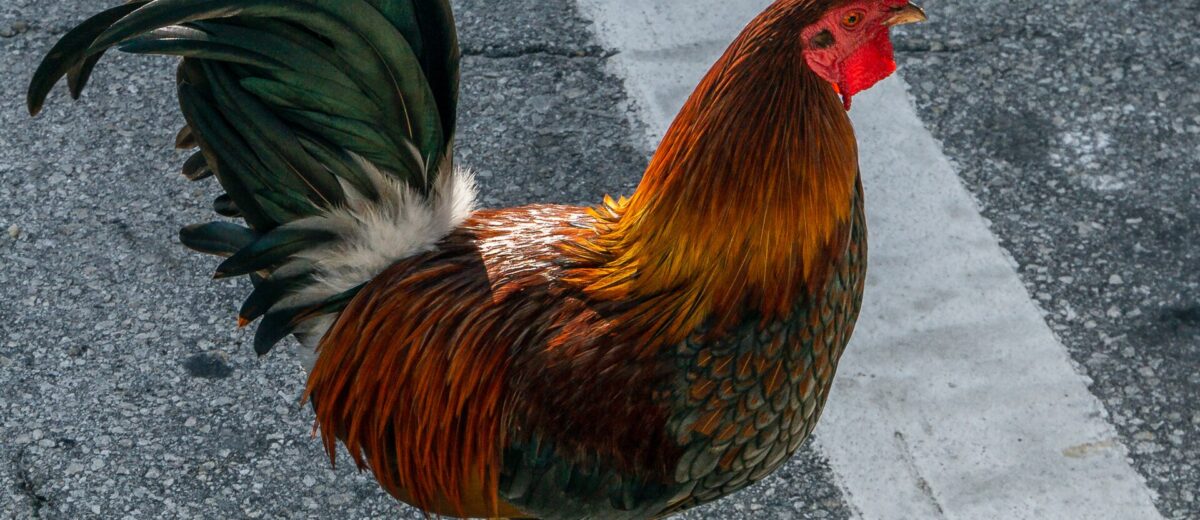
The first rooster usually goes off at about three in the morning. Not at dawn, as every children’s book promised, but in the pitch dark, from a palm tree right outside the guesthouse window, answered within seconds by another one two gardens over. By breakfast you will have stepped around a hen and her chicks on the sidewalk, watched a rooster strut across Duval Street against the light, and seen someone photograph a chicken as if it were a celebrity. The Key West chickens are the island’s unofficial mascot, its most reliable alarm clock and, for a lot of first-time visitors, the thing they end up talking about most when they get home.
This guide explains where the birds came from, who (if anyone) owns them, what the law says about feeding and harming them, how the city has tried to manage them, and how to live alongside them for a week without losing your sleep or your sandwich. The city rules, wildlife center details and figures here were checked in October 2026 against the City of Key West’s announcements, the Key West Wildlife Center, Florida’s statutes and local reporting.
Key West chickens at a glance
| Question | Short answer |
|---|---|
| Who owns them? | Mostly no one. They are feral birds living wild on the island. |
| Where did they come from? | Backyard flocks and fighting birds that outlived the uses people had for them |
| Can you feed them? | No. Feeding poultry is against city law in Key West, and fines are possible. |
| Can you harm or take them? | No. Florida’s animal cruelty laws apply, and the city funds a rescue and rehoming program instead. |
| Who looks after them? | The Key West Wildlife Center, under an agreement with the city since 2009 |
| How many have been rehomed? | Well over 15,000 since 2009, according to the city |
| Do roosters crow at night? | Yes, at any hour. Pack earplugs. |
Why are there chickens in Key West?
The short answer is that people brought them, and then stopped needing them. For most of Key West’s history, chickens were simply part of island life. Families kept them in their yards for eggs and meat, as households did all over the rural South and the Caribbean, and the birds scratched around under the raised floors of the island’s wooden houses and in the gardens behind them. Key West has long had chickens; what changed is that they stopped belonging to anyone.
Two things probably made that happen. The first was the supermarket. Once eggs and chicken came wrapped in plastic from a store, the backyard flock lost its purpose, and many owners stopped penning, feeding or culling their birds. Chickens are very good at looking after themselves in a warm climate with plenty of insects, seeds, fallen fruit and garden scraps, so the flocks carried on without their owners.
The second was cockfighting. Fighting roosters were part of island life too, and gamecocks were bred and kept in Key West for generations. When cockfighting became illegal, the people who had bred and fought the birds were left with roosters they could no longer use, and some were turned loose. That is a version of the story often told locally.
The truth is probably a mix of both. The roosters on Duval Street today are many generations removed from any particular yard or fighting pit, and they have been breeding freely with each other for decades. What you are looking at is a feral island population: domestic chickens that have gone back to living wild.
Cockfighting then and now
Today, cockfighting is a serious crime in Florida. The state’s Animal Fighting Act, section 828.122 of the Florida Statutes, covers fights between roosters or other birds, and owning, training, staging, promoting or attending a fight is a third-degree felony. The history survives in odd places. Blue Heaven, the open-air restaurant at 729 Thomas Street in Bahama Village, says on its own website that its property has hosted cockfighting, gambling and boxing over the years, and that Ernest Hemingway refereed boxing matches there in the 1930s. The restaurant has served lunch since September 1992.
The Key West Wildlife Center, which cares for injured chickens on the island, lists cockfighting injuries among the reasons birds come into its care. If you ever see signs of an organized fight, report it to the police; it is not a quaint local custom but an animal cruelty crime.
Who owns the chickens?
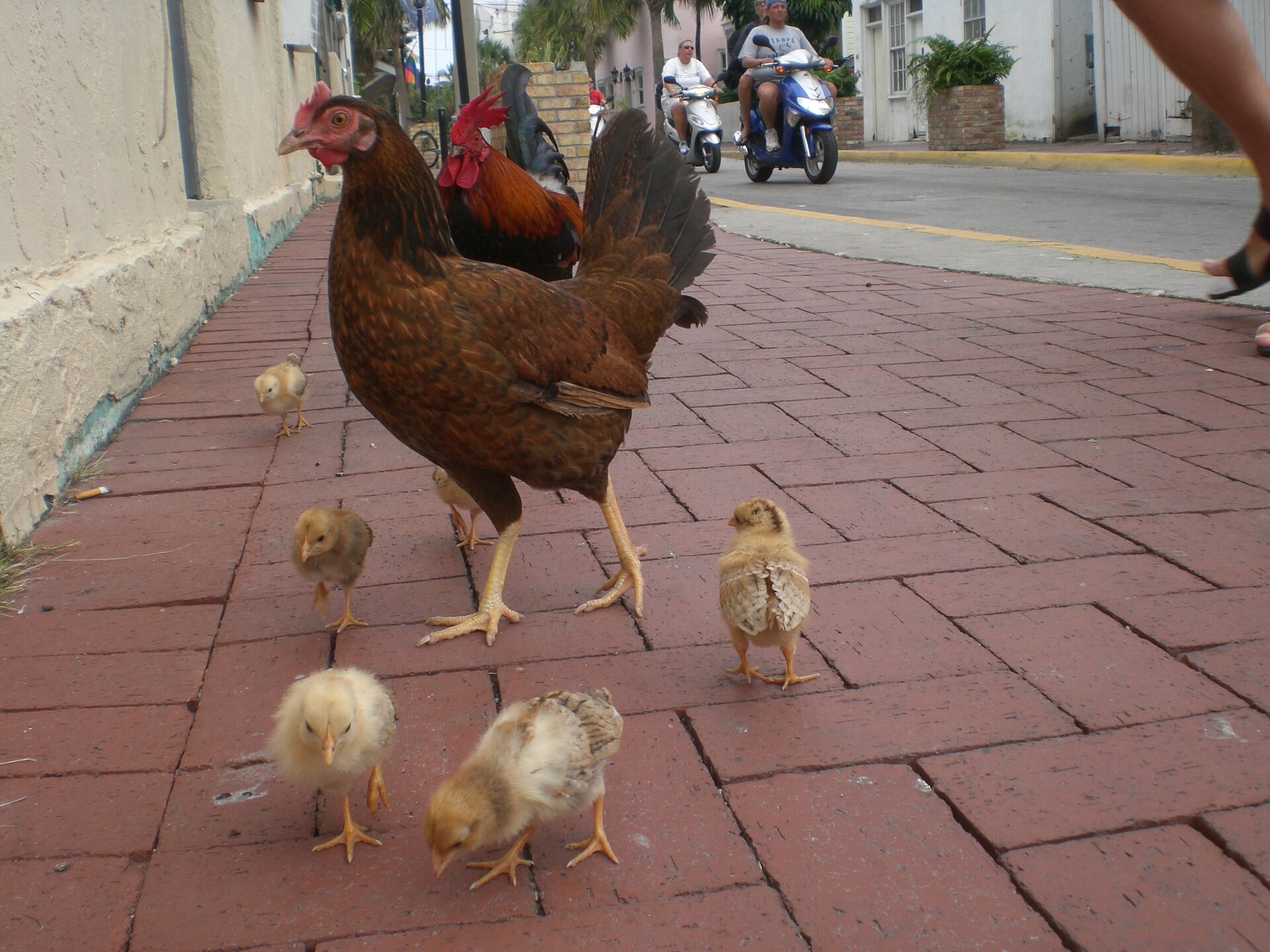
For the most part, no one. A few residents still keep chickens penned on their own property, which the city allows, but the birds you see on the streets, in the cemetery, in restaurant courtyards and on the beaches are feral. Locals sometimes call them “gypsy chickens.” They roost in trees at night, scratch for food in gardens and under shrubs, and nest wherever they find a quiet corner. Hens raise their chicks in plain sight on sidewalks and in parking lots, and because there is no winter to slow them down, there are chicks around for much of the year.
That ownerless status is the root of the island’s long argument about them. To many residents and most visitors, the chickens are charming, a living reminder that Key West is not quite like anywhere else in America. To others, they are a noisy, messy nuisance that digs up gardens, scratches mulch onto paths, and crows outside bedroom windows at 4 a.m. Both camps have a point, and the city’s policies have tried to keep both reasonably happy.
What the law says
Feeding chickens is illegal
This is the rule most visitors don’t know. In February 2021, the Key West City Commission unanimously passed an ordinance that makes it unlawful “for any person to feed, provide food, water or other forms of sustenance (feeding) to poultry within the city.” The only exception is for chickens kept in coops on private property. Code compliance officers enforce it, and fines are possible. The city sent out a fresh reminder in September 2025, noting that feeding the birds encourages them to gather and breed in greater numbers, and that it can even be lethal to them: outbreaks of botulism kill chickens on the island at that time of year.
So, however tempting it is to toss a bit of your breakfast to the rooster eyeing your table, don’t. It is against the law, it makes life harder for the businesses and residents who have to deal with the consequences, and it is not good for the bird.
Harming the birds is illegal too
The chickens may not belong to anyone, but that doesn’t make them fair game. Florida’s general animal cruelty statute, section 828.12, applies to them like any other animal, and the city’s approach for two decades has been to catch and rehome problem birds rather than kill them. Chasing them or letting a dog loose on them can get you into trouble, and the Wildlife Center, not visitors, handles catching and rehoming.
How Key West manages its chickens
Key West has experimented with several ways to keep the population in check without turning against the birds.
The chicken catcher
The most famous attempt came in 2004, when the city hired a chicken catcher to trap and remove birds from neighborhoods where residents had complained. The job lasted only that year: according to Florida Rambler’s history of the birds, the catcher quit, and the post was discontinued. The episode is still part of island folklore, and it showed how hard it is to remove birds that most of the town is fond of.
The Key West Wildlife Center
Since 2009, the Key West Wildlife Center has run the island’s chicken program under a city-funded concession agreement. The center, which sits inside Indigenous Park at 1801 White Street, rescues injured and sick birds, cares for them, and arranges for chickens that need to leave the island to be adopted on the Florida mainland, where people take them in for their flocks. It does not remove healthy chickens simply because they are there. According to the city, well over 15,000 birds have been relocated to the mainland since the program began.
The center also takes in injured native wildlife, and it is a good place for visitors who want to understand the island’s birds better. Check its website for current visiting hours before you go. If you find an injured chicken or other bird, the center runs a 24-hour rescue line at 305-292-1008.
Residents’ traps and the SPCA
Residents with a persistent problem should ask the Key West Wildlife Center or the Florida Keys SPCA about humane traps, and caught birds go to the Wildlife Center for rehoming. The SPCA’s Key West campus is at 5711 College Road on Stock Island and covers animal control from the start of the Keys to about Mile Marker 16.7; the Wildlife Center leaves non-native species to the SPCA.
Where you’ll see them
Everywhere, honestly. But a few places are especially reliable.
- Bahama Village. The streets west of Duval around Petronia, Thomas and Whitehead have plenty of shade, gardens and quiet corners, and chickens to match.
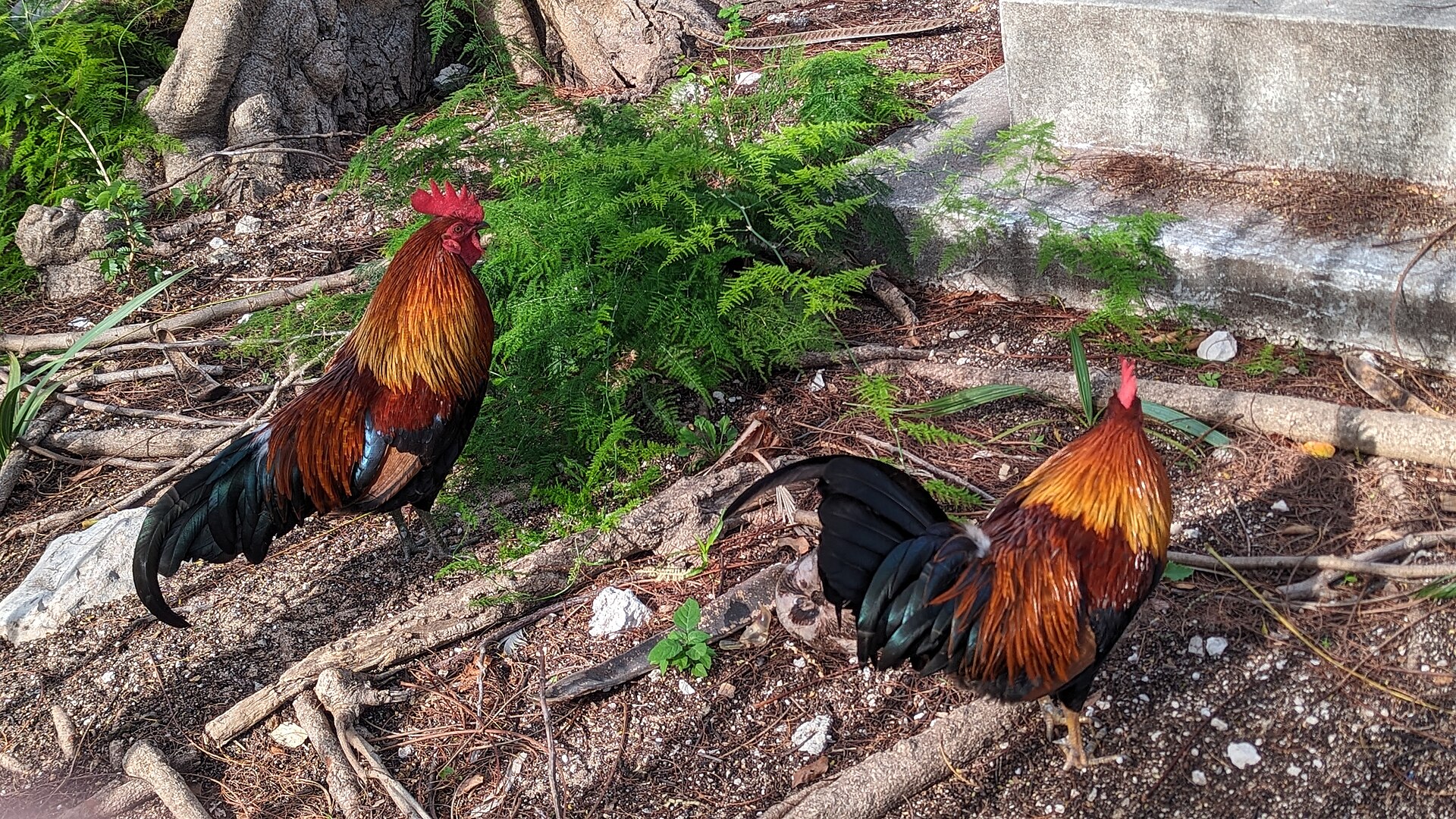
- The Key West Cemetery. Shade, shrubs and peace and quiet make the cemetery a favorite roost. It is also one of the most atmospheric places on the island; our Key West cemetery guide explains what to see.
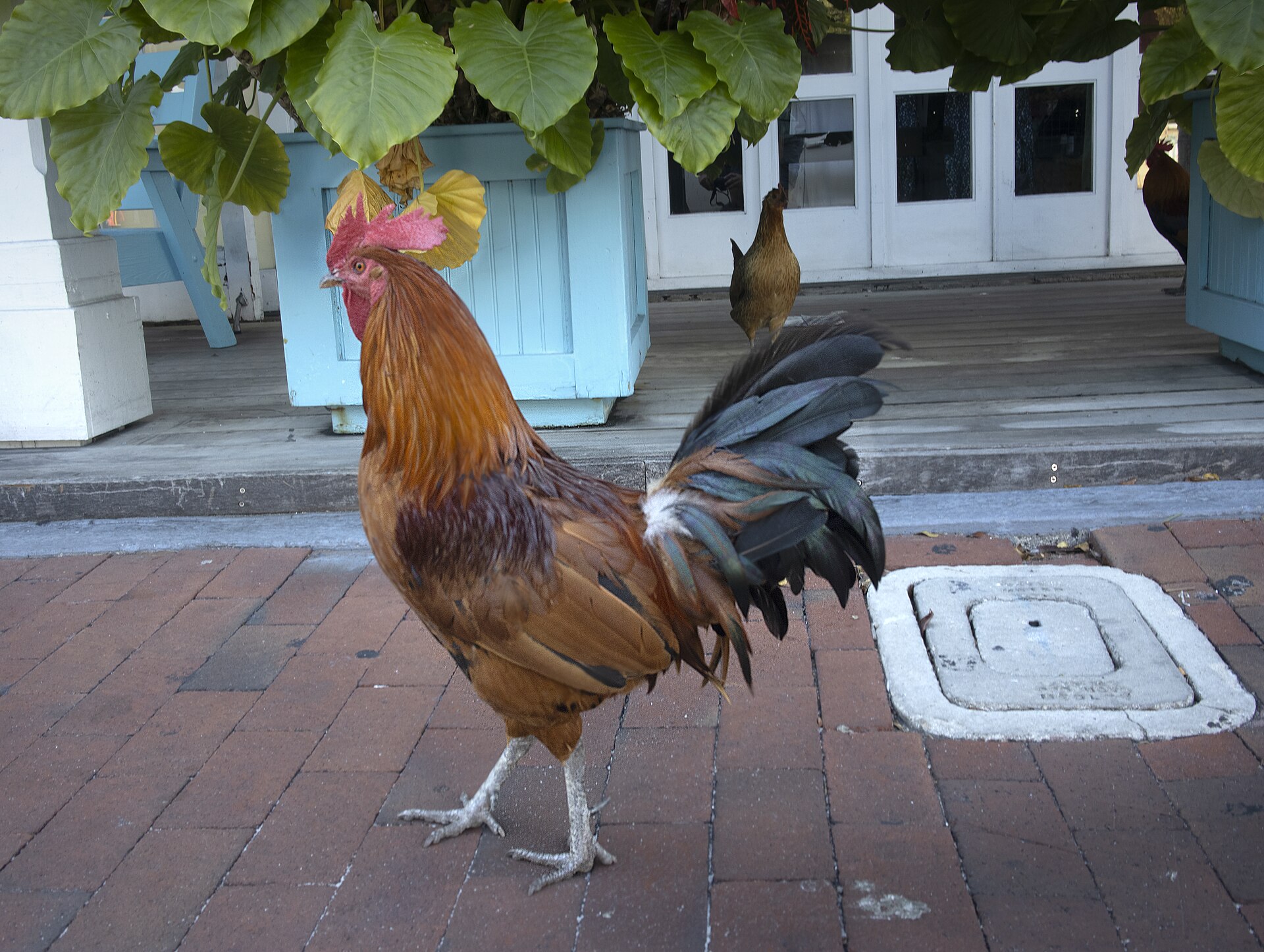
- Duval Street. Roosters cross Duval at all hours, often with more confidence than the pedestrians.
- Outdoor restaurants and cafés. Any courtyard with crumbs on the ground will get visitors. Staff will usually shoo them off; please don’t encourage them back.
- Parks and beaches. Hens with chicks are common in the shade at the edges of parks.
A slow walk through Old Town is the best way to see them, and our Key West walking tour covers the streets where they are most at home.
Living with the chickens on vacation
Sleeping through the crowing
Roosters don’t just crow at dawn. They crow at street lights, at car headlights, at each other, at noises in the night and seemingly at nothing at all. For a light sleeper, this is the one real downside of the island’s birds, and it is worth planning for.
- Bring earplugs, or a white-noise app on your phone. This is the single best piece of advice for a first trip.
- Ask for a room away from the garden or the tallest trees, where roosters tend to roost.
- Keep the air conditioning running. The hum masks a lot of crowing, and closed windows help.
- Consider where you stay. Old Town guesthouses with lush gardens are lovely, and they are also prime rooster territory. Our Key West bed and breakfast guide describes the settings.
Eating outdoors
Chickens, and the occasional pigeon and grackle, are part of the outdoor dining experience in Key West. They will wander around the tables looking for crumbs. Don’t feed them, don’t leave food on an empty table, and keep a hand on your plate if a bold one hops up. If a bird is bothering you, tell the staff; they deal with it every day.
Kids and hygiene
Children love the chicks, and it is fine to watch and photograph them. Touching is another matter. The US Centers for Disease Control and Prevention warns that poultry can carry germs such as Salmonella even when they look healthy and clean, advises washing your hands after touching birds or anything in the areas where they roam, and says children under five should not handle poultry at all. So look, don’t touch, and keep the hand sanitizer handy. Our Key West with kids guide has more family tips.
On the road
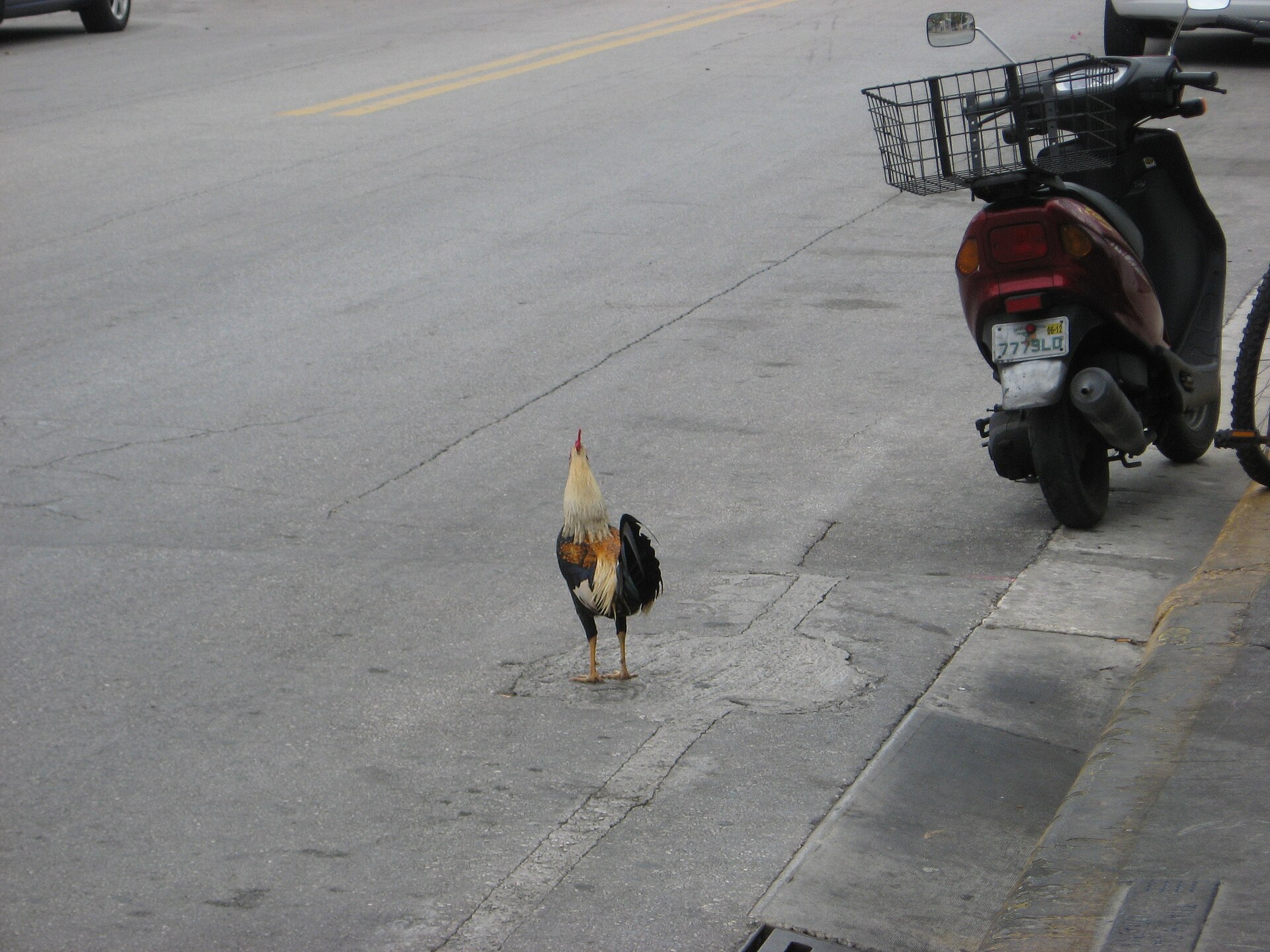
Chickens don’t understand traffic, and they will step off a curb in front of a bike or a scooter without warning. Ride slowly in Old Town, especially in Bahama Village and the quieter residential streets, and give the birds room.
The chicken as a Key West symbol
Somewhere along the way, the feral rooster became one of the town’s symbols, alongside the conch shell and the Conch Republic flag. You will find chickens on T-shirts, mugs, paintings, metal sculptures, refrigerator magnets and shop signs all over Old Town, and in almost every set of vacation photos. They suit the island’s sense of itself: a bit unruly, a bit loud, independent, colorful, and not much interested in what the mainland thinks. It is no accident that a town which once “seceded” from the United States in protest at a roadblock has adopted a bird nobody can control as its mascot. Our Conch Republic guide tells that story, and the Key West history guide covers the Cuban community that brought so much of the island’s culture across the water.
Not every Key West animal story is about chickens. The Hemingway Home’s six-toed cats are the island’s other famous animal residents, and up the highway, the tiny Key deer of Big Pine Key are an endangered species found nowhere else. Our Hemingway House guide and Key deer guide cover both.
Is it all worth the noise?
For most visitors, yes. The chickens are a small, constant reminder that Key West does things its own way, and they are part of why the island feels like a real town rather than a theme park. They are also, at 3 a.m., genuinely annoying. Accept the trade, pack the earplugs, keep your breakfast to yourself, and you will probably go home with more photos of roosters than you expected. For the other questions first-timers ask, start with our Key West travel questions guide.
Frequently Asked Questions
Why does Key West have so many chickens?
They are the descendants of backyard flocks and fighting roosters that people stopped needing, first as supermarkets replaced home-raised eggs and meat, and then when cockfighting became illegal. The birds went feral and have been breeding freely ever since in the island’s warm climate.
Are the chickens in Key West protected?
They are covered by Florida’s animal cruelty laws like any other animal, so harming them is illegal. The city’s approach is to rescue and rehome problem birds through the Key West Wildlife Center rather than cull them.
Can you feed the chickens in Key West?
No. Since February 2021, city law has made it unlawful to feed, or provide food or water to, poultry within Key West, apart from birds kept in coops on private property. Fines are possible.
Are Key West chickens wild?
They are feral: domestic chickens that live without owners and look after themselves. They roost in trees, find their own food and raise chicks in the open.
Do Key West roosters crow all night?
They can crow at any hour, set off by street lights, headlights, noises and each other. Earplugs, air conditioning and a room away from the garden help a lot.
Who owns the chickens in Key West?
Mostly nobody. A few residents keep penned chickens on their own property, but the birds on the streets are feral and ownerless.
Can I take a Key West chicken home?
No. They are wild island birds, and the Key West Wildlife Center already rehomes chickens on the Florida mainland through its program with the city. A rooster T-shirt travels better.
What should I do if I find an injured chicken?
Call the Key West Wildlife Center’s 24-hour rescue line at 305-292-1008. Don’t try to handle the bird yourself.
Related Key West Guides
- Key West Questions Answered: 30 Things First-Timers Ask
- Key West History
- The Conch Republic
- Key West Cemetery Guide
- Key West Hidden Gems
- Is Key West Safe?
Photo Credits
Hen and chicks in Bahama Village: Chickenfamily by Averette at English Wikipedia, CC BY 3.0, via Wikimedia Commons.
Roosters in the Key West Cemetery: Graveyard Roosters – Key West, Florida 2024 by Eden, Janine and Jim, CC BY 2.0, via Wikimedia Commons.
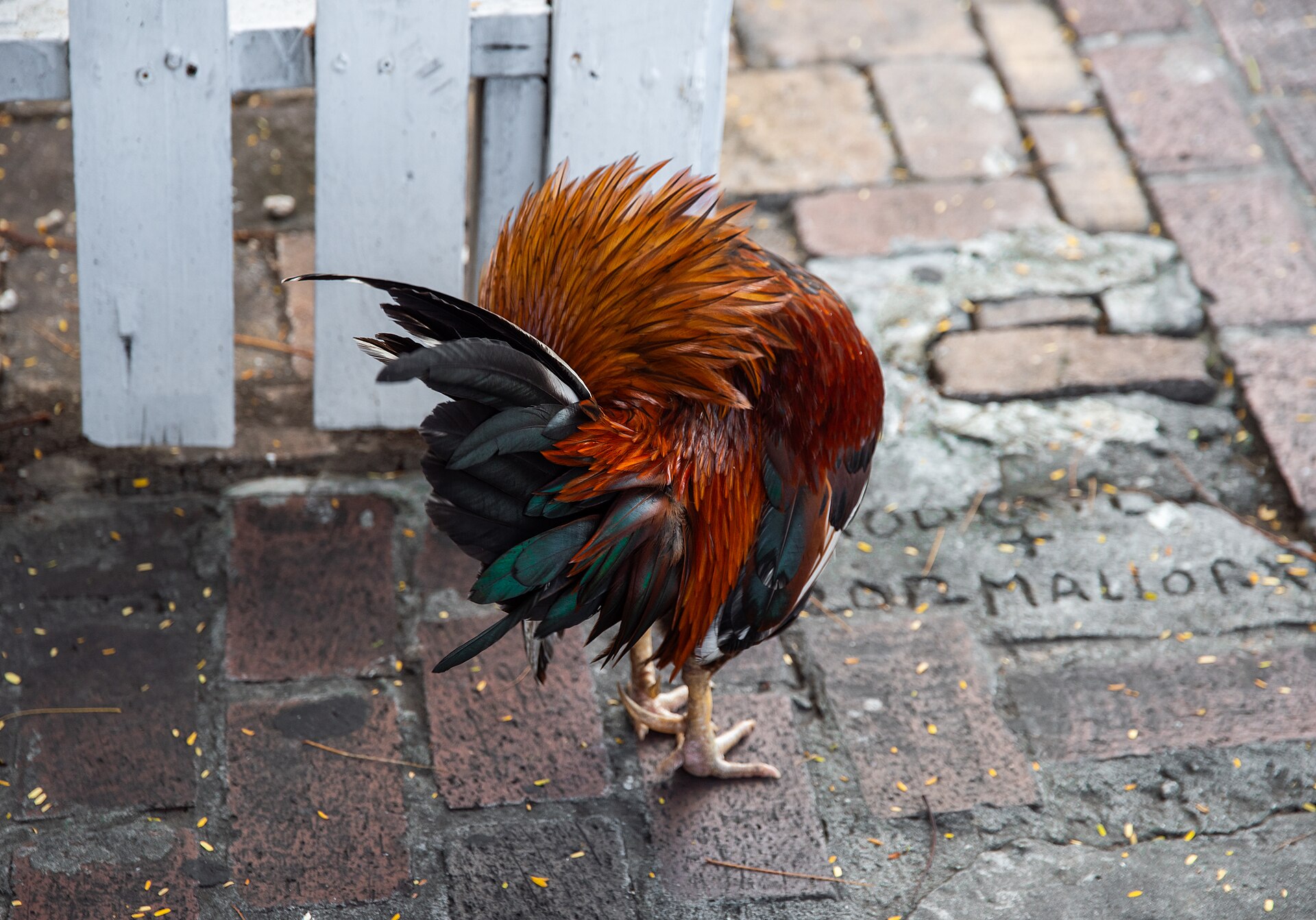
Rooster preening by a picket fence: Rooster Preening in Key West, Florida by Julian Lupyan, CC0, via Wikimedia Commons.
Rooster on Duval Street: Rooster – Duval St. Key West Florida by Watts, CC BY 2.0, via Wikimedia Commons.
Rooster in the street: Gamecock – panoramio by Wallace Parry, CC BY-SA 3.0, via Wikimedia Commons.
Rooster crossing a street (featured image): Cuban Rooster (46696877051) by Shiva Shenoy from Flower Mound, United States, CC BY 2.0, via Wikimedia Commons.
Sources & corrections
Rates, hours and closures verified against operator listings and on-island visits. Prices are peak-season unless noted.