Sheet 09 · Know Before You Go
What Is Key West Known For? 15 Claims to Fame
Sunsets, Hemingway, six-toed cats, Duval Street, Key lime pie, sunken treasure and the Conch Republic: Key West's 15 biggest claims to fame, with an honest line on which live up to the hype.
Ask ten people who have been to Key West what it is famous for and you will get ten different answers, often delivered with a slightly faraway look. One will say the sunsets. One will say Hemingway, or the six-toed cats, or the bars on Duval Street. Someone will mention Jimmy Buffett, someone else Key lime pie, and at least one person will tell you, with total conviction, that you can see Cuba from the Southernmost Point. (You can’t.) So what is Key West known for? A surprising amount, for an island about four miles long, and most of it is genuinely worth seeing.
This guide runs through the island’s 15 biggest claims to fame, from the landmarks and the famous residents to the food, the history and the attitude, with a line on which ones live up to the reputation and which are more about the photo than the experience. Prices, opening details and dates were checked in October 2026 against the museums’, venues’ and agencies’ own sites; treat them as a guide and confirm before you go.
Key West’s claims to fame at a glance
| Claim to fame | Where to see it | Cost | Worth it? |
|---|---|---|---|
| Southernmost Point | Replica buoy at 1400 Duval St during roadworks | Free | For the photo, yes; don’t queue an hour |
| Sunset at Mallory Square | Mallory Square, every evening | Free | Yes, at least once |
| Hemingway | Ernest Hemingway Home, 907 Whitehead St | $19 adult | Yes |
| Truman’s Little White House | Truman Annex | From $24 | Yes, for history fans |
| Duval Street bars | Duval St, Sloppy Joe’s, Captain Tony’s | Price of a drink | Yes, in moderation |
| Sunken treasure | Mel Fisher Maritime Museum, 200 Greene St | $17.50 adult | Yes |
| The coral reef | Snorkel and dive trips offshore | Varies by operator | Yes |
| Mile Marker 0 | Whitehead St, near Fleming St | Free | A quick photo stop |
1. The Southernmost Point
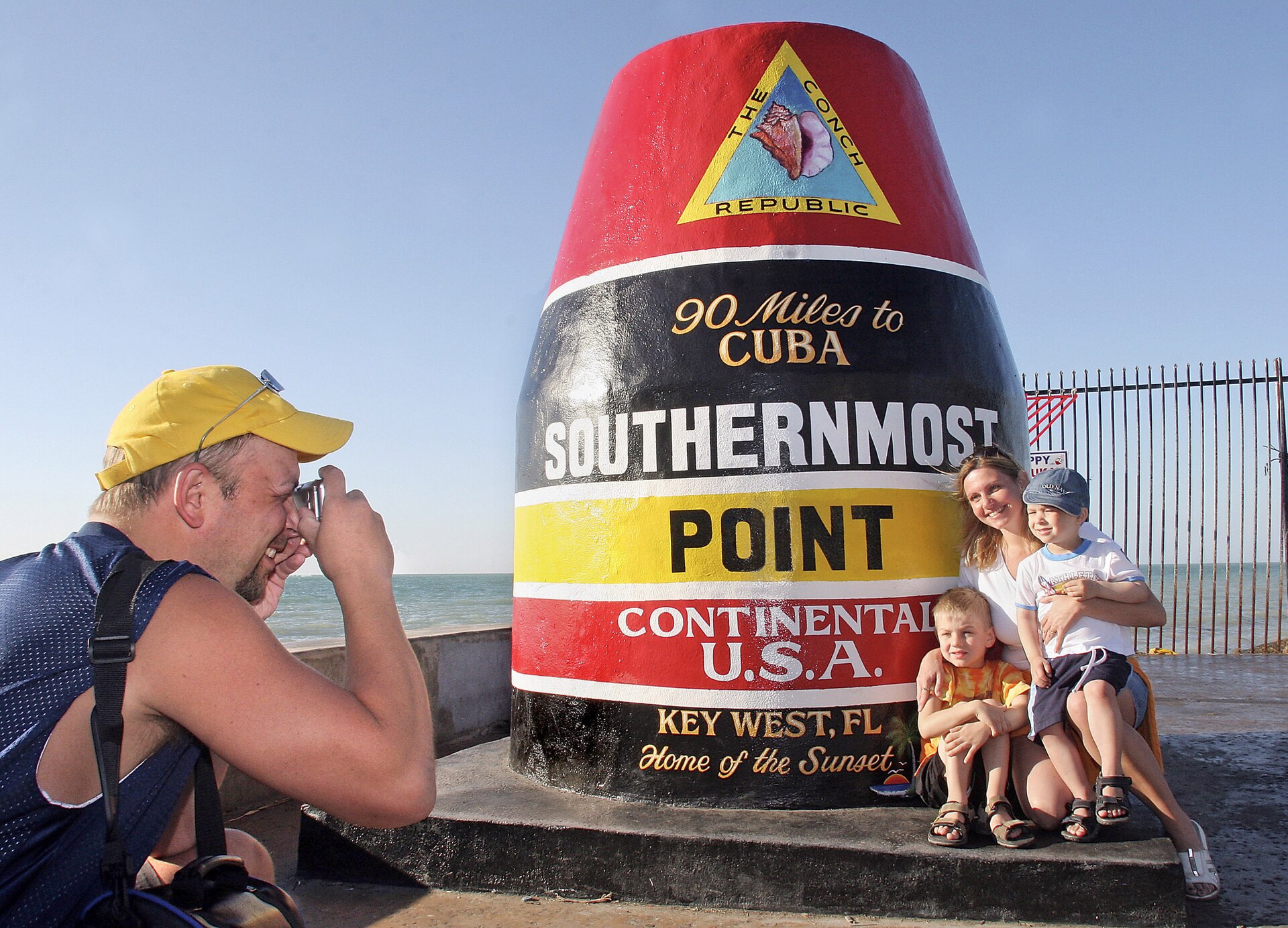
The red, black and yellow concrete buoy at the corner of South and Whitehead streets is the island’s most photographed landmark, and its sign, “Southernmost Point Continental U.S.A.,” is one of the most recognizable in Florida. Two footnotes: the buoy was only unveiled in 1983, replacing a simple sign, and the actual southernmost spot of the island is on military land that is closed to the public. The buoy’s other famous line, “90 Miles to Cuba,” rounds down; the closest point of Cuba is about 95 statute miles away, well over the horizon.
As of October 2026, the original corner is closed for a city roadway project that the City described in September 2026 as lasting about 180 days, so a full-scale replica stands in the meantime at a pedestrian plaza at 1400 Duval Street. Check the City of Key West’s news page if you are hoping to see the original. Either way, the photo is free; just don’t spend an hour in the queue at midday when you could come back early in the morning.
2. Sunsets at Mallory Square
Key West faces west across the Gulf of Mexico, and its sunsets are famous enough to have a nightly festival built around them. At Mallory Square on the northwest waterfront, jugglers, magicians, musicians, tightrope walkers and food carts gather every evening, and a crowd claps when the sun drops below the horizon. It is touristy, a little chaotic and completely free, and almost everyone should do it once. If you want the view without the circus, the harbor piers and waterfront bars have the same sky. Our Mallory Square sunset guide has the timing and the best places to stand.
3. Ernest Hemingway
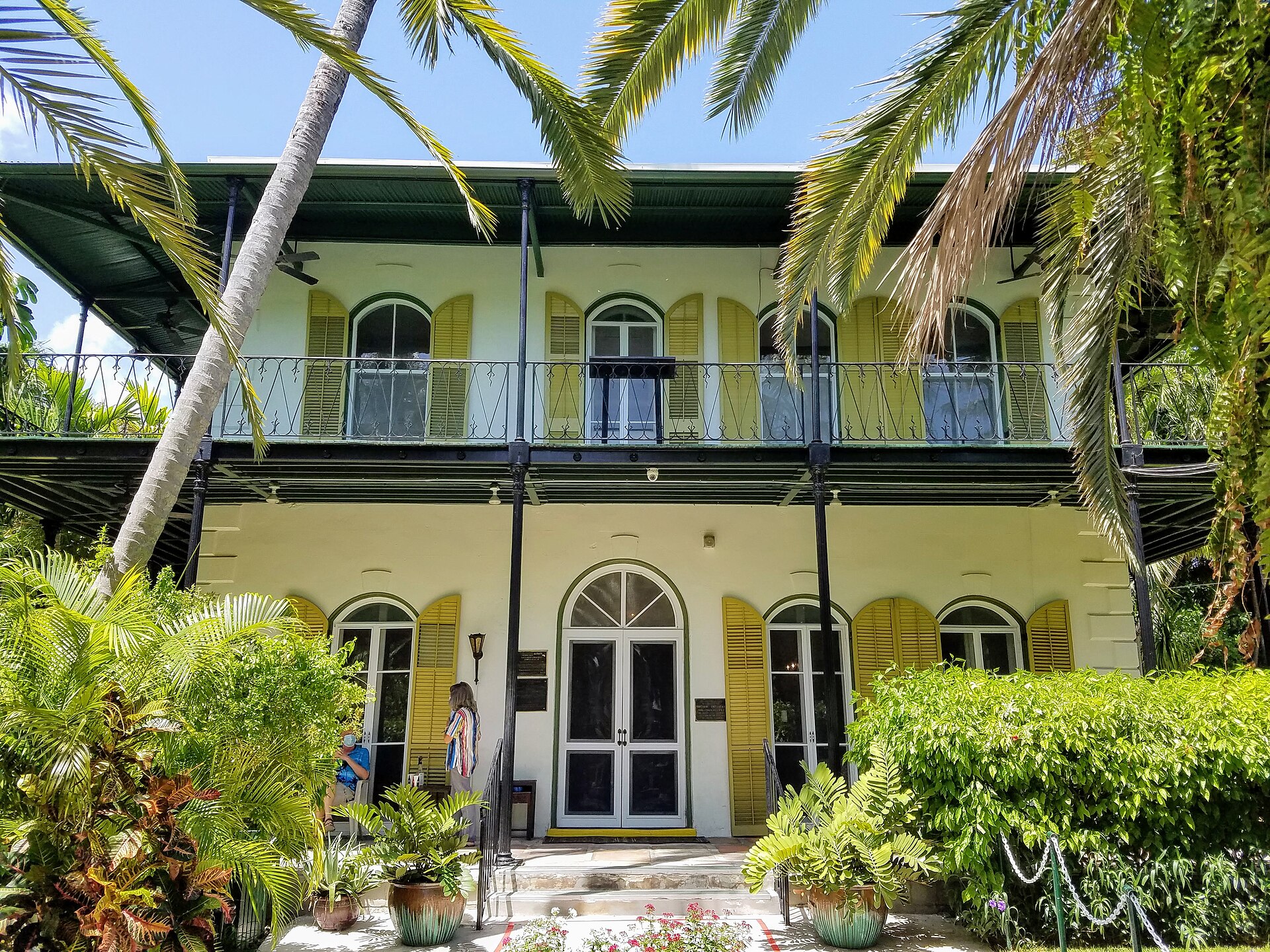
Hemingway is the island’s most famous former resident. He lived in the Spanish Colonial house at 907 Whitehead Street from 1931 to 1939, wrote some of his best-known work there, and set his 1937 novel To Have and Have Not in Key West. The house is now the Ernest Hemingway Home and Museum, open every day of the year from 9 a.m. to 5 p.m., with guided tours every 15 minutes and admission of $19 for adults. The tours are lively, the gardens are lovely, and the house is a genuine time capsule of the writer’s Key West years. It is among the big-name attractions on the island that are well worth the money. Our Hemingway House guide covers the visit, and every July the island celebrates him with Hemingway Days.
4. Six-toed cats and free-roaming chickens
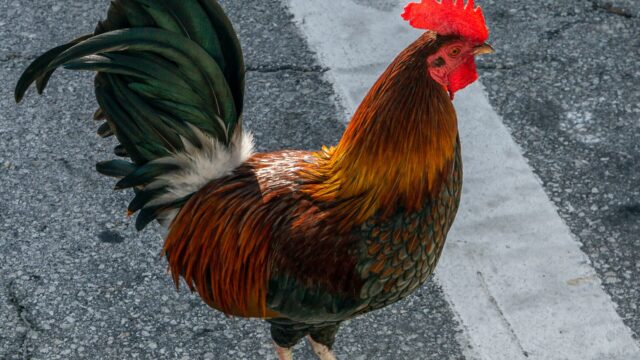
Key West has two famous animal populations, and visitors meet both within hours. The Hemingway Home says it cares for nearly 60 polydactyl cats, about half of which show the trademark extra toes and all of which carry the gene; the museum traces them to a white cat named Snow White. Out on the streets are the island’s feral chickens: roosters and hens that roam Old Town freely, crow at all hours and, by city law, must not be fed. Our Key West chickens guide tells their story and explains how to sleep through the 3 a.m. crowing.
5. Harry Truman’s Little White House
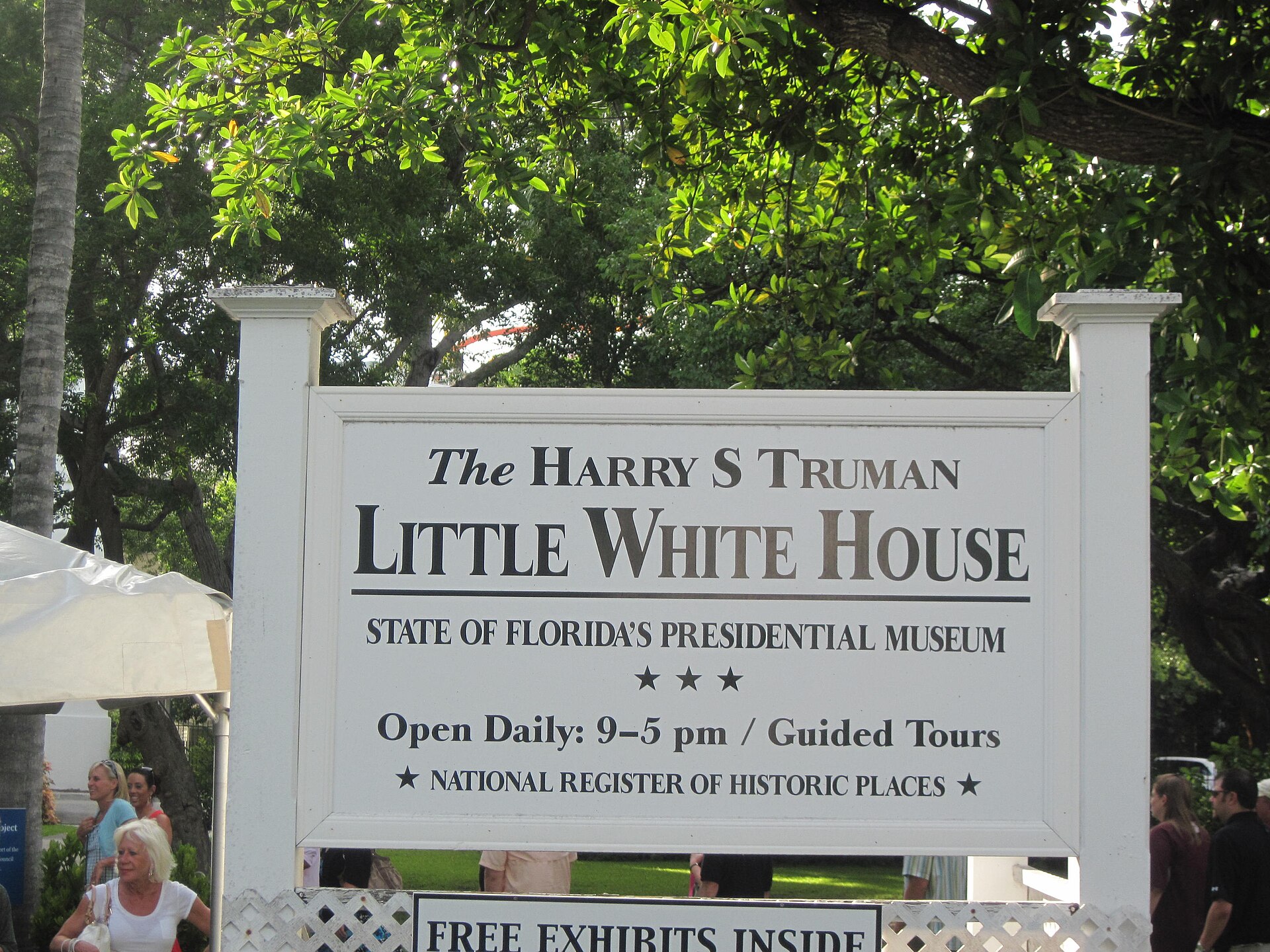
Key West was President Harry S. Truman’s favorite escape. According to the museum, he made 12 visits and spent 175 days of his presidency here between 1946 and 1952, working and relaxing in a house built in 1890 as naval officers’ quarters. The house has been used by six presidents and is now a museum that calls itself the State of Florida’s Presidential Museum. Guided tours start from $24. History lovers rate it highly, and the guides are full of stories about poker games, loud shirts and morning walks. Check the museum’s website for the day’s hours, which vary with events. Our Truman Little White House guide has more.
6. Duval Street and its bars
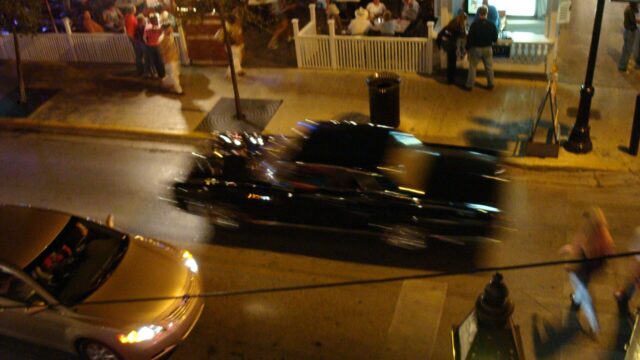
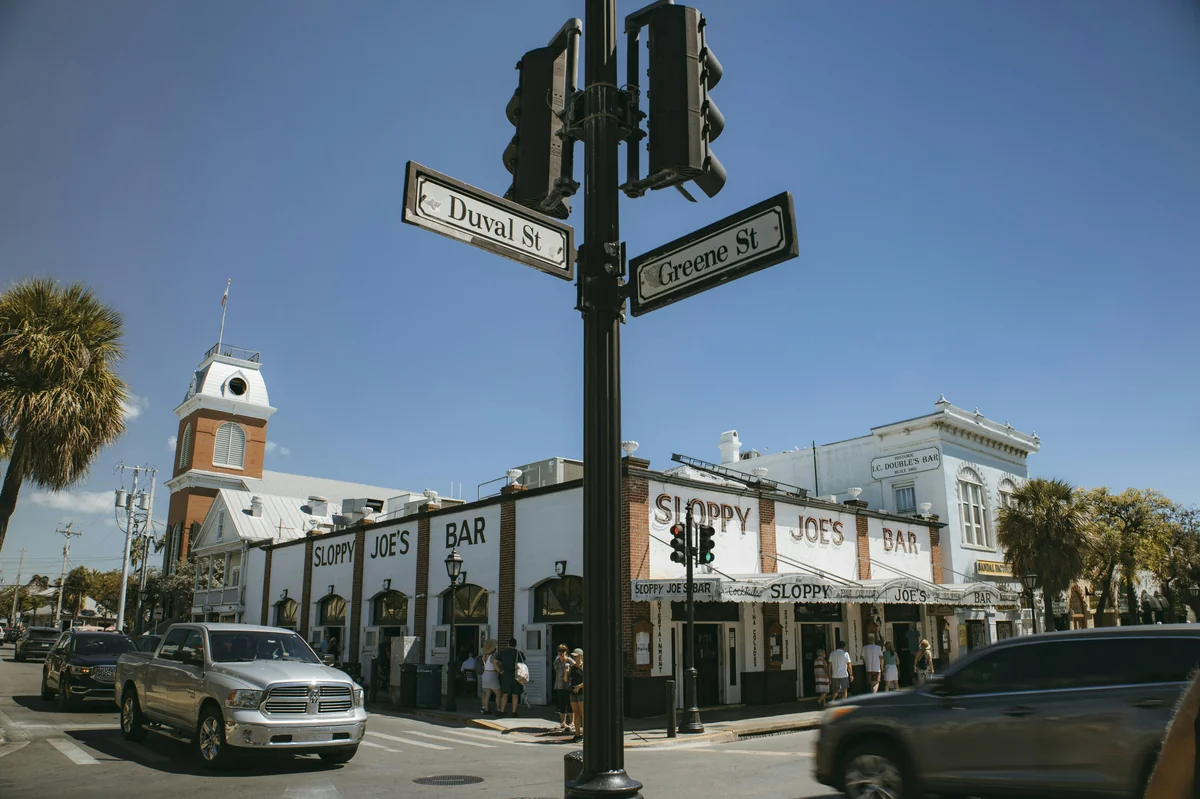
Duval Street runs a little over a mile across the island, from the Gulf of Mexico to the Atlantic, and its northern end is one of America’s most famous bar crawls. The most famous name is Sloppy Joe’s, which says it has stood at the corner of Duval and Greene streets since 1937 and traces its history back to 1933; it is open until 4 a.m. and hosts live music every day. Around the corner, Captain Tony’s Saloon at 428 Greene Street occupies the building where, by its own account, Sloppy Joe’s began, and claims a colorful history of its own. Both are fun for a drink and the atmosphere. The rest of Duval is a mix of bars, galleries, T-shirt shops and restaurants; the late-night end of it is loud, which is the point. Our Sloppy Joe’s guide and Duval Street bars guide go bar by bar.
7. Jimmy Buffett and Margaritaville
For many Americans, Key West means Jimmy Buffett. The singer’s songs about island life, boats, bars and cheeseburgers made Key West a state of mind as much as a place, and his career has deep roots here: Captain Tony’s says Buffett played there in the early 1970s. His Margaritaville restaurant still operates at 500 Duval Street. Whether you are a Parrothead or not, the Buffett connection explains a lot about the island’s image, and about why so many visitors arrive expecting a permanent party. The reality is more interesting than the song, but the song is not entirely wrong.
8. Key lime pie and island food
Key lime pie is Florida’s official state pie, by law since 2006, and nowhere takes it more seriously than Key West. Expect strong opinions about meringue versus whipped cream, and about graham-cracker crusts versus pastry. The island’s food reputation goes beyond pie: conch fritters, fresh fish, Key West pink shrimp, Cuban coffee and sandwiches, and from mid-October to May, stone crab claws. Our best Key lime pie guide rates the slices, and our best restaurants guide covers the rest.

9. The Conch Republic
On April 23, 1982, Key West “seceded” from the United States in protest at a Border Patrol roadblock on US 1 that was strangling traffic to the Keys, and declared itself the Conch Republic. The joke stuck. The Conch Republic’s flag flies all over town, the secession is celebrated every April, and “Conch” (pronounced “konk”) is still what locals born on the island call themselves. It sums up the island’s attitude better than any slogan. Our Conch Republic guide tells the full story.
10. Mile Marker 0 and the end of US 1
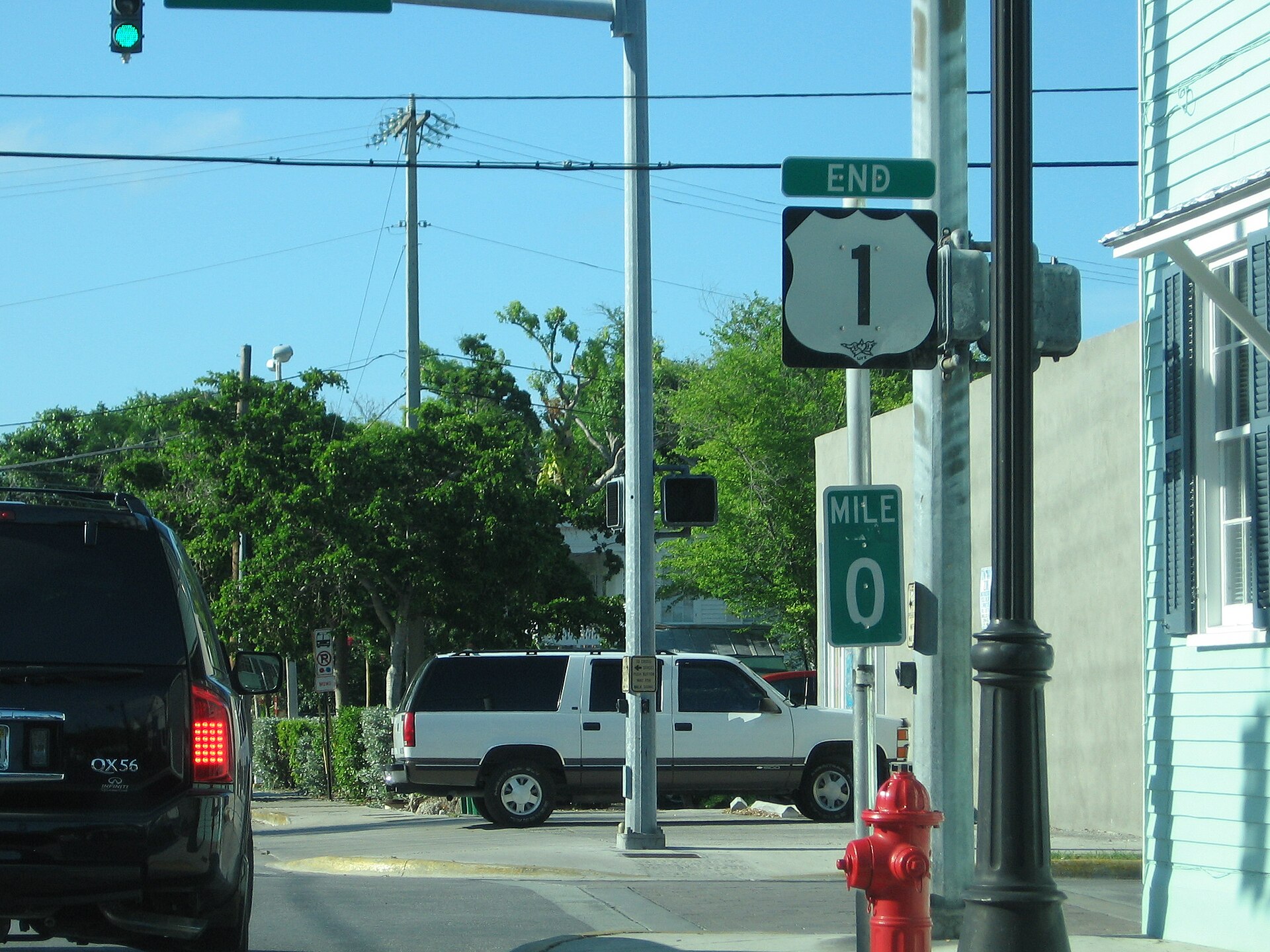
US Route 1 runs about 2,369 miles down the East Coast from Fort Kent, Maine, and it ends in Key West, where a small green “Mile 0” sign and an “End” sign for US 1 mark the spot near the corner of Whitehead and Fleming streets. The mile markers along the Overseas Highway count down from the mainland, which is why Keys addresses are often given by mile marker. It is a two-minute photo stop, best combined with a walk down Whitehead to the Hemingway Home and the lighthouse. If you are driving down, the countdown is half the fun; our drive to Key West guide covers the route.
11. Shipwrecks and sunken treasure
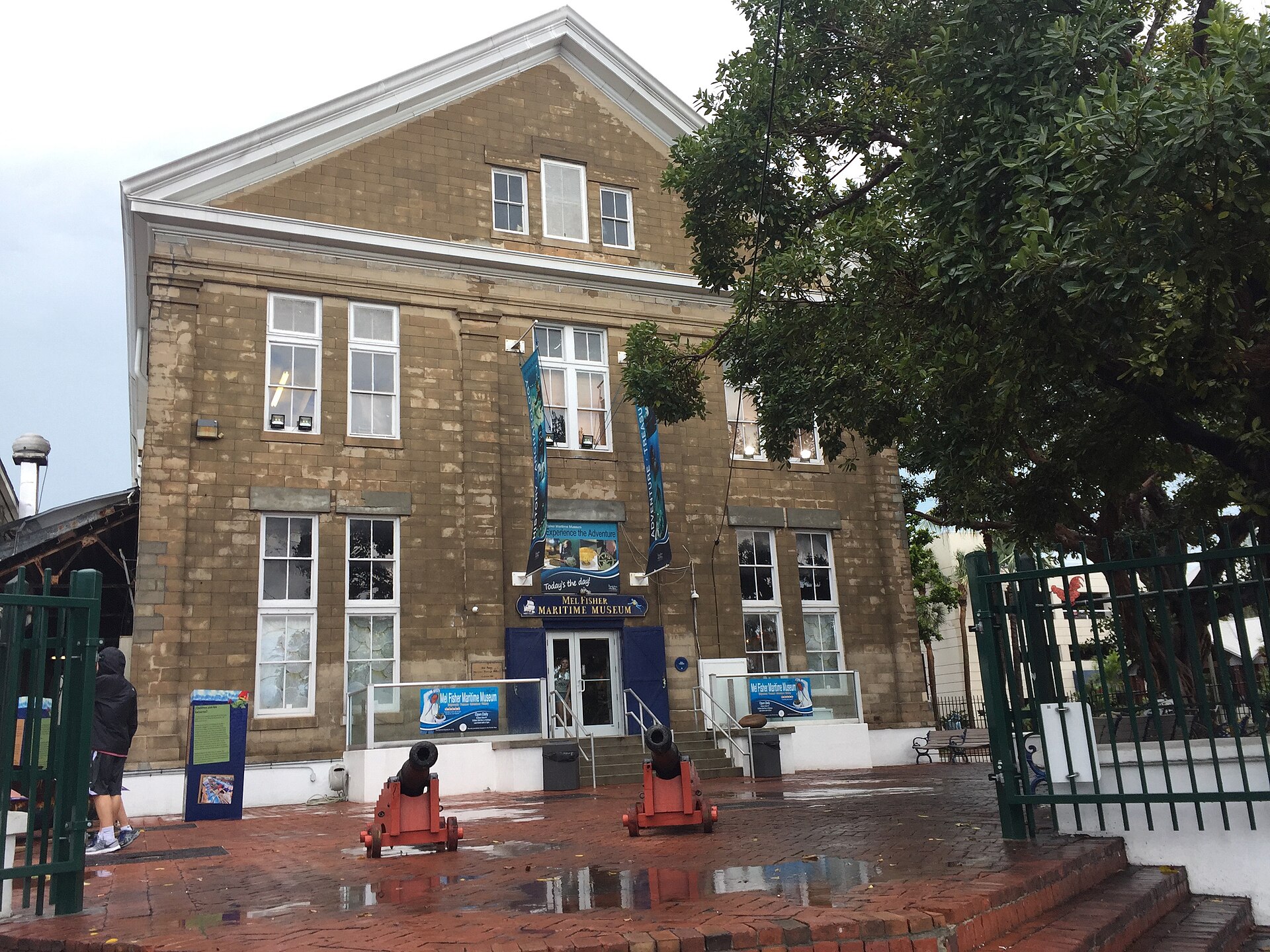
Key West grew rich on other people’s misfortune. In the 19th century, the reef offshore wrecked ship after ship, and the island’s licensed wreckers salvaged their cargoes, a trade that built many of the grand old houses in Old Town. The treasure story continues into modern times. In 1622 the Spanish galleon Nuestra Señora de Atocha sank in a hurricane off the Keys with a vast cargo of silver, gold and emeralds, and in 1985 the treasure hunter Mel Fisher’s team finally found the main part of the wreck after years of searching. The Mel Fisher Maritime Museum at 200 Greene Street displays some of what was raised; it opens daily at 10 a.m., and admission is $17.50 for adults and $8.50 for children. Our Shipwreck Museum guide covers the wrecking story in more depth.
12. The coral reef
The Florida Keys sit beside what NOAA describes as the only coral barrier reef in the continental United States, protected within the Florida Keys National Marine Sanctuary, which covers 3,800 square miles of water. From Key West, snorkel and dive boats run out to the reef every day, weather permitting, and the clear, shallow water over the coral is the reason many people come at all. The reef has had hard years, including a severe marine heat wave in 2023, and it is fragile: wear a rash guard rather than heavy sunscreen, and never stand on or touch the coral. Our Key West snorkeling guide and reef snorkeling trips guide cover the options.
13. Writers, artists and the literary life
Hemingway is only the start. Key West has drawn writers for a century, among them Tennessee Williams, whose life and work are the subject of the Tennessee Williams Museum run by the Key West Art and Historical Society. Judy Blume and George Cooper founded the independent bookstore Books & Books Key West, which marked its tenth birthday in 2026. Every January the Key West Literary Seminar brings writers and readers to the island; the 2027 seminar runs January 7 to 10. Our Key West authors and writers guide covers the literary trail.
14. Cuban heritage and cigars
Key West is closer to Havana than to Miami, and Cuba runs through its history. In the 19th century, Cuban cigar makers built a major industry on the island, and the Cuban community left a deep mark on Key West’s food, music, architecture and politics. The San Carlos Institute on Duval Street, founded in 1871, is the best-known landmark of that history. Today you can taste it in the café con leche and Cuban sandwiches from walk-up windows, and see it in the cigar shops of Old Town. Our Cuban restaurants guide and Key West cigars guide go deeper.
15. Festivals, tolerance and a live-and-let-live attitude
Key West is known for throwing a party and for letting people be themselves. Fantasy Fest, the island’s ten-day costume festival every October (October 16 to 25 in 2026), is the most famous and the most outrageous. Hemingway Days, the Conch Republic celebration, the Literary Seminar and Pride fill the rest of the calendar. Underneath the festivals is a long tradition of tolerance: Key West has been one of America’s best-known LGBTQ destinations for decades, and its well-known motto, “One Human Family,” sums up the island’s view of the world. Our Key West events calendar lists what is on when.
Also worth knowing: the lighthouse and Old Town
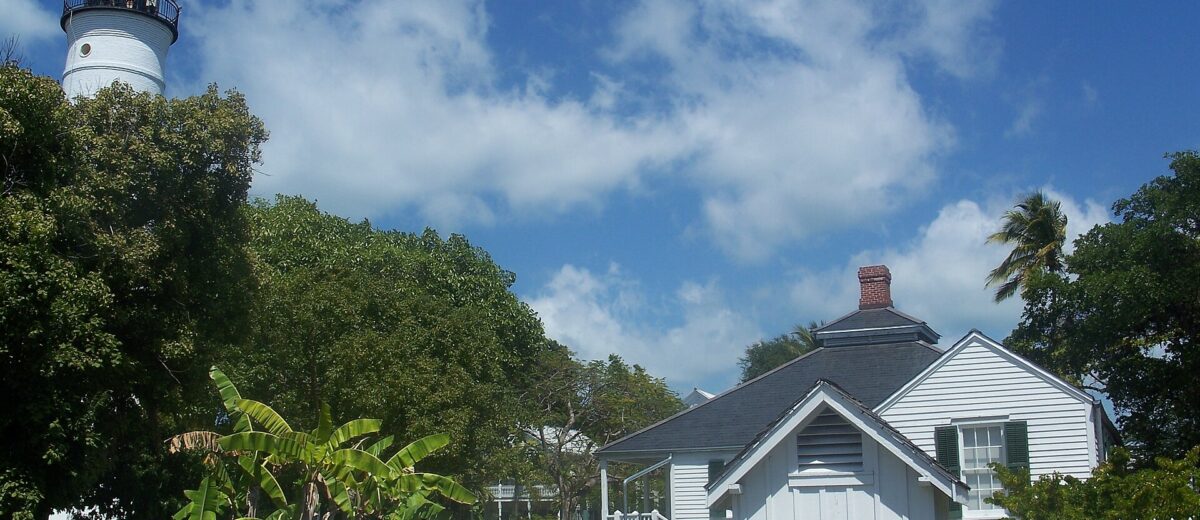
Two more things that don’t quite make the top 15 but deserve a mention. The Key West Lighthouse on Whitehead Street opened in 1848; you can climb its 88 steps for the best view in Old Town, and admission to the lighthouse and keeper’s quarters is $17 for adults. And the whole of Old Town is a treat to walk: the Key West Historic District was listed on the National Register of Historic Places in 1971, and its wooden “Conch houses,” with their porches, shutters and gingerbread trim, make Old Town a remarkable place to see 19th-century wooden architecture. Our lighthouse guide and architecture guide have the details.
What Key West is not known for
It helps to know what Key West is not, too, because the reputation sometimes promises more than the island delivers.
- Big beaches. The reef offshore keeps the water calm, which also means Key West’s beaches are small, shallow and sometimes rocky. Pleasant for a swim, but not the long white sand of Florida’s Gulf coast. Our beaches guide is honest about each one.
- Bargains. Key West is one of the more expensive places to stay in Florida, especially in winter. Plenty of the best things are free, but the hotels are not.
- Peace and quiet, everywhere. Old Town is lively until late, and roosters start early. Quiet exists, but you have to choose your street.
- A view of Cuba. As above: it is over the horizon.
None of that stops Key West being one of the most distinctive places in the country. It just means the best way to enjoy it is to come for what it really is: a small, eccentric, historic island town with great sunsets, a strong sense of itself, and a lot of stories to tell. For the practical questions that come next, see our Key West travel questions guide and the full list of things to do in Key West.
Frequently Asked Questions
What is Key West most famous for?
Its sunsets at Mallory Square, the Southernmost Point buoy, Ernest Hemingway’s house and its six-toed cats, the bars of Duval Street, Key lime pie and a famously relaxed, tolerant attitude. Most visitors would add the free-roaming chickens.
Is Key West the southernmost point in the United States?
Key West is the southernmost city in the continental United States, and the buoy marks the southernmost point of the continental US open to visitors. The true southernmost spot on the island is on military land, and Hawaii lies further south.
Why is Key West famous for Hemingway?
Ernest Hemingway lived at 907 Whitehead Street from 1931 to 1939 and wrote important work there, including To Have and Have Not, set in Key West. His house is now a museum, open daily, and the island celebrates him every July with Hemingway Days.
What food is Key West known for?
Key lime pie above all, which is Florida’s official state pie. Also conch fritters, fresh fish, Key West pink shrimp, Cuban coffee and sandwiches, and stone crab claws in season from mid-October to May.
Is Key West known for its beaches?
Not really. Its beaches are small and calm because the reef offshore breaks the waves. They are pleasant for swimming, and Fort Zachary Taylor is good for snorkeling from shore, but the island is better known for its reef, sunsets and town than its sand.
Why is Key West called the Conch Republic?
On April 23, 1982, Key West declared its “secession” from the United States as the Conch Republic, in protest at a Border Patrol roadblock on US 1. The name, flag and annual celebration have stuck ever since.
Related Key West Guides
- Key West History
- Things to Do in Key West
- Key West Questions Answered: 30 Things First-Timers Ask
- Key West Museums
- Why Are There Chickens in Key West?
- Is Key West Safe?
Photo Credits
Ernest Hemingway Home: Ernest Hemingway Home – Key West, FL by Upstateherd, CC BY-SA 4.0, via Wikimedia Commons.
Truman Little White House sign: Harry S. Truman Little White House by Anita Walz, CC BY-SA 4.0, via Wikimedia Commons.
Mile 0 and End US 1 signs: Key west end of route 1 by Cadence- at English Wikipedia, Public domain, via Wikimedia Commons.
Mel Fisher Maritime Museum: Mel Fisher Maritime Museum, Key West, FL by w_lemay, CC0, via Wikimedia Commons.
Southernmost Point buoy: Florida Keys Scenic Highway – The Southernmost Point Marker – NARA – 7718454 by an unknown author (U.S. National Archives), Public domain, via Wikimedia Commons.
Key West Lighthouse and keeper’s quarters (featured image): Key West FL HD Lighthouse Museum lighthouse and keeper01 by Ebyabe, CC BY-SA 3.0, via Wikimedia Commons.
Sources & corrections
Rates, hours and closures verified against operator listings and on-island visits. Prices are peak-season unless noted.